
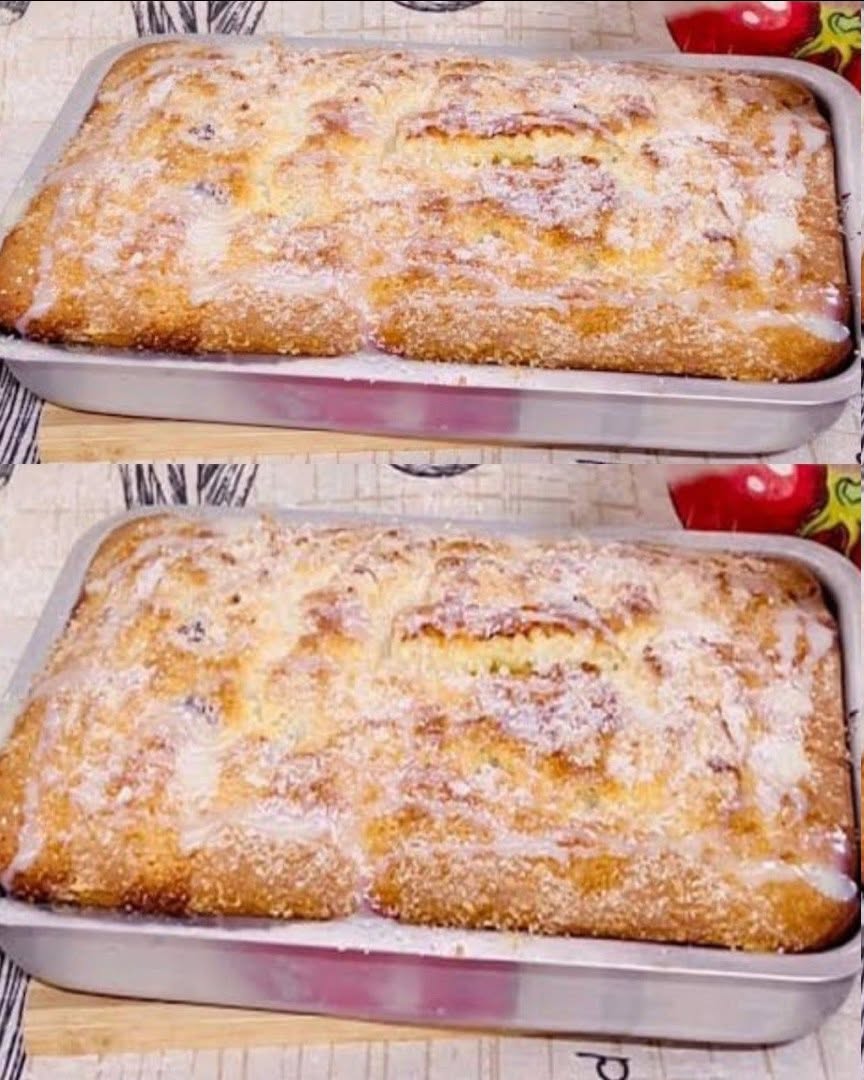
Ingredients
For a classic version of this simple homemade cake, you’ll need:
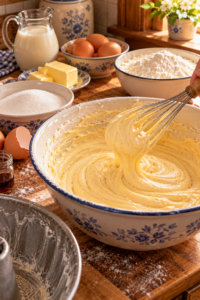
- 2 cups all-purpose flour
- 1 ½ teaspoons baking powder
- ¼ teaspoon salt
- ½ cup unsalted butter, softened
- 1 cup granulated sugar
- 3 large eggs
- 2 teaspoons vanilla extract
- ¾ cup whole milk
For the simple glaze
- 1 cup powdered sugar
- 2–3 tablespoons milk
- ½ teaspoon vanilla extract
Optional
- Powdered sugar for dusting
- A small amount of lemon zest
- Chopped nuts for serving
Ingredient Notes
All-Purpose Flour
All-purpose flour works well because it provides enough structure while keeping the cake tender.
For the most consistent results, measure flour carefully.
If using measuring cups, spoon the flour into the cup and level the top rather than packing flour directly into the cup.
Too much flour can make the finished cake heavy or dry.
Butter
Softened unsalted butter gives the cake richness and helps create a tender crumb.
Allow the butter to soften naturally at room temperature.
It should be soft enough to mix easily but not melted.
Melted butter changes the structure of the batter and can produce a different texture.
Sugar
Granulated sugar provides sweetness and also contributes to the cake’s texture.
Creaming the sugar with softened butter helps incorporate air into the mixture, which contributes to a lighter cake.
Eggs
Eggs help bind the ingredients together and contribute structure, richness, and moisture.
Use room-temperature eggs when possible.
They tend to incorporate more easily into the batter.
For safe handling of eggs and other ingredients, the FDA provides food-safety guidance for consumers. FDA Food Safety for Eggs
Vanilla Extract
Vanilla may seem like a small ingredient, but it makes a noticeable difference.
It adds warmth and helps round out the buttery sweetness of the cake.
Pure vanilla extract works beautifully, but imitation vanilla can also be used if that is what you have available.
Whole Milk
Whole milk gives the batter richness and moisture.
You can use another milk if necessary, but the texture may vary slightly.
How to Make This Simple Old-Fashioned Cake
Step 1: Prepare the Oven
Preheat your oven to 350°F (175°C).
Grease a 9-by-13-inch baking dish.
You can also line the bottom with parchment paper if you want easier removal.
Allowing the oven to fully preheat before baking is important because the cake depends on consistent heat to rise properly.
Step 2: Combine the Dry Ingredients
In a medium bowl, whisk together:
- Flour
- Baking powder
- Salt
Mixing these ingredients separately helps distribute the baking powder throughout the flour.
Set the bowl aside.
Step 3: Cream the Butter and Sugar
Place the softened butter and granulated sugar in a large mixing bowl.
Beat them together until the mixture becomes lighter and creamy.
This step is important.
Do not rush through it simply because the ingredients are already combined.
Properly creamed butter and sugar help create a lighter texture.
Step 4: Add the Eggs
Add the eggs one at a time.
Mix after each addition until incorporated.
Then add the vanilla extract.
If the mixture looks slightly curdled at this stage, don’t panic. This can happen when ingredients have different temperatures.
Once the flour and milk are incorporated, the batter should come together.
Step 5: Add the Flour and Milk
Add some of the dry ingredients to the butter mixture.
Mix gently.
Then add part of the milk.
Continue alternating the dry ingredients and milk until everything is incorporated.
Start and finish with the dry ingredients.
Avoid overmixing once the flour has been added.
Overmixing can develop too much gluten and produce a denser cake.
Step 6: Transfer the Batter to the Pan
Pour the batter into the prepared baking dish.
Use a spatula to spread it evenly.
Gently smooth the top.
Try to distribute the batter evenly into the corners so the cake bakes at a consistent thickness.
Step 7: Bake
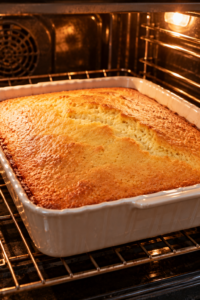
Place the pan in the preheated oven.
Bake for approximately 30–35 minutes, depending on your oven and the exact size of the baking dish.
The cake should become lightly golden on top.
A toothpick inserted into the center should come out clean or with a few moist crumbs attached.
Avoid opening the oven repeatedly during the first part of baking.
A sudden temperature change can interfere with the cake’s rise.
Step 8: Cool the Cake
Remove the cake from the oven and place the pan on a cooling rack.
Let it cool before adding the glaze.
If you pour glaze over a very hot cake, it can melt quickly and disappear into the surface.
A slightly warm or completely cooled cake gives you more control.
Step 9: Make the Simple Glaze
Place the powdered sugar in a small bowl.
Add 2 tablespoons of milk and the vanilla extract.
Whisk until smooth.
If the glaze is too thick, add a small amount of milk.
If it becomes too thin, add a little more powdered sugar.
The ideal consistency should be thick enough to sit lightly on the cake but fluid enough to drizzle.
Step 10: Finish the Cake
Drizzle the glaze over the cooled cake.
For a traditional appearance, allow some of the glaze to run naturally across the surface.
You can also dust the top lightly with powdered sugar.
Let the glaze set for several minutes before slicing.