
Why Are the Holes So Small?
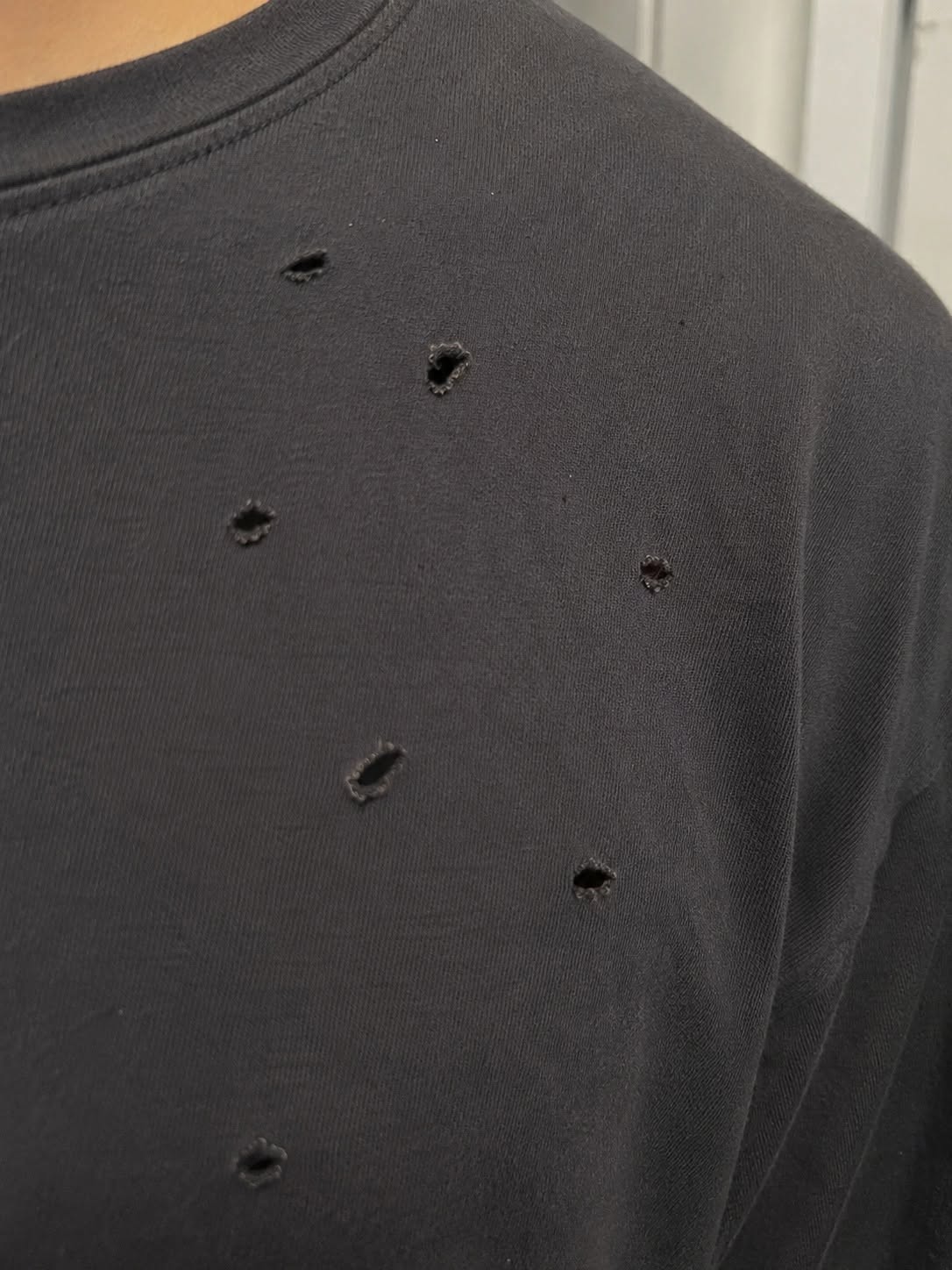
Tiny holes can be more confusing than large tears.
A large tear usually has an obvious explanation.
A tiny hole, however, may represent gradual fiber damage.
For example, several individual fibers may break over weeks of friction.
Eventually, the remaining fibers can’t support the fabric structure, and a small opening appears.
This is why a shirt can seem completely fine one day and suddenly have a hole after washing.
The washing process may simply make previously weakened fibers more obvious.
How to Prevent Holes in Clothes
You don’t need to completely change your laundry routine.
A few small habits can make a meaningful difference.
Turn Clothes Inside Out
Turning garments inside out before washing can reduce surface friction and help protect prints and finishes.
It’s especially useful for clothing with delicate surfaces or decorative details.
Use Laundry Bags for Delicates
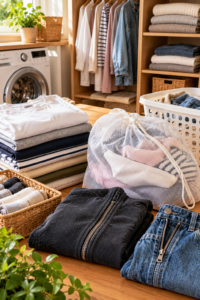
A mesh laundry bag can keep smaller delicate items together and reduce contact with zippers and other garments.
This is particularly useful for lightweight fabrics.
Separate Heavy and Lightweight Clothing
Avoid throwing heavy denim, towels, and delicate shirts into the same load whenever possible.
Different fabric weights experience different levels of mechanical stress.
Check Pockets
Coins, keys, pens, tissues, and other objects can cause problems during washing.
Empty pockets before putting clothes into the machine.
A forgotten tissue may not create a hole, but a sharp object certainly can.
Close Zippers
Zip them before washing.
This simple step reduces the possibility of zipper teeth catching another garment.
Don’t Overfill the Washer
Give clothing enough space to move.
An overloaded machine can increase rubbing and prevent garments from being cleaned effectively.
Use the Correct Wash Cycle
Delicate garments generally benefit from gentler washing conditions.
Follow the care label rather than automatically using the strongest cycle for everything.
How to Protect Clothes in the Closet
Laundry isn’t the only place where clothing can become damaged.
Storage matters too.
Don’t cram clothes into a drawer so tightly that fabric becomes compressed and difficult to remove.
For long-term storage, make sure clothing is clean and completely dry.
Avoid storing clothing in damp areas.
If you’re storing valuable garments, use appropriate breathable or protective storage solutions rather than leaving them exposed to dust, moisture, and pests.
What About Cheap or Thin Fabric?
Sometimes the uncomfortable answer is that the fabric itself may simply be more vulnerable.
Very lightweight fabrics can wear faster than heavier, more durable materials.
That doesn’t mean inexpensive clothing always develops holes, or that expensive clothing never does.
But fabric construction, fiber type, thickness, stitching quality, and finishing can all affect durability.
If a particular shirt develops holes repeatedly despite careful washing, compare it with another shirt that receives the same treatment.
If one garment repeatedly fails while the others remain intact, the garment itself may be the weak point.
Can Washing Clothes Less Often Prevent Holes?
For some garments, washing less frequently when appropriate can reduce mechanical and thermal wear.
However, this doesn’t mean dirty clothes should be left unwashed.
Items that become sweaty, visibly dirty, or contaminated should be cleaned appropriately.
For lightly worn outer layers, following the garment’s care instructions and washing only when necessary may help reduce unnecessary wear.
The goal is balance.
Clean your clothes when they need cleaning while avoiding unnecessary washing of garments that aren’t actually dirty.
How to Repair Small Holes Before They Get Bigger
If you find a small hole, don’t automatically throw the garment away.
A tiny hole can sometimes be repaired before it spreads.
For basic cotton clothing, hand stitching can stabilize the area.
A small patch on the inside may also help reinforce weakened fabric.
For knitwear, sweaters, wool garments, or expensive clothing, the repair method should match the construction of the fabric.
The important part is to deal with the damage early.
A tiny hole is generally easier to manage than a large tear with several unraveling threads.
When Should You Stop Wearing the Garment?
If a garment has developed several holes or the surrounding fabric is extremely thin, continued wear may cause additional damage.
Look closely at the area around the hole.
If the fabric around it is strong and intact, a repair may be worthwhile.
If the entire area feels fragile or transparent compared with the rest of the garment, repairing one hole may only provide a temporary solution.
In that situation, you might consider repurposing the garment for cleaning cloths, crafts, or another household use instead of throwing it away immediately.
A Quick Checklist When You Find a New Hole
The next time you discover holes in clothes, don’t immediately blame the washing machine.
Ask these questions:
Where is the hole?
Location is one of your biggest clues.
Is it always in the same place?
Repeated positioning suggests friction.
Was the garment stored for a long time?
If yes, investigate possible pests.
Is there a zipper, buckle, or button nearby?
Hardware can cause repeated abrasion.
Is the fabric becoming thin?
If so, normal wear may be responsible.
Does another garment have similar damage?
If several garments are affected, look for a shared cause.
Is there a rough surface nearby?
Check chairs, desks, counters, bags, and furniture.
This quick investigation can often narrow down the cause.
Don’t Forget About Handbags and Backpacks
A handbag or backpack can cause more clothing damage than you might expect.
The straps, buckles, zippers, and edges can repeatedly rub against your clothing.
If holes appear near your shoulders, sides, or back, inspect the bag you use regularly.
Look for:
- Rough seams
- Metal hardware
- Exposed zipper edges
- Worn straps
- Loose stitching
- Sharp corners
Sometimes simply adjusting how the bag sits can reduce repeated friction.
What If Only One Type of Clothing Gets Holes?
That’s another useful clue.
Suppose your cotton T-shirts develop holes but your sweatshirts don’t.
Or your lightweight tops develop damage while your thicker shirts remain fine.
That may indicate the thinner fabric is more vulnerable to friction.
On the other hand, if wool sweaters stored in the same closet are developing holes, pests become more worth investigating.
The pattern matters.
A Better Laundry Routine for Longer-Lasting Clothes
If you want your clothes to stay in good condition for longer, focus on reducing unnecessary stress.
Before washing:
- Empty all pockets.
- Close zippers and fasteners.
- Turn delicate garments inside out.
- Separate very heavy items from lightweight clothing.
- Place delicate pieces in laundry bags when appropriate.
- Check care labels.
During washing:
- Avoid overloading the machine.
- Choose an appropriate cycle.
- Use the recommended water temperature.
- Avoid unnecessarily aggressive settings.
After washing:
- Follow the garment’s drying instructions.
- Avoid excessive heat when the care label doesn’t call for it.
- Don’t leave damp clothing sitting for long periods.
- Store clothing only when it is completely dry.
These habits won’t make fabric indestructible, but they can reduce avoidable wear.
Frequently Asked Questions
What causes tiny holes in clothes?
Common causes include friction, rough surfaces, zippers, buttons, belts, snagging, repeated washing, fabric wear, and insects such as clothes moth larvae.
Why do my shirts get tiny holes near the bottom?
Small holes near the lower front of shirts can be caused by repeated friction from belts, jeans buttons, countertops, desks, or other surfaces.
Can the washing machine cause holes in clothes?
Yes, washing can contribute to fabric damage, particularly when garments become caught on zippers, hooks, rough hardware, or other clothing. Overloading the machine can also increase friction.
Can the dryer cause holes?
Excessive heat and repeated drying can contribute to fabric wear, especially for garments that aren’t suited to high temperatures. Always follow the care label.
How can I prevent holes in my shirts?
Close zippers, turn delicate garments inside out, avoid overloading the washer, separate heavy items from lightweight fabrics, inspect rough surfaces, and address loose threads or small holes early.
How do I know if moths are eating my clothes?
Suspect fabric pests when unexplained holes appear in stored garments, particularly wool and other animal-based fibers. Look for additional signs such as larvae, webbing, or shed material.
Why do my clothes get holes after washing but not before?
The fabric may have already been weakened through wear. Washing can put enough stress on the weakened fibers for the damage to become visible.
Should I throw away clothes with holes?
Not necessarily. Small holes can often be repaired, especially when the surrounding fabric is still strong.
Why do some clothes develop holes faster than others?
Fabric thickness, fiber type, construction, stitching, frequency of wear, friction, and washing conditions can all influence durability.
Can turning clothes inside out prevent holes?
Turning clothing inside out can reduce some surface friction and protect finishes, but it won’t prevent every possible cause of holes.
Final Thoughts
Finding unexpected holes in clothes can be annoying, but the damage usually leaves clues.
A hole near your waistband may point toward friction from a belt, jeans, or countertop. A pulled thread may suggest a snag. Damage to stored wool garments may warrant checking for fabric pests. And repeated damage after laundry may indicate that your washing or drying routine needs a few adjustments.
The most useful thing you can do is look for a pattern.
Where are the holes?
What clothing is affected?
How often do you wear it?
What does it rub against?
How is it washed and dried?
Once you identify the source, prevention becomes much easier.
You don’t need an expensive laundry system or complicated products. Simple habits such as closing zippers, avoiding overloaded machines, separating heavy and delicate fabrics, checking pockets, protecting delicate garments, and repairing small holes early can help your clothes last longer.
And if one particular shirt keeps developing holes despite careful treatment, don’t overlook the possibility that the fabric itself may simply be wearing out.
Sometimes the mystery isn’t in the laundry room at all—it’s hiding in the places your clothes touch every day.