
3. The Washing Machine Can Damage Clothes
Your washing machine is designed to clean clothing, but certain washing habits can increase wear.
A garment can become damaged when it repeatedly rubs against rough items or gets caught on another piece of clothing.
This doesn’t mean your washing machine is necessarily defective.
The problem may be how the load is being prepared.
Don’t Overload the Drum
When a washing machine is packed too tightly, clothing has less room to move freely.
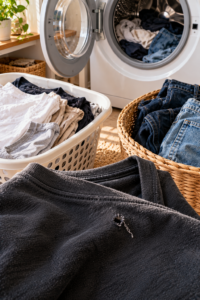
Heavy garments can rub against lighter fabrics, while zippers and other hardware can catch on delicate materials.
Instead of stuffing the machine as full as possible, leave enough room for the clothing to move.
Zip Zippers Before Washing
Open zippers have teeth that can catch on other fabrics.
Before washing clothes, zip jackets, trousers, and other garments with zippers.
For additional protection, turn delicate items inside out.
Keep Hooks and Fasteners Closed
Bras, hook-and-eye fasteners, and similar closures can catch on other clothing.
Fastening them before washing reduces the chance of snagging.
4. Your Dryer Could Be Making the Problem Worse
Heat isn’t necessarily the original cause of every hole, but excessive drying can contribute to fabric wear.
Repeated high-heat drying can be harder on some fabrics than lower-temperature drying.
Some garments are better suited to air drying or low-heat settings.
Check the care label before deciding how an item should be dried.
If you notice that older shirts are becoming increasingly thin, rough, or fragile, reducing unnecessary heat may help extend their usable life.
A Simple Habit That Helps
Separate delicate clothing from heavy items whenever practical.
Towels, denim, sweatshirts, and other heavy fabrics can create considerably more friction than lightweight shirts.
Washing and drying similar weights together can help reduce unnecessary wear.
5. Moths and Other Fabric Pests Can Cause Holes
Not every hole comes from friction.
If you suddenly discover several unexplained holes in stored clothing, especially in wool, cashmere, silk, or other animal-based fibers, consider fabric-damaging insects.
Clothes moth larvae are well known for damaging natural animal fibers.
The adult moth itself isn’t necessarily what creates the holes. The larvae feed on suitable fibers and can damage garments while they’re stored.
Signs That Point Toward Insects
You may want to investigate further if:
- Holes appear on clothing that hasn’t been worn recently
- Several stored garments are affected
- Damage is scattered rather than concentrated in one friction area
- You notice larvae, webbing, or shed material
- Wool or other animal-fiber clothing is affected
- Damage appears inside closets, drawers, or storage boxes
Don’t immediately assume every small hole is caused by moths.
Location and pattern matter.
Keep Stored Clothing Clean
Clothing that has been worn and then stored without washing can retain food particles, body oils, sweat, and other organic material that may make it more attractive to pests.
Before putting seasonal clothes away for a long period, make sure they’re clean and completely dry.
Store them in clean, well-sealed containers when appropriate.
6. Rough Surfaces Can Slowly Destroy Fabric
A rough surface doesn’t have to feel sharp to damage clothing.
A textured chair, rough desk edge, unfinished wood surface, or worn piece of furniture can repeatedly rub against the same part of your clothes.
This is particularly relevant if you spend several hours sitting at a desk.
Think about where your clothing contacts your chair.
If you wear the same type of shirt repeatedly and notice holes developing around the back, sides, or lower front, inspect the chair and desk.
The problem might be right in front of you.
Look for Repeated Contact
Ask yourself:
Where does this exact part of my shirt touch something during the day?
That question can be surprisingly useful.
7. Snags Can Create Larger Holes
Sometimes the fabric isn’t gradually wearing away.
Instead, one thread gets caught.
A sharp edge on furniture, jewelry, a zipper, a nail, or another object can pull a thread out of place.
You might initially notice a small loop or pulled thread.
If you continue wearing and washing the garment without repairing it, the damaged area can eventually become a hole.
Don’t Pull Loose Threads
If you notice a thread sticking out, resist the temptation to pull it.
Cutting or securing the loose thread carefully is usually better than pulling it and potentially causing additional unraveling.
For expensive or delicate clothing, professional repair may be worthwhile.