
and pet waste.
Animal-based food scraps can become particularly strong-smelling as they decompose in warm conditions.
Moisture Makes the Situation Worse
Leaking garbage bags, discarded liquids, food juices, rainwater, condensation, and wet food scraps can create a damp layer at the bottom of the bin.
This moisture combines with decomposing organic material and can produce exactly the environment flies seek.
A clean, relatively dry container is much less inviting than one containing a warm mixture of food residue and liquid.
Heat Can Accelerate the Problem
Trash bins left in strong
summer sun can become very warm.
Heat accelerates food decomposition, increases odors, and can support rapid insect activity.
Whenever practical, keeping an outdoor garbage container in a cooler shaded location can help slow decomposition.
The bin still needs to remain accessible for collection and positioned according to local waste rules.
Bad Odors Are More Than an Annoyance
A strong garbage smell is often evidence that organic material is decomposing.
Odors can also attract flies searching for suitable places to feed and reproduce.
Trying
to cover the odor with perfume
does not remove the underlying attraction.
Cleaning food residue, controlling moisture, and securely containing waste are more important than simply making the bin smell better.
Step One: Remove the Source
If you already have an infestation, begin by dealing with the garbage itself.
Wear suitable household cleaning gloves and avoid direct contact with decomposing waste.
Seal contaminated garbage appropriately and dispose of it according to your local waste-collection rules.
If collection day is approaching, moving the waste out of the bin during scheduled collection is often the simplest way to
eliminate the larvae’s primary food source.
Do not leave loose infested garbage elsewhere around the property, where flies may simply continue breeding.
Check for Torn or Leaking Bags
Once the bin is emptied, inspect the bottom.
A surprisingly common cause of recurring odors is a small amount of food liquid that leaked through a garbage bag and remained underneath it.
Look for meat juices, food residue, sticky liquid, grease, pieces of food, damaged bags, and residue around the rim.
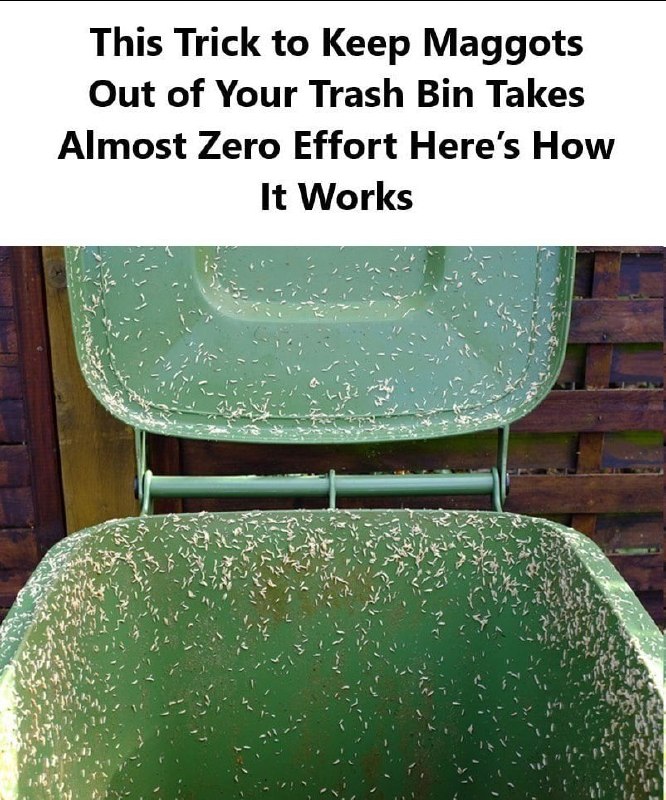
Removing visible maggots without removing these materials may provide only temporary
relief.
Getting rid of the larvae you can see is only half the job—the
hidden food residue at the bottom, rim, and lid can determine whether flies return.
How to Clean an Infested Trash Bin
After the garbage has been removed, the container should be cleaned thoroughly.
Choose an outdoor location where wash water can be handled appropriately and will not contaminate food-preparation areas.
Remove loose debris first.
Then wash the inside surfaces using water and an appropriate household detergent or cleaner according to its label directions.
Pay special
attention to the bottom, corners, lid, handles, hinges, and rim.
Why Scrubbing Matters
Simply rinsing a heavily soiled container may leave behind a thin film of grease and decomposing organic material.
Physical scrubbing helps loosen this residue.
A long-handled brush dedicated to garbage-bin cleaning can make the task easier and keeps your hands farther away from dirty surfaces.
Rinse Away Remaining Residue
After scrubbing, rinse the container appropriately.
The objective is to remove the material that attracted flies rather than merely cover its smell.
Follow local guidance regarding where dirty