
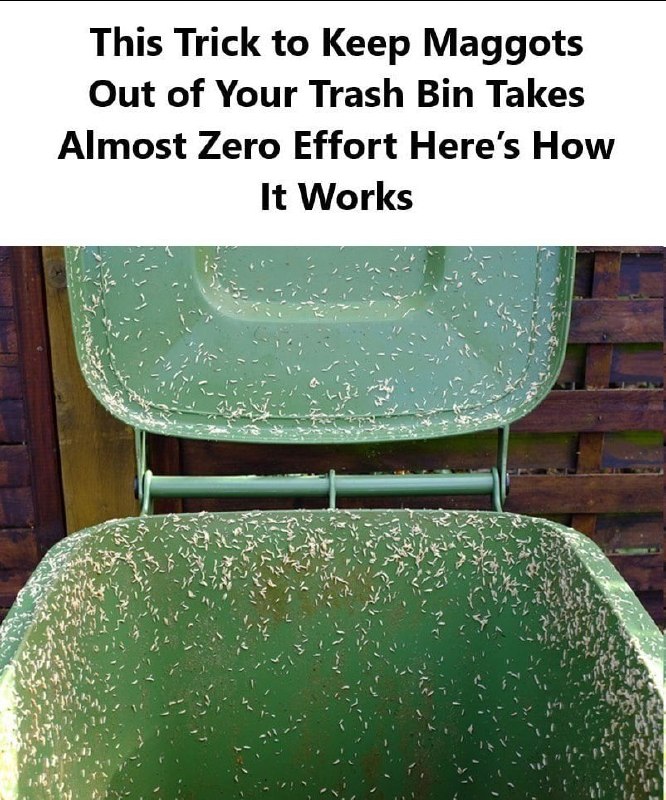
may also have easy access to the contents.
The Biggest Attraction: Food Waste
Not all household trash is equally attractive to flies.
Dry cardboard, empty packaging, and clean paper are generally much less appealing than moist decomposing food.
Common problem items
hidden food residue at the bottom, rim, and lid can determine whether flies return.
How to Clean an Infested Trash Bin
After the garbage has been removed, the container should be cleaned thoroughly.
Choose an outdoor location where wash water can be handled appropriately and will not contaminate
food-preparation areas.
Remove loose debris first.
Then wash the inside surfaces using water and an appropriate household detergent or cleaner according to its label directions.
Pay special attention to the bottom, corners, lid, handles, hinges, and rim.
Why Scrubbing Matters
Simply rinsing a heavily soiled container may leave behind a thin film of grease and decomposing organic material.
Physical scrubbing helps loosen this residue.
A long-handled brush dedicated to garbage-bin cleaning can make the task easier and keeps your hands farther away from dirty surfaces.
Rinse Away Remaining Residue
After
scrubbing, rinse the container appropriately.
The objective is to remove the material that attracted flies rather than merely cover its smell.
Follow local guidance regarding where dirty wash water should be disposed of. Avoid directing heavily contaminated water toward vegetable gardens, children’s play areas, or natural waterways.
Let the Bin Dry Completely
Drying is an important but frequently skipped step.
If possible,
include raw meat trimmings, cooked meat leftovers, fish and seafood scraps, animal bones with food attached, food-soiled packaging, spoiled leftovers, fruit waste, some vegetable scraps, pet food,