
How to Maintain a Joggling Board
Keep It Sheltered
A covered porch offers better protection than an exposed lawn. Repeated rain and strong sunlight accelerate deterioration.
Clean It Gently
Remove dust and loose debris with a soft brush or cloth. Use mild soap and water when appropriate for the finish, then allow it to dry fully.
Inspect the Plank
Look for cracks, warping, soft spots, and splinters. Pay particular attention to the points where the plank meets the stands.
Refresh the Finish
Exterior-grade paint or another manufacturer-approved coating can protect the wood. Prepare the surface correctly before repainting.
Protect the Feet
Standing water beneath the rockers can cause decay. Make sure the porch or patio drains correctly.
Store It During Severe Weather
Move the board to a protected location before hurricanes, extreme storms, flooding, or long periods of snow and ice.
Antique Versus Modern Joggling Boards
An antique board may have historical, sentimental, or decorative value. A modern reproduction may offer more predictable structural strength and weather protection.
Before sitting on an antique example, have it examined by an experienced furniture conservator or woodworker.
Avoid permanently altering an antique with modern screws, paint, or aggressive sanding before determining whether it has historical value.
Decorating With a Joggling Board
Its long, minimalist form makes it an eye-catching porch feature.
It can be paired with:
- Traditional rocking chairs
- Porch lanterns
- Ferns and potted plants
- Outdoor cushions
- Historic paint colors
- Woven baskets
- Seasonal decorations
- Coastal or Lowcountry-inspired décor
Do not cover the entire plank with heavy decorations if people will use it. Its surface and surrounding area should remain clear.
Frequently Asked Questions
What is the object in the photo?
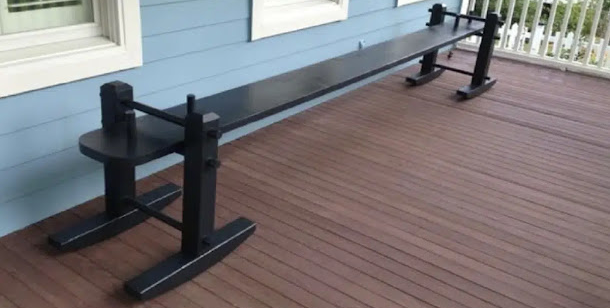
It is a Joggling Board, a long, flexible porch bench supported by two rocking stands.
What is its purpose?
It provides seating while allowing a gentle bouncing and rocking movement.
Why is it called a Joggling Board?
The name refers to its light, repeated movement when someone sits or shifts their weight on the flexible plank.
Is it originally from Scotland?
A popular South Carolina legend says that Scottish relatives sent a model that inspired an early board at Acton Plantation. The exact historical origin remains uncertain.
Why are Joggling Boards so long?
The long plank creates flexibility and provides seating for multiple people.
Can it stay outside?
It is outdoor porch furniture, but it lasts longer beneath a roof. Direct rain, sunlight, and standing water can damage the wood.
Can children play on it?
Children may enjoy its movement, but they need adult supervision. They should never stand, run, or bounce violently on it.
Is the object a quilting frame?
No. Quilting frames support stretched fabric, while a Joggling Board has a solid flexible plank designed for sitting.
Conclusion
The unusual object in the photograph is a Joggling Board, a flexible rocking bench with a long history in South Carolina’s Lowcountry.
Its simple design—a long plank resting between two curved stands—allows it to bend, bounce, and rock gently. Over time, it became associated with porch conversations, family gatherings, courtship stories, and traditional Southern hospitality.
Today, the Joggling Board remains both functional furniture and a fascinating cultural object. Whether antique or newly constructed, it deserves careful maintenance and safe use so its unusual movement can be enjoyed for years.