
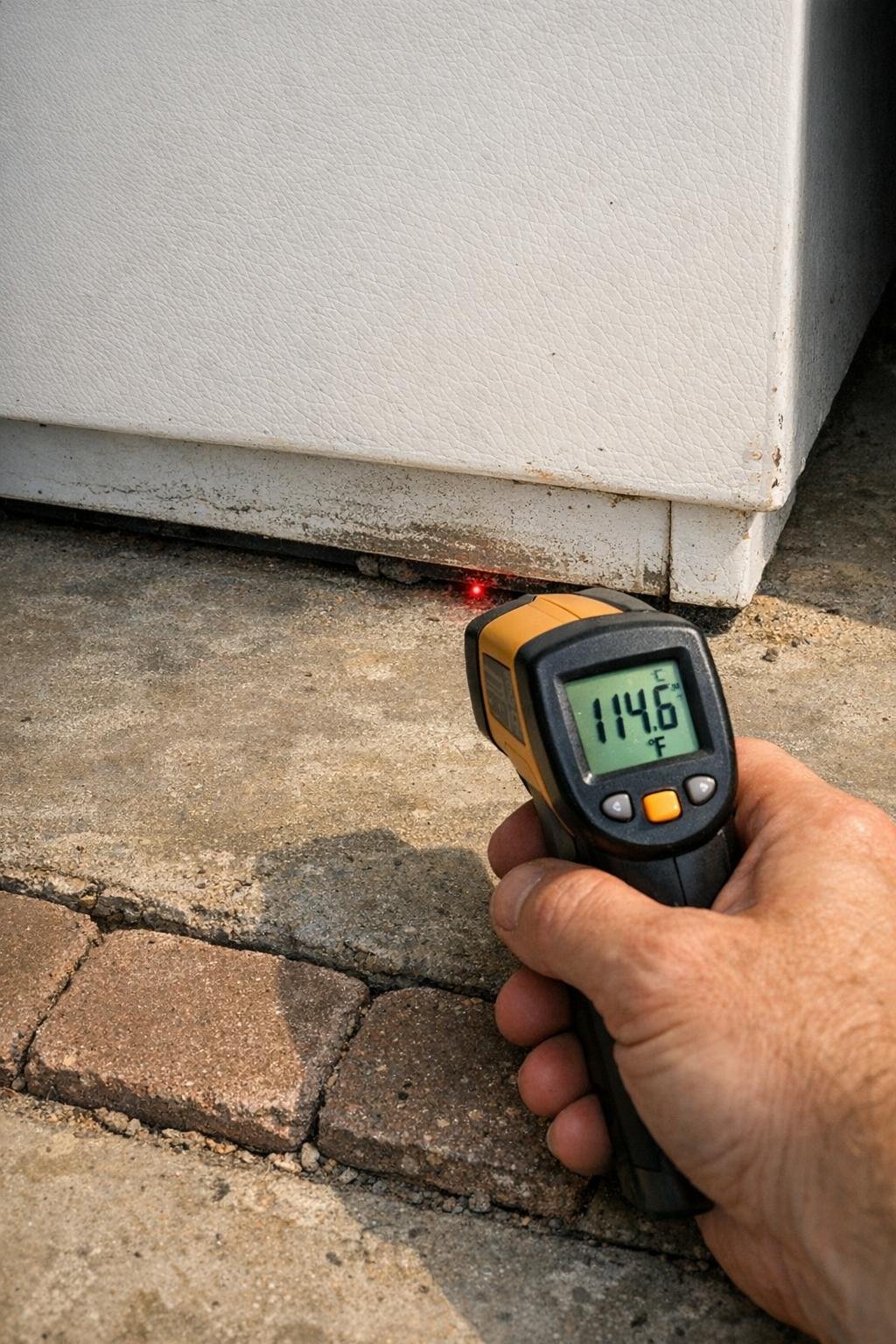
beneath the freezer edge, generally measured 84°F to 88°F. That is not a dramatic drop, but it was consistently lower than the slab itself by about 4°F to 6°F in my spot checks.
The metal base edge of the freezer also read slightly cooler during the hottest part of the day. Before the test, similar afternoon readings on the lower cabinet edge usually landed around 91°F to 93°F. With the pavers in place, I more often saw 87°F to 90°F. Infrared readings
are imperfect on mixed surfaces, but the trend was steady enough that I’m comfortable calling it a modest improvement.
7. Compressor run time changed a little, not a lot
I did not wire in a dedicated cycle logger, so this part was observational rather than instrument-grade. Still, after living with this freezer for years, I know its rhythm pretty well. During the test, the compressor seemed to run a bit less aggressively in the 3 p.m. to 7 p.m. window. Instead of long, drawn-out cycles during peak garage
heat, I heard slightly shorter runs with a little more time between them.
If I had to put numbers on it from my notes, the afternoon cycles looked shorter by perhaps 5% to 10% on the hottest days. That is not enough to transform your utility bill, but it was noticeable to me because that late-day period is normally when the freezer sounds busiest. In the morning and late evening, I noticed almost no difference at all.
8. Power use dropped,