
freezer is in an attached garage that gets some west-facing heat gain after 2 p.m. The garage door is insulated, but the space is not actively cooled. I open the side door a few times a day, and the main garage door typically goes up and down 2 to 4 times daily. In other words, this was a pretty ordinary suburban setup with all the little temperature swings and warm air blasts that come with daily life.
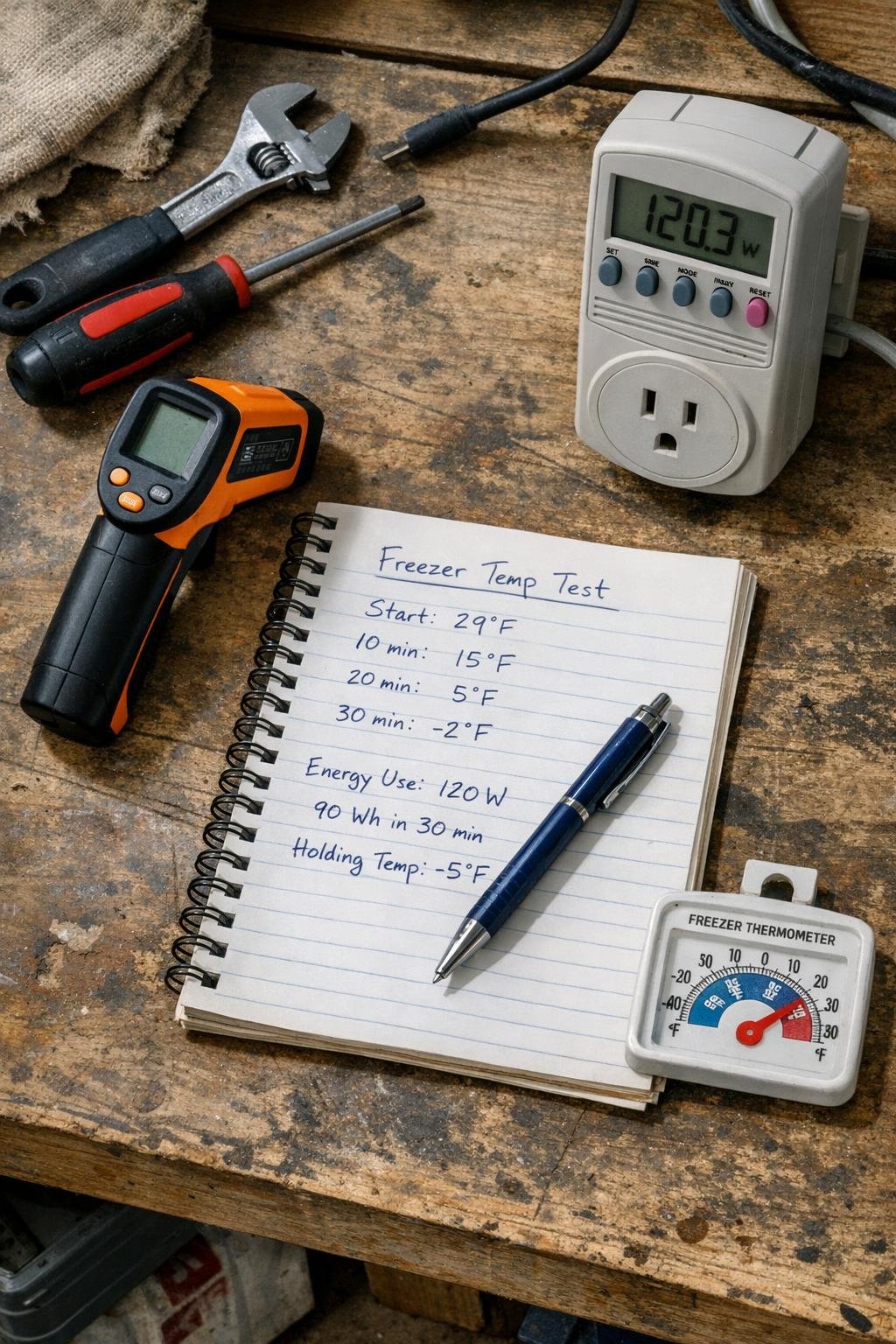
4. What I measured and how I tracked it
I kept this
simple but consistent. I used a plug-in energy monitor to track daily electricity use in kilowatt-hours, a freezer thermometer inside the basket area, an infrared thermometer for spot-checking the concrete floor, the pavers, and the freezer exterior, and a notebook on a workbench for compressor observations. I checked readings three times most days: around 7 a.m., 3 p.m., and 9 p.m.
I also noted how often I opened the lid, because that can throw off any freezer experiment quickly. My household opened it 2 to 5 times
per day, usually for under 30 seconds each time. I did my best to keep food load stable and did not do a big grocery restock during the test. That helped keep one variable from swamping all the others.
5. Getting the freezer onto the pavers was the trickiest part
Moving a chest freezer, even a partly loaded one, is not a graceful project. I unplugged it for about 11 minutes while repositioning it, which was short enough that the interior