
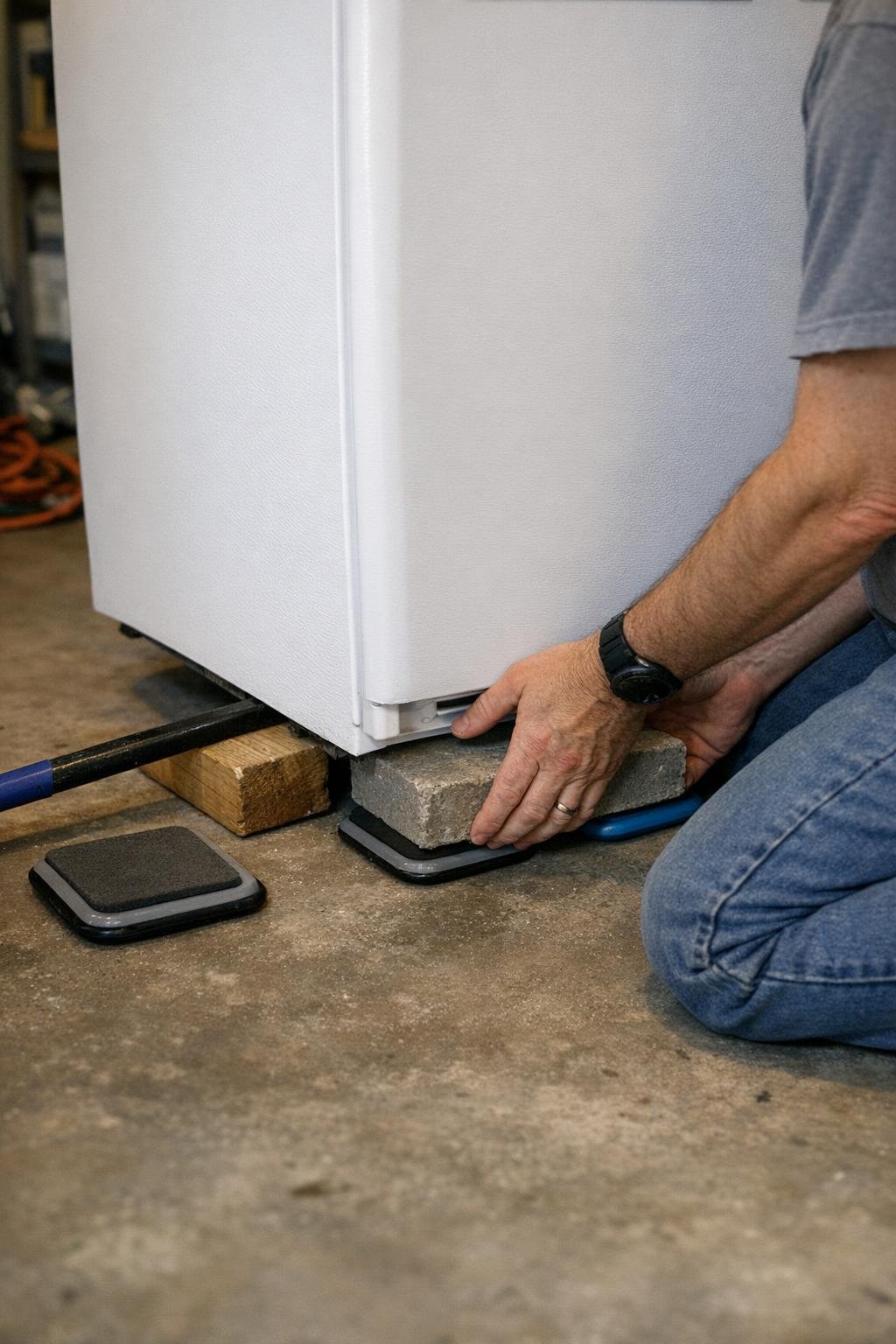
temperature barely moved. I used furniture sliders under one side, lifted carefully with a pry bar and a wood block, then worked one paver into place at a time. If you try this yourself, measure the base rails before you start. My first instinct was to center the pavers visually, but the actual support points were narrower than they looked.
The second challenge was stability. A freezer full of food has a high, awkward center of mass when the lid is open. Once the pavers were in place and the
unit was level, it felt solid. Before I corrected that 1/8-inch low corner, though, the freezer had a faint wobble. I would not ignore that. Stability matters more than squeezing out some tiny theoretical efficiency gain.
6. The temperature difference at the floor and base was real
This was the first meaningful change I noticed. On several hot afternoons, the bare concrete floor next to the freezer measured between 90°F and 94°F. The top surface of the pavers, under shaded conditions