
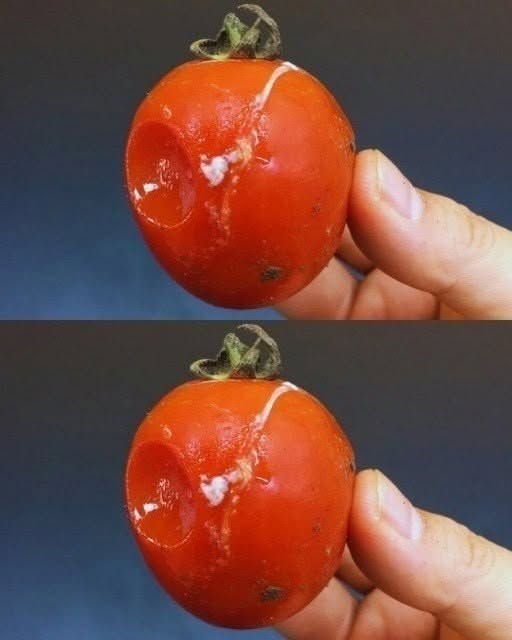
Tomatoes are one of the major dietary sources of lycopene, a carotenoid found in red tomatoes.
Research has found that processing and cooking can increase the amount of lycopene available for absorption under certain conditions. In particular, tomato products cooked with oil have shown higher lycopene bioavailability than some raw preparations.
That doesn’t mean cooked tomatoes are automatically “healthier” than fresh tomatoes in every situation. Fresh and cooked tomatoes can both be part of a varied diet.
It simply gives you another good reason not to overlook ripe tomatoes that are no longer attractive enough for a salad.
Instead of throwing away a perfectly usable tomato, turn it into a sauce, soup, stew, or another cooked dish.
What You Should NOT Do With Moldy Tomatoes
This deserves its own section because many food-waste tips online blur the line between overripe and spoiled.
Don’t:
- Cut off visible mold and eat the rest
- Cook a moldy tomato hoping heat will make it safe
- Blend a moldy tomato into sauce
- Use moldy tomatoes for salsa
- Use moldy tomatoes in soup
- Apply moldy tomatoes to your skin
- Taste a suspicious tomato to determine whether it is safe
USDA guidance specifically recommends discarding soft fruits and vegetables with mold, including tomatoes.
If one moldy tomato has been stored beside other tomatoes, inspect the others carefully. Mold can spread between produce, especially when pieces are touching.
What About Using Overripe Tomatoes for Homemade Face Masks?
You may see social-media posts recommending very ripe tomatoes as DIY facial treatments for brightening skin, reducing spots, cleaning pores, or treating acne.
These claims should be treated cautiously.
There isn’t a good reason to recommend putting spoiled or questionable food on your face, and tomato juice can irritate sensitive skin. More importantly, a tomato that has visible mold should never be used as a homemade skincare ingredient.
For a food-waste article, there are much safer and more useful ways to use a perfectly good overripe tomato: cook it, freeze it, or compost it when it is no longer edible.
Can Overripe Tomatoes Go Into Compost?
Yes. If a tomato is no longer suitable for eating, composting can be a practical way to divert food scraps from the trash, provided your composting system accepts food scraps.
Remove any produce stickers or packaging before composting, and follow the rules for your local composting program if you use municipal collection.
If you’re composting at home, balance food scraps with appropriate dry or carbon-rich materials according to your composting method.
And if the tomato has mold, there’s no need to worry that you’re “wasting” it by discarding it. Food safety comes first.
Can You Save Tomato Seeds From Very Ripe Tomatoes?
Yes, very ripe tomatoes can contain viable seeds.
If you are saving seeds from a tomato variety you want to grow, remove the seeds from a healthy tomato and follow an appropriate seed-saving method.
However, a tomato that is rotten or moldy is not something you should handle as a food product just because you want its seeds.
Also keep in mind that seeds saved from hybrid varieties may not produce plants identical to the original tomato.
For gardeners, healthy ripe tomatoes can therefore have a second life beyond the kitchen—but don’t confuse gardening potential with food safety.
How to Store Tomatoes So They Last Longer
The best way to reduce tomato waste is to use tomatoes before they become excessively soft.
Keep an eye on tomatoes as they ripen rather than waiting until several are already past their prime.
When tomatoes are approaching peak ripeness, make a plan:
Today: use them in a salad or sandwich.
Tomorrow: cook them into sauce.
Later: freeze them for soup or stew.
This simple approach can prevent a large batch of tomatoes from becoming food waste.
Once tomatoes are cut, refrigerate them promptly in a clean container. The FDA notes that cut tomatoes require refrigeration because they can support the growth of harmful microorganisms if held at unsafe temperatures.
For official food-safety guidance on selecting, washing, and preparing fresh produce, see the FDA’s Selecting and Serving Produce Safely
5 Easy Ways to Prevent Tomato Waste
If you regularly find forgotten tomatoes in your kitchen, try these simple habits.
1. Check your tomatoes every day
A quick daily check makes it easier to notice when tomatoes are becoming very ripe.
2. Cook them before they become questionable
If you know you won’t eat them fresh, turn them into sauce or soup while they’re still good.
3. Freeze extras
Freezing gives you more time and is especially useful when you have a large harvest.
4. Don’t buy more than you can use
Continue on the next page