
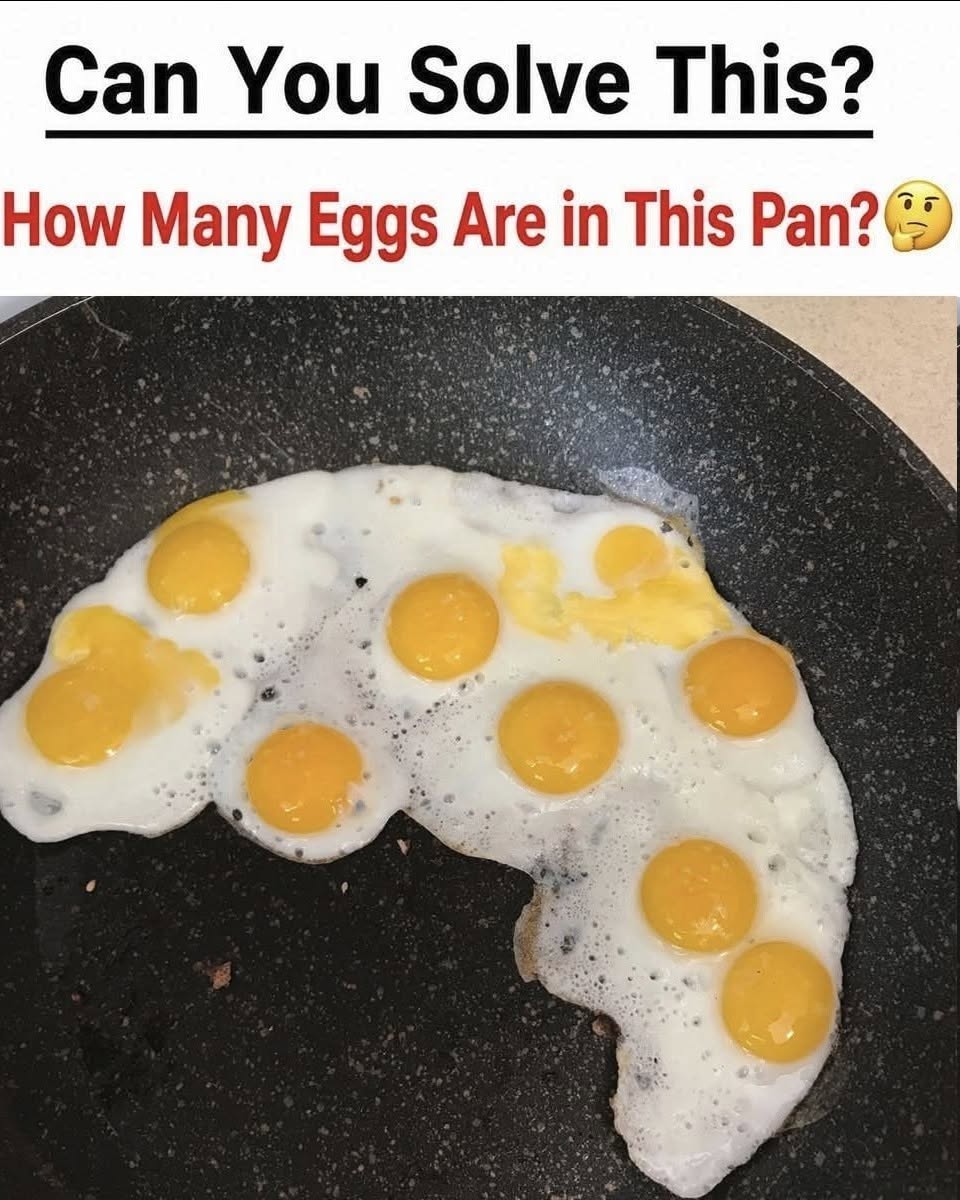
What the Image Teaches About Careful Observation
The puzzle works as a small reminder that the first obvious answer is not always the complete one. Careful observation often involves three stages:
- Identifying the most visible information
- Searching for details that do not match the main pattern
- Rechecking the conclusion before answering
This approach can help with visual riddles, spot-the-difference games, logic challenges, and even ordinary activities such as checking a shopping receipt or reviewing written work.
The lesson is not simply to count more slowly. It is to consider whether the way you are counting matches the exact wording of the question.
A Fun Way to Share This Egg Puzzle
If you plan to publish the photograph on Facebook, avoid revealing the answer in the main caption. A short challenge encourages readers to inspect the picture and leave comments.
You can use this caption:
Most people get this wrong on their first try! How many eggs can you find in the pan? Look carefully before answering—the obvious number may not be correct. 🥚🤔
After readers have had time to participate, you can reveal the answer in a pinned comment:
Answer: 10 eggs—eight intact yolks and two broken yolks. Did you find both hidden ones?
This format encourages genuine discussion without using a misleading claim.
Why Egg Puzzles Generate So Much Engagement
Food-based riddles perform well on social media because they combine familiar objects with a simple challenge.
Almost Anyone Can Participate
The puzzle does not require specialized knowledge. Children, adults, and readers from different countries can all examine the same photograph.
The Answer Is Easy to Debate
Some viewers count only the intact yolks, while others notice the broken ones. That disagreement naturally creates comments and conversation.
The Image Is Immediately Understandable
Readers do not need to study long instructions. The question and the pan are enough to begin.
It Creates a Quick Sense of Achievement
Finding the two irregular yolks feels rewarding. People who discover them are also likely to explain the answer to others.
Readers Often Tag Friends
A short visual challenge gives people a reason to invite friends or family members to participate.
How to Fry Several Eggs in One Pan
Although the picture is primarily a puzzle, cooking multiple eggs in a single frying pan requires a little planning.
Choose a Large Pan
Use a wide pan with enough surface area for the whites to spread. Overcrowding a small pan can produce uneven cooking and make flipping or serving difficult.
Preheat Gently
Set the pan over low to medium heat. Excessively high heat can brown the bottoms before the tops have finished cooking.
Add Fat
Use a small amount of butter or cooking oil to reduce sticking. Spread it evenly over the cooking surface.
Crack Eggs Into a Separate Bowl
Cracking each egg into a small bowl first makes it easier to remove a piece of shell and check the egg’s appearance before adding it to the pan.
This method also gives you more control over placement.
Add the Eggs Gradually
Slide each egg into an open section of the pan. If the whites merge, that is not necessarily a problem, but the individual eggs will be more difficult to separate when serving.
Cover the Pan
Covering the pan briefly traps steam and helps the upper surfaces cook without requiring the eggs to be flipped.
Season Near the End
Add salt, pepper, paprika, herbs, or another preferred seasoning shortly before serving.
Important Egg-Safety Guidance
Raw shell eggs can contain Salmonella, even when the shells appear clean and unbroken. Wash your hands, utensils, and work surfaces after contact with raw egg.
For the greatest safety, the FDA recommends cooking eggs until both the whites and yolks are firm. Recipes served with raw or undercooked egg should use pasteurized eggs or pasteurized egg products. You can read the official FDA egg-safety recommendations for additional guidance.
Keep these practical rules in mind:
- Buy eggs with clean, unbroken shells.
- Refrigerate eggs promptly.
- Do not use an egg that smells unpleasant after cracking.
- Wash hands with soap and water after touching raw egg.
- Clean bowls, utensils, and countertops that contacted raw egg.
- Serve cooked eggs promptly.
- Refrigerate leftovers within two hours.
- Use pasteurized eggs for preparations that will remain raw or lightly cooked.
-
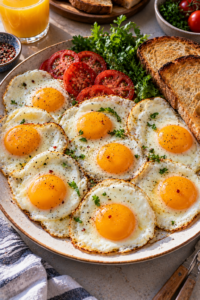
Serve cooked eggs promptly with toast, tomatoes, and fresh herbs for a simple breakfast.
People who are pregnant, elderly, very young, or immunocompromised may face a higher risk of severe foodborne illness and should be especially careful with undercooked eggs.