
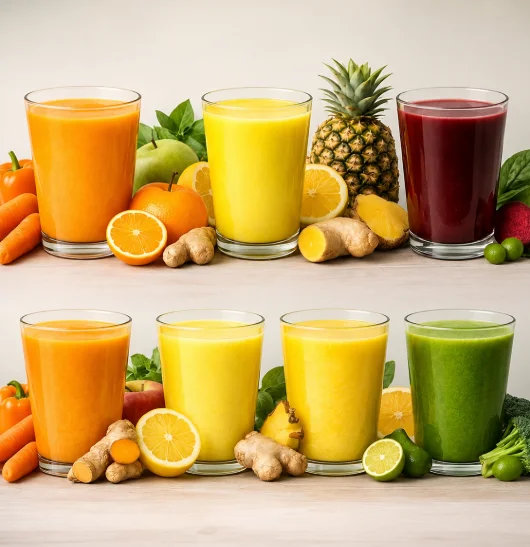
There isn’t one juice that is universally the healthiest. Different recipes provide different nutrients. A better approach is to choose a variety of fruits and vegetables and include whole produce regularly.
Are homemade juice recipes better than store-bought juice?
Homemade juice gives you control over the ingredients and lets you avoid unnecessary added ingredients. However, the nutritional value depends on what you put into the recipe and whether the drink is strained.
Does juicing remove fiber?
Traditional juicing removes much of the pulp, so juice generally contains less fiber than the whole fruit or vegetable. Blending without straining retains more of the original fiber.
Can I make these recipes without a juicer?
Yes. Several of these recipes can be made in a blender. Add a little water when necessary and strain the mixture if you prefer a thinner drink.
Can I drink juice every day?
Homemade juice can fit into a balanced eating pattern, but it shouldn’t replace whole fruits and vegetables. Variety is more important than relying on one type of drink.
Which juice is best for digestion?
There is no single juice proven to improve digestion for everyone. The apple-ginger combination is a flavorful option, and ginger has been studied for certain types of nausea and gastrointestinal discomfort.
Does ginger help digestion?
Ginger has a long history of traditional use for digestive discomfort, and research has examined it for nausea and vomiting. However, results depend on the specific condition, and many studies involve supplements rather than the small amount of ginger used in a drink.
Is beetroot juice good before exercise?
Beetroot contains naturally occurring nitrates, which have been studied in relation to blood flow and exercise performance. However, individual responses vary, so it is better to view beetroot juice as a food option rather than a guaranteed performance booster.
Can I add yogurt to juice?
You can, but yogurt is better suited to a smoothie made in a blender. It will create a thicker, creamier drink rather than traditional juice.
Should I strain blended juice?
That’s completely up to you. Straining creates a smoother drink, while leaving the pulp in preserves more of the ingredients’ natural fiber.
Final Thoughts
These Healthy Juice Recipes are a simple and delicious way to experiment with fresh fruits, vegetables, herbs, and spices.
From the bright combination of orange, carrot, and ginger to the earthy sweetness of beetroot and apple, every recipe offers a different flavor experience.
The key is balance. Use fresh produce, combine sweet and savory flavors, and don’t be afraid to adjust the ingredients to suit your taste.
And while homemade juice can be a convenient addition to a healthy eating pattern, remember that whole fruits and vegetables remain important because they provide fiber and other nutrients that may be reduced when produce is juiced.
Whether you prefer a refreshing watermelon-mint drink, a vibrant green blend, or a tropical pineapple-turmeric combination, these six recipes give you plenty of easy ideas to try at home.
Pick your favorite combination, grab some fresh produce, and enjoy a colorful homemade drink!
Recipe Summary
1. Orange Carrot Immunity Juice
Ingredients: 2 oranges, 2 carrots, 1 tsp fresh ginger
Method: Juice all ingredients together and serve fresh.
2. Green Gut Health Juice
Ingredients: 1 cucumber, 1 green apple, 2 celery stalks, 1/2 lemon
Method: Blend with a little water and strain if desired.
3. Beetroot & Lemon Energy Juice
Ingredients: 2 medium beets, 1 lemon, 1 apple
Method: Juice all ingredients together and serve immediately.
4. Pineapple Turmeric Juice
Ingredients: 1 cup pineapple, 1 small carrot, 1/2 tsp turmeric, 1/2 lemon
Method: Blend or juice until smooth.
5. Watermelon Mint Hydration Juice
Ingredients: 2 cups watermelon, 5–6 mint leaves, 1/2 lime
Method: Blend, strain if desired, and serve chilled.
6. Apple Ginger Digestion Juice
Ingredients: 2 apples, 1-inch ginger, 1 carrot
Method: Juice all ingredients and serve fresh.