
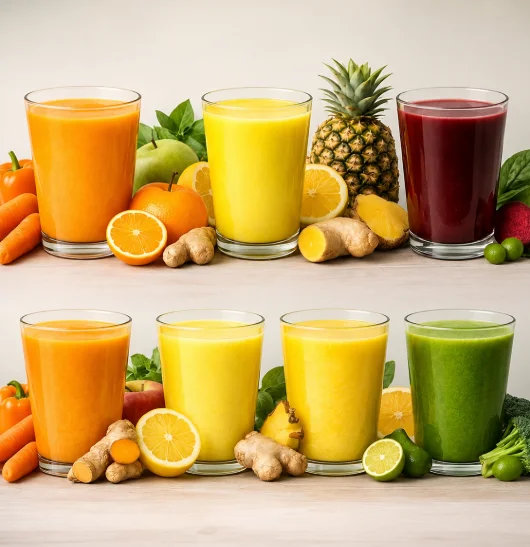
Homemade juice can be a convenient way to enjoy fruits and vegetables, but it’s best considered one part of a varied eating pattern.
Different ingredients provide different nutrients.
For example:
- Oranges provide vitamin C.
- Carrots provide beta-carotene.
- Beets contain naturally occurring nitrates.
- Watermelon provides water and potassium.
- Apples provide natural carbohydrates and plant compounds.
- Cucumber contributes water and small amounts of vitamins and minerals.
- Ginger provides flavor and has been studied for certain digestive and nausea-related uses.
Vitamin C is particularly important because it contributes to normal immune function and collagen production.
However, drinking juice doesn’t automatically make a diet healthy. Variety matters, and whole fruits and vegetables remain important sources of fiber and other nutrients.
How Often Should You Drink Homemade Juice?
There isn’t one universal amount that everyone needs.
Think of homemade juice as a beverage that complements meals and snacks rather than something that needs to replace whole foods.
If you’re making fruit-heavy juice, remember that it can be easy to consume several pieces of fruit in one glass.
That’s another reason to include whole fruits and vegetables throughout the day as well.
The Dietary Guidelines note that 100% fruit juice can fit into a healthy dietary pattern, but whole fruit should make up most fruit intake.
Tips for Better Homemade Juice
Use chilled ingredients
Cold produce creates a naturally refreshing drink without requiring a lot of ice.
Drink it soon after making it
Fresh juice generally tastes best soon after preparation.
Don’t add unnecessary sugar
Fruit already provides natural sweetness.
If a juice tastes too tart, adjust the fruit-to-vegetable ratio instead of automatically adding sugar.
Experiment with herbs
Mint, basil, and parsley can completely change the flavor of a simple juice.
Use citrus to brighten earthy vegetables
Lemon and lime work particularly well with beetroot, cucumber, celery, and leafy greens.
Keep the pulp when appropriate
If you are blending rather than juicing, consider keeping the pulp instead of straining it out.
This gives the drink a thicker texture and preserves more of the natural fiber.
Healthy Juice Recipe Combinations to Try
Once you’ve made the six recipes above, you can experiment with your own combinations.
Carrot + Orange + Ginger
Sweet, bright, and gently spicy.
Beetroot + Apple + Lemon
Earthy, sweet, and tart.
Cucumber + Green Apple + Lime
Light, crisp, and refreshing.
Watermelon + Mint + Lime
Cool and perfect for warm weather.
Pineapple + Carrot + Turmeric
Tropical, sweet, and aromatic.
Apple + Ginger + Lemon
Fresh, warming, and simple.
How to Store Homemade Juice
Fresh juice is best enjoyed soon after preparation.
If you need to refrigerate it, transfer it to a clean, covered container and keep it cold.
Avoid leaving fresh juice sitting at room temperature for long periods.
For the best flavor and freshness, make only as much as you expect to drink.
For readers who want reliable nutrition information, you can naturally link to the NIH Office of Dietary Supplements Vitamin C guide when discussing vitamin C and immune function.
Common Mistakes When Making Juice
Adding too much ginger
A little ginger can add wonderful warmth. Too much can overpower everything else.
Using too many sweet fruits
Combining several very sweet fruits can make the drink taste heavy.
Balance them with cucumber, celery, lemon, or other vegetables.
Removing all the pulp automatically
If you’re blending, consider keeping the pulp if you enjoy a thicker texture and want more of the produce’s natural fiber.
Treating juice as a meal replacement
Juice can be part of a meal or snack, but it doesn’t provide the same combination of fiber, protein, fats, and other nutrients as a complete meal.
Making exaggerated health claims
A homemade juice can provide nutrients, but no single drink should be presented as a cure or treatment for a medical condition.
Can You Add Protein to Juice?
The original recipe suggests adding chia seeds, protein powder, or Greek yogurt.
There’s an important distinction here: once you add these ingredients, you’re moving away from a traditional clear juice and toward a smoothie or blended drink.
That’s not a bad thing at all.
In fact, blending fruit with Greek yogurt, for example, creates a thicker drink with protein.
You can also blend fruit with chia seeds for a more substantial beverage.
For the best texture, use a blender rather than a juicer for these additions.
Why These Recipes Are Great for Beginners
You don’t need an extensive collection of ingredients to start making homemade juice.
Each recipe uses only a few main ingredients, making it easy to understand how different flavors work together.
If you’re new to juicing, start with combinations you already enjoy.
For example, if you like orange juice, try adding carrot and a little ginger.
If you enjoy watermelon, add mint and lime.
If you like apples, combine them with ginger or lemon.
Once you understand which flavors you enjoy, you can experiment with more unusual combinations.
Frequently Asked Questions
What is the healthiest juice to drink?
Continue on the next page