
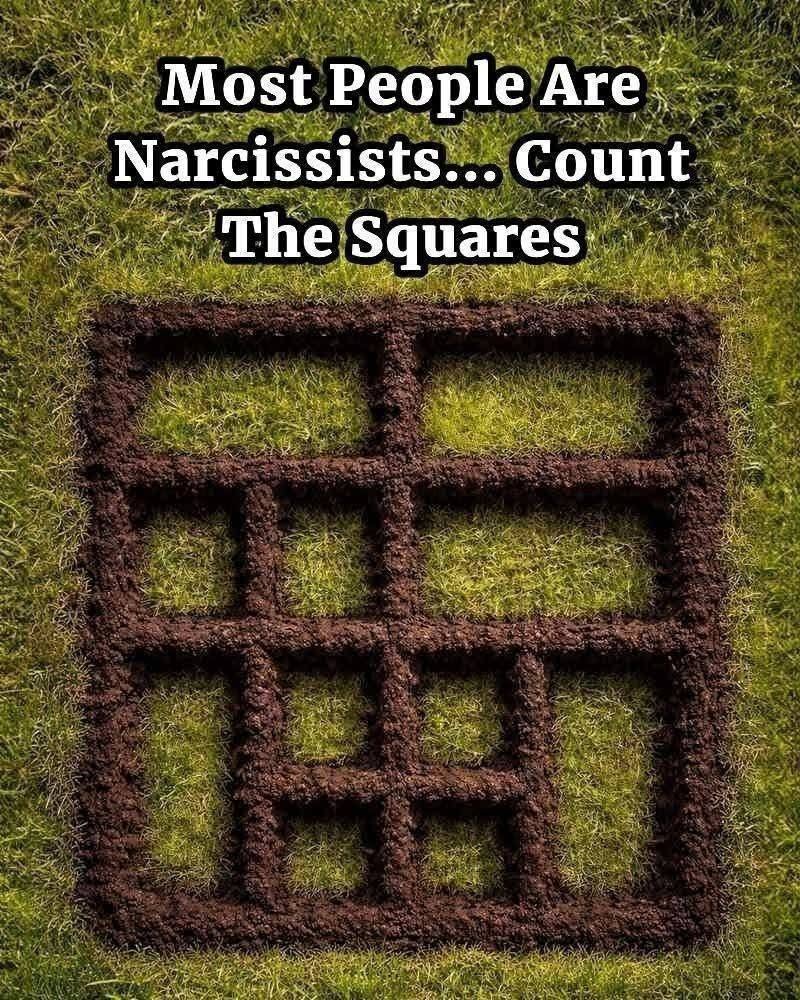
What Is a Count the Squares Puzzle?
A count the squares puzzle is a visual challenge in which the goal is to determine how many squares are contained within a larger geometric drawing.
The squares can appear in different sizes.
Some may be small and easy to see.
Others may be created by combining several smaller areas.
The challenge becomes more difficult when the diagram contains overlapping lines, incomplete internal sections, or different-sized rectangles.
The basic rule is simple:
A square must have four equal sides and four right angles.
However, when looking at a complex diagram, identifying every possible square can be surprisingly difficult.
That is because our eyes naturally focus on the most obvious shapes first.
We see a small square.
We count it.
Then we move on.
But a larger square may use the same lines together with additional boundaries.
That is where many answers go wrong.
Why This Square Puzzle Is Tricky
The image appears to contain a collection of simple sections.
At first glance, you may want to count the visible boxes one by one.
But a count the squares puzzle often requires a different approach.
Instead of asking:
“How many little boxes do I see?”
you should ask:
“How many different combinations of lines can create a square?”
That change in perspective makes a major difference.
For example, imagine a diagram containing four small squares arranged in a larger square.
You would have the four individual squares.
But you would also have the large square surrounding all four.
So the total is greater than four.
The same principle applies to more complicated diagrams.
Start With the Largest Shape
The easiest way to begin solving this puzzle is to start with the outside.
Look at the large outer border.
If the entire outside shape has four equal sides and four right angles, it counts as one square.
This is important because people sometimes become so focused on the smaller shapes that they forget to count the largest one.
Whenever you solve a geometric puzzle, start from the outside and work inward.
This creates a systematic process and reduces the chance of missing an obvious shape.