
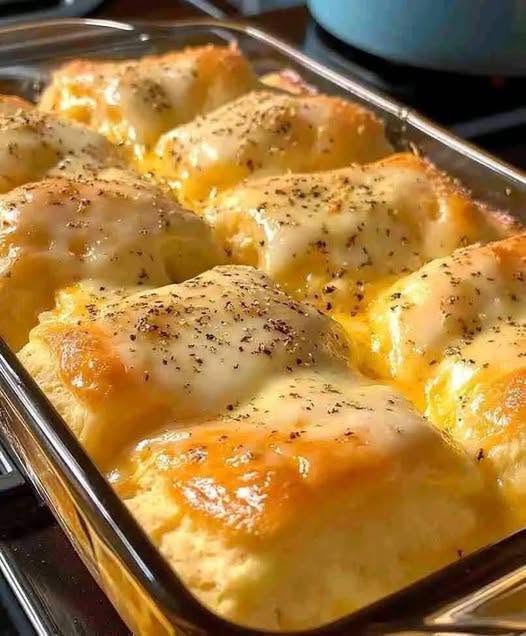
How to Make Cheesy Garlic Dinner Rolls
1. Mix the Dough
In a large mixing bowl, whisk together the flour, instant yeast, sugar, and salt. In another bowl or measuring jug, combine the warm milk, egg, and 3 tablespoons melted butter.
Pour the wet mixture into the flour. Stir with a sturdy spoon until a shaggy dough forms and no large pockets of dry flour remain. It may look uneven at first; kneading will bring it together.
If there is loose flour at the bottom of the bowl, give it another minute of mixing before adding extra liquid. If the dough is so sticky that you cannot lift it from the bowl, dust your hands and the work surface lightly with flour. Add flour cautiously: a soft dough is what gives the baked rolls their tender texture.
2. Knead Until Smooth
Turn the dough onto a lightly floured surface. Knead for about 8–10 minutes, pushing it away with the heel of your hand, folding it back, and turning it regularly. It should become smoother and more elastic.
You can also use a stand mixer fitted with a dough hook for approximately 5–7 minutes on a low speed, stopping to check the dough. It should gather around the hook while remaining soft to the touch.
You do not need to knead until the dough feels dry. A little tackiness is normal. If it clings heavily to your fingers, dust with a small amount of flour and continue kneading.
3. Let the Dough Rise
Shape the dough into a ball. Place it in a lightly greased bowl, cover it, and let it rise in a comfortably warm place until noticeably puffy and roughly doubled. This commonly takes 60–90 minutes, but a cool kitchen may take longer.
Watch the dough rather than treating the clock as the only test. Yeast activity changes with temperature. King Arthur Baking’s guide to where bread dough should rise explains why a comfortably warm, steady environment helps dough rise predictably.
While the dough rises, cut the filling mozzarella into 12 cubes and lightly grease a 9 × 13-inch baking dish.
4. Divide and Fill the Rolls
Transfer the risen dough to a clean work surface. Gently press out some of the air and divide it into 12 approximately equal pieces. For especially even rolls, weigh the dough and divide its total weight by 12.
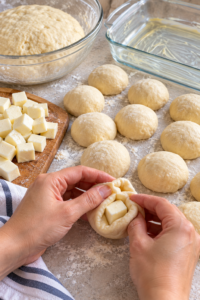
Flatten one piece into a small round. Put a mozzarella cube in the center. Bring the dough edges together over the cheese and pinch them firmly shut. Turn the piece seam-side down and cup your hand around it, gently moving it against the work surface to make a rounded roll.
Repeat with the remaining dough and cheese. Take an extra second to check each seam. An opening at the bottom gives melted cheese a place to escape during baking.
Arrange the rolls in the prepared dish in three rows of four. Leave small spaces between them; they will expand during the second rise.
5. Let the Shaped Rolls Rise
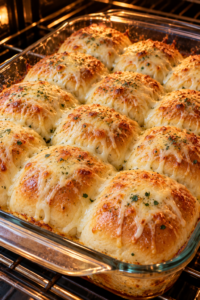
Cover the dish loosely and let the rolls rise for approximately 30–50 minutes, until puffy and beginning to touch. They do not need to double dramatically.
Toward the end of this rise, heat the oven to 375°F (190°C). If using a glass baking dish, place it on a dry, room-temperature surface while the oven preheats, and follow the dish manufacturer’s instructions about temperature changes.
These cheesy garlic dinner rolls should look soft and expanded before they go into the oven. Under-risen rolls may bake up dense; letting them sit far too long can make them difficult to handle. A gentle finger press should leave a slight indentation that slowly begins to recover.
6. Bake, Then Add the Cheese Topping
Bake the rolls for 15 minutes. Their tops should be setting and beginning to color, though they will not be finished.
Carefully remove the dish from the oven. Scatter the shredded mozzarella over the tops, concentrating a little on each roll. Add the optional Parmesan. Return the dish to the oven and bake for another 8–13 minutes, until the bread is golden and the cheese is melted with a few browned spots.
The exact finish time depends on your oven and how closely the rolls are packed. Check a center roll: its exposed bread should look baked rather than wet or doughy. If using a thermometer, insert it into a bread section away from the molten cheese; around 190°F (88°C) is a useful doneness benchmark for many yeast rolls. King Arthur Baking also notes that closely arranged pull-apart rolls can take longer than separated rolls.
If the cheese browns before the bread is ready, loosely cover the dish with foil for the remaining baking time.
7. Finish with Garlic Butter
As the rolls finish baking, melt the remaining 2 tablespoons butter in a small saucepan over low heat. Add the minced garlic and stir gently for about 30–60 seconds, just until fragrant. Do not let it brown deeply. Take the pan off the heat and stir in the parsley or dried herbs. Add a small pinch of salt only if needed.
Brush the garlic butter over the hot rolls immediately after they come out of the oven. Let them rest in the dish for 5–10 minutes before pulling them apart. The cheese inside will be very hot, so give the first roll a moment to cool before eating.
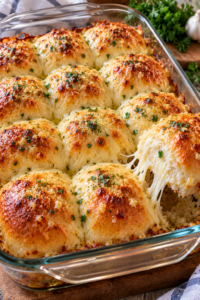
How to Get Soft Rolls and Melted Cheese
Good cheesy garlic dinner rolls need both properly risen dough and a cheese filling that stays inside. Neither part is complicated, but each benefits from a little care.
For the dough, measure flour conservatively and knead until smooth. The dough should feel supple. If you keep adding flour just to make it completely nonsticky, the baked crumb may lose the softness you wanted.
For the filling, use a modest cube rather than trying to pack in as much cheese as possible. A small cube melts inside the roll; an oversized piece makes sealing difficult and may burst through the dough. Pinch the seam closed before placing each roll in the dish.
For the topping, wait until the bread has had its first 15 minutes in the oven. Cheese added at the very beginning may brown long before the center rolls are baked. Adding it partway through produces a softer melted surface.