
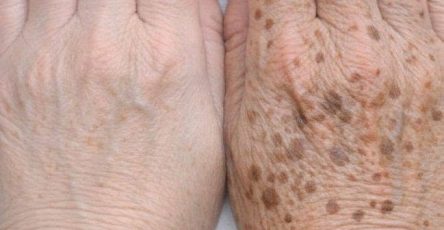
Warning Signs That Need Medical Attention
Arrange a professional skin examination if a spot:
- Appears suddenly or looks different from your other spots
- Changes in size, colour, shape, or texture
- Has an irregular or poorly defined border
- Contains several colours
- Becomes raised after previously being flat
- Bleeds, crusts, itches, or becomes painful
- Does not heal
- Grows rapidly
- Looks like an unusual dark streak beneath a nail
The National Cancer Institute recommends remembering the ABCDE rule when evaluating a pigmented lesion:
- A — Asymmetry: One half does not resemble the other.
- B — Border: The edges appear irregular, ragged, notched, or blurred.
- C — Colour: The colour is uneven or contains several different shades.
- D — Diameter: The lesion may be larger than approximately 6 millimetres, although suspicious lesions can be smaller.
- E — Evolving: The spot changes in size, colour, shape, elevation, or symptoms.
- The National Cancer Institute provides detailed guidance about the ABCDE warning signs of melanoma. Any spot that changes in size, shape, colour, or symptoms should be examined by a qualified healthcare professional.
These signs do not automatically mean a person has melanoma, but they are reasons to seek a professional examination.
How a Dermatologist Diagnoses Age Spots
A dermatologist normally begins by asking when the marks appeared and whether they have changed. The examination may include:
- Looking at the spot under good lighting
- Comparing it with other marks on the skin
- Examining it with a dermatoscope
- Checking its border, pigmentation, symmetry, and texture
- Taking a small skin sample if the diagnosis remains uncertain
This evaluation is particularly important before cosmetic treatment. Lightening a suspicious mark without identifying it could delay an appropriate diagnosis or make future visual assessment more difficult.
Can Age Spots on Hands Be Removed?
Age spots can often be faded significantly, although no responsible treatment can promise permanent removal. Continued sun exposure can darken treated areas and encourage new marks to develop.
Treatment falls into two general categories:
- Topical products that gradually reduce pigmentation
- Professional procedures that target the pigmented cells or remove superficial skin layers
Results depend on skin tone, the number and depth of the spots, the chosen treatment, and how carefully the hands are protected from sunlight afterward.
Seven Safe Ways to Fade Age Spots on Hands
1. Daily Broad-Spectrum Sunscreen
Sunscreen does not instantly erase existing age spots, but it is the foundation of a sensible treatment plan. Without adequate protection, the marks may darken and new ones can develop.
Choose a sunscreen that offers:
- Broad-spectrum UVA and UVB protection
- SPF 30 or higher
- Water resistance when swimming or sweating
Apply it generously to the backs of the hands before going outdoors. Reapply after washing your hands, swimming, heavy sweating, or prolonged exposure.
Do not forget sun exposure through car windows. UVA radiation can contribute to skin ageing, making hand protection particularly important for people who drive regularly.
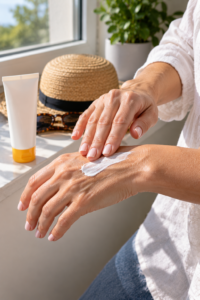
Image 1 placement: Put the preparation or prevention image here, immediately after this sunscreen section and before the next treatment.
2. Dermatologist-Recommended Topical Treatments
A dermatologist may recommend or prescribe a topical treatment based on the type of pigmentation and the person’s skin tone. Possible ingredients can include retinoids, azelaic acid, vitamin C, glycolic acid, kojic acid, or prescription pigment-reducing medicine.
These products work gradually. Depending on the formula, meaningful improvement may take several weeks or months.
More is not necessarily better. Overusing acids or combining several strong products can cause irritation, inflammation, peeling, and post-inflammatory hyperpigmentation. That can make dark marks more noticeable, especially in deeper skin tones.
Patch-test a new cosmetic product and discontinue it if it causes significant burning, swelling, blistering, or persistent irritation.
3. Cryotherapy
Cryotherapy uses a very cold substance, usually liquid nitrogen, to treat a specific pigmented area. The treated skin may form a blister or crust before healing.
This procedure can work well for selected spots, but possible side effects include temporary irritation and permanent lightening or darkening of the skin. The risk of pigment change can be more relevant for people with medium or deep skin tones.
Cryotherapy should be performed only after the mark has been correctly identified.
4. Laser or Light-Based Treatment
Certain laser and intense pulsed light treatments can target excess pigment. Some people notice improvement after one or two sessions, while others require a series of treatments.
The appropriate device and settings depend on skin colour and the nature of the spots. Poorly selected treatment can cause burns, scars, or changes in pigmentation.
Choose a board-certified dermatologist or another appropriately qualified clinician with experience treating your skin tone.
5. Chemical Peels
A chemical peel applies a controlled chemical solution to remove superficial skin layers and encourage renewal. Light peels may gradually improve mild discolouration, while stronger peels involve more recovery time and greater risk.
Possible side effects include redness, peeling, irritation, infection, scarring, and unwanted pigment changes. Professional assessment is important because the hands may heal differently from the face.
6. Microdermabrasion
Microdermabrasion gently removes part of the outermost skin layer. It may help with mild surface pigmentation, particularly when used as part of a broader dermatologist-directed treatment plan.
It generally produces subtler results than some laser procedures. Several sessions may be required, and sun protection remains essential afterward.
7. Consistent Hand-Care Habits
Healthy skin is better able to tolerate an appropriate treatment routine. Use a mild cleanser and apply a fragrance-free moisturiser after washing. This does not remove age spots directly, but it can reduce dryness and irritation.
Wear protective gloves when cleaning, gardening, or using irritating household products. When outdoors for long periods, consider UV-protective gloves in addition to sunscreen.