
Some recipes stay with a family not because they are fancy or expensive, but because they are simple, dependable, and comforting.
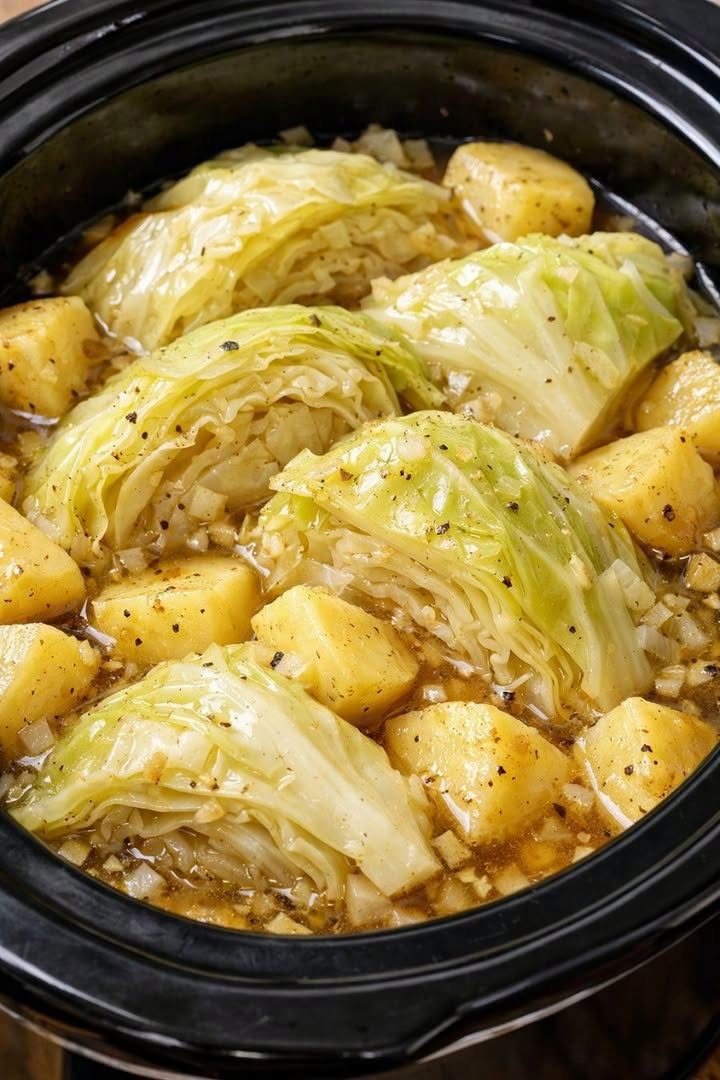
This slow cooker cabbage and potatoes recipe is exactly that kind of meal.
Made with just four basic ingredients, it transforms humble cabbage and potatoes into a warm, tender dish that feels surprisingly satisfying. It is inexpensive, easy to prepare, and requires very little hands-on work, making it an excellent choice for busy evenings or days when you simply don’t feel like standing over the stove.
For generations, dishes built around cabbage and potatoes have been valued because both ingredients are affordable, filling, widely available, and capable of feeding several people without requiring an expensive grocery list.
And when they are cooked slowly together with broth and a little oil, something wonderful happens.
The cabbage softens and develops a mild sweetness, while the potatoes absorb the savory cooking liquid and become tender and creamy inside.
It’s uncomplicated comfort food at its best.
Why Cabbage and Potatoes Have Been Kitchen Staples for Generations
Long before convenience foods filled supermarket shelves, families relied heavily on ingredients that were affordable, easy to store, and versatile.
Potatoes were particularly valuable because they could turn a modest meal into something filling. Cabbage was another practical choice because it could be cooked in many different ways and paired well with other inexpensive ingredients.
Together, they became the foundation of countless traditional dishes.
Different versions can be found across European and North American cooking traditions. Some families added sausage or ham when they had it. Others used butter, onions, herbs, or whatever seasonings were available.
But the basic combination didn’t need much.
That’s part of what makes this recipe so appealing today.
At a time when ingredient lists can become surprisingly long, returning to a meal built around four basic ingredients feels refreshingly simple.
Why the Slow Cooker Works So Well
Don’t miss the rest of the recipe—continue on the next page.
Cabbage and potatoes both respond beautifully to slow, moist cooking.
The slow cooker maintains a relatively gentle cooking environment over several hours. During that time, the cabbage gradually softens while the potatoes cook until fork-tender.
The broth helps provide moisture and flavor throughout the cooking process.
Instead of constantly stirring a pot on the stove, you can assemble everything in the morning or early afternoon, turn on the slow cooker, and largely leave it alone.
By dinnertime, the vegetables should be tender and ready to serve.
It’s particularly convenient for anyone who enjoys home-cooked meals but doesn’t want to spend an hour actively preparing dinner.
Is This Recipe Nutritious?
Despite its simplicity, cabbage and potatoes provide several useful nutrients.
Cabbage is naturally low in calories and provides vitamin C, vitamin K, fiber, and other plant compounds.
Potatoes provide carbohydrates for energy as well as potassium, vitamin C, vitamin B6, and some fiber, particularly when the skins are left on.
Using a moderate amount of oil adds fat, which contributes flavor and helps make the dish more satisfying.
However, it’s important not to exaggerate what any single recipe can do.
Cabbage and potatoes can certainly be part of a nutritious, balanced diet, but this meal shouldn’t be described as preventing cancer, treating circulation problems, preventing strokes, or eliminating unexplained skin changes.
No single food can guarantee those outcomes.
Nutrition works through overall dietary patterns rather than one supposedly miraculous ingredient.
The Four Core Ingredients
One of the best things about this recipe is the short shopping list.
1. Green Cabbage
You’ll need:
1 large head of green cabbage
Remove any damaged outer leaves, cut out the hard core, and slice the cabbage into approximately 6 to 8 wedges.
Keeping the pieces relatively large helps them maintain more structure during the long cooking process.
You can make the wedges smaller if you prefer very soft cabbage.
2. Baby Yukon Gold Potatoes
You’ll need:
1½ pounds baby Yukon Gold potatoes
Wash and scrub them thoroughly, then cut larger potatoes in half.
There’s generally no need to peel Yukon Gold potatoes for this recipe unless you prefer them without the skin.
Leaving the skins on saves preparation time and preserves some of the potato’s fiber.
If Yukon Gold potatoes aren’t available, other waxy or all-purpose potatoes can work as well. Just try to cut them into similarly sized pieces so they cook evenly.
3. Broth
You’ll need:
1 cup low-sodium chicken or vegetable broth
Chicken broth gives the vegetables a savory background flavor, while vegetable broth keeps the recipe meat-free.
Using a lower-sodium broth also gives you greater control over the final seasoning.
You can always add a little salt at the table if needed.
4. Oil
You’ll need:
2 tablespoons avocado oil or olive oil
Either works well.
There’s no need to use a specialty oil if you already have olive oil in the kitchen.
The oil adds richness to an otherwise very lean combination of vegetables and broth.
Optional Seasoning
Although the core recipe contains four main ingredients, a little seasoning makes a noticeable difference.
Try:
½ teaspoon freshly ground black pepper
You can also season lightly with salt according to taste and dietary needs.
Garlic powder, onion powder, dried thyme, paprika, dill, or parsley are optional additions if you want more flavor.
Slow Cooker Cabbage and Potatoes
Ingredients
Don’t miss the rest of the recipe—continue on the next page.
- 1 large green cabbage, cored and cut into wedges
- 1½ pounds baby Yukon Gold potatoes, scrubbed and halved if necessary
- 1 cup low-sodium chicken or vegetable broth
- 2 tablespoons avocado oil or olive oil
- ½ teaspoon freshly ground black pepper
- Salt to taste, optional
That’s it.
Four main ingredients turn into a comforting family-style dish with very little preparation.
Step 1: Prepare the Cabbage
Remove loose or damaged outer leaves from the cabbage.
Rinse the cabbage and cut it into quarters.
Remove the tough core from each section, then cut the cabbage into approximately 6 to 8 large wedges.
Arrange the cabbage inside the slow cooker.
Don’t worry if the slow cooker initially looks quite full. Cabbage loses volume considerably as it cooks.
Step 2: Prepare the Potatoes
Wash the potatoes thoroughly.
Small baby potatoes can remain whole, while larger ones should be halved or quartered.
The goal is to keep the pieces relatively similar in size so they finish cooking at roughly the same time.
Arrange the potatoes over and around the cabbage.
Step 3: Add the Oil and Seasoning
Drizzle the oil evenly over the vegetables.
Sprinkle with freshly ground black pepper.
If you’re using additional seasonings such as garlic powder, thyme, or paprika, add them now.
You can add salt before cooking, but remember that broth may already contain sodium.
It’s often easier to taste the finished dish and adjust the salt before serving.
Step 4: Add the Broth
Pour one cup of broth around the vegetables.
You don’t need to completely cover them.
The slow cooker traps moisture during cooking, and the cabbage itself releases additional liquid as it softens.
Using too much broth can turn the dish into more of a soup.
Step 5: Cook Until Tender
Cover the slow cooker.
Cook on LOW for approximately 6 to 7 hours, or until the potatoes are easily pierced with a fork and the cabbage has reached your preferred tenderness.
Slow cookers vary in temperature and efficiency, so cooking times aren’t perfectly universal.
Start checking toward the earlier end of the suggested cooking range if your slow cooker tends to run hot.
The dish can also potentially be prepared on HIGH when you’re short on time, but cooking on LOW generally makes timing easier for a hands-off meal.
Step 6: Taste Before Serving
Once everything is tender, gently stir or rearrange the vegetables so they are coated with some of the cooking liquid.
Taste the broth and vegetables.
Add additional pepper or a small amount of salt if necessary.
Then serve while warm.
Don’t Overcook the Potatoes
Don’t miss the rest of the recipe—continue on the next page.
One of the few things that can go wrong with this recipe is cooking the potatoes far beyond the point of tenderness.
You want them soft enough to pierce easily with a fork but not so soft that they completely collapse when served.
Potato varieties behave differently during long cooking.
Waxy potatoes generally hold their shape better than very starchy potatoes, making Yukon Gold or similar varieties convenient choices.
Try Not to Open the Lid Constantly
It’s tempting to check a slow cooker repeatedly, especially when the kitchen begins smelling good.
But every time the lid is removed, some accumulated heat and steam escape.
You don’t have to completely avoid checking your food, but there’s no reason to open the slow cooker repeatedly during the first several hours.
Allow it to do its job.
Easy Ways to Add More Flavor
The basic version is deliberately simple, but that doesn’t mean you can’t customize it.
For additional savory flavor, try adding sliced onion or minced garlic.
For a slightly smoky flavor, smoked paprika works beautifully.
Fresh dill or parsley can brighten the finished vegetables.
A little whole-grain mustard served on the side adds acidity and sharpness that contrasts nicely with the mild potatoes.
And if you enjoy heat, red pepper flakes can give the dish a gentle kick.
These additions aren’t necessary, though.
The appeal of the original recipe is its simplicity.
Want to Add Meat?
You can turn cabbage and potatoes into a more substantial one-pot dinner by adding an appropriate protein.
Cooked ham or properly cooked smoked sausage pairs naturally with both vegetables.
If adding meat, make sure it is handled and cooked safely according to the specific product being used.
You may also want to reduce added salt because processed meats can already contain significant sodium.
For a meat-free meal, keep the vegetable broth version and serve the cabbage and potatoes alongside beans, lentils, or another source of protein.
What to Serve With Cabbage and Potatoes
This dish can be served as a side or incorporated into a larger meal.
For an easy dinner, pair it with roasted chicken, fish, beans, lentils, or another protein.
You can also serve it with crusty bread to soak up some of the flavorful broth.
For toppings, consider:
- Fresh parsley or dill
- Chopped chives
- Whole-grain mustard
- Plain Greek yogurt or sour cream
- Freshly ground black pepper
- A small drizzle of olive oil
- Red pepper flakes
A splash of vinegar or squeeze of lemon can also add brightness to the finished dish.
Can You Add Avocado?
Don’t miss the rest of the recipe—continue on the next page.
One of the few things that can go wrong with this recipe is cooking the potatoes far beyond the point of tenderness.
You want them soft enough to pierce easily with a fork but not so soft that they completely collapse when served.
Potato varieties behave differently during long cooking.
Waxy potatoes generally hold their shape better than very starchy potatoes, making Yukon Gold or similar varieties convenient choices.
Try Not to Open the Lid Constantly
It’s tempting to check a slow cooker repeatedly, especially when the kitchen begins smelling good.
But every time the lid is removed, some accumulated heat and steam escape.
You don’t have to completely avoid checking your food, but there’s no reason to open the slow cooker repeatedly during the first several hours.
Allow it to do its job.
Easy Ways to Add More Flavor
The basic version is deliberately simple, but that doesn’t mean you can’t customize it.
For additional savory flavor, try adding sliced onion or minced garlic.
For a slightly smoky flavor, smoked paprika works beautifully.
Fresh dill or parsley can brighten the finished vegetables.
A little whole-grain mustard served on the side adds acidity and sharpness that contrasts nicely with the mild potatoes.
And if you enjoy heat, red pepper flakes can give the dish a gentle kick.
These additions aren’t necessary, though.
The appeal of the original recipe is its simplicity.
Want to Add Meat?
You can turn cabbage and potatoes into a more substantial one-pot dinner by adding an appropriate protein.
Cooked ham or properly cooked smoked sausage pairs naturally with both vegetables.
If adding meat, make sure it is handled and cooked safely according to the specific product being used.
You may also want to reduce added salt because processed meats can already contain significant sodium.
For a meat-free meal, keep the vegetable broth version and serve the cabbage and potatoes alongside beans, lentils, or another source of protein.
What to Serve With Cabbage and Potatoes
This dish can be served as a side or incorporated into a larger meal.
For an easy dinner, pair it with roasted chicken, fish, beans, lentils, or another protein.
You can also serve it with crusty bread to soak up some of the flavorful broth.
For toppings, consider:
- Fresh parsley or dill
- Chopped chives
- Whole-grain mustard
- Plain Greek yogurt or sour cream
- Freshly ground black pepper
- A small drizzle of olive oil
- Red pepper flakes
A splash of vinegar or squeeze of lemon can also add brightness to the finished dish.
Can You Add Avocado?
Don’t miss the rest of the recipe—continue on the next page.