
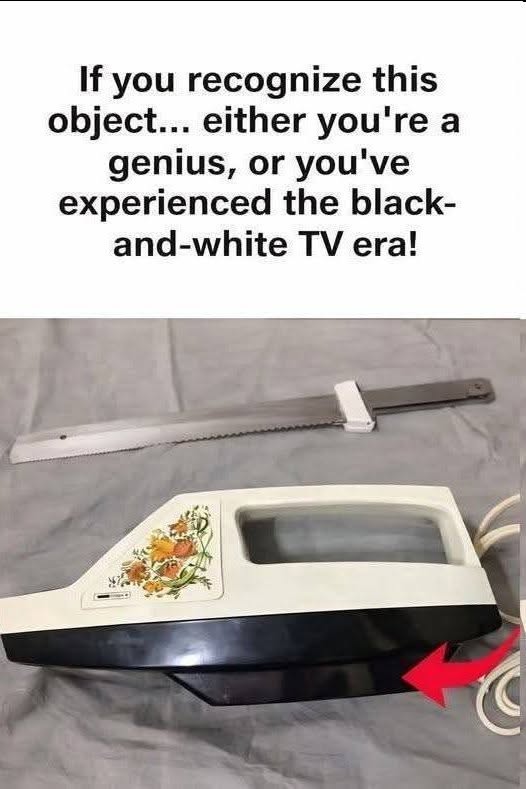
How to Clean an Electric Carving Knife
Cleaning instructions vary between models, so the original manual should take priority. The general process is:
- Turn off and unplug the appliance.
- Press the blade-release control.
- Remove the blades using their safe gripping area.
- Separate the blades if the design permits.
- Wash the removable blades with warm water and dish soap.
- Dry them thoroughly to prevent corrosion.
- Wipe the motor housing with a lightly damp cloth.
- Never submerge the motorized handle.
- Reassemble or store only when every component is dry.
Older blades may not be dishwasher-safe. Hand washing is the safer choice when the manufacturer’s instructions are unavailable.
How Was It Different From a Manual Carving Knife?
A traditional carving knife uses one fixed blade. The cook must create every slicing movement manually and maintain steady pressure.
An electric knife uses a motor to move its blades. This reduces physical effort and can make repeated slicing faster.
However, a sharp manual carving knife provides greater precision for many experienced cooks. It is also quieter, easier to clean, and does not require electricity.
The electric version is particularly helpful when cutting a large quantity of similar slices or working with foods that require repetitive sawing.
Why Did Some Families Stop Using Them?
Several factors reduced the popularity of the Vintage Electric Carving Knife:
- It required assembly and cleaning.
- The motor could be noisy.
- It occupied additional storage space.
- Better manual knives became widely available.
- Many households used it only during holidays.
- Older cords and motors eventually wore out.
- Some users preferred the control of a traditional knife.
Even so, many families kept these appliances for decades because they were durable and associated with memorable holiday meals.
Is It Collectible?
Certain older electric knives can interest collectors of vintage kitchenware, especially if they include:
- The original box
- Both cutting blades
- Blade guards
- Storage case
- Instruction manual
- Warranty card
- Advertising booklet
- An unusual color or decorative pattern
- A clearly identified manufacturer and model number
Condition strongly affects collectibility. An intact appliance can still have decorative or historical value even when it is no longer safe to operate.
Do not test an unidentified antique electrical appliance merely to determine whether it works. Inspect it first and consider professional electrical evaluation.
Frequently Asked Questions
What is the object in the photo?
It is a corded electric carving knife with a detachable serrated blade assembly.
Is it really from the black-and-white television era?
The style is associated with mid-to-late twentieth-century household appliances. However, an exact manufacturing date cannot be confirmed without seeing the brand, model number, label, or original packaging.
Why are there two blades?
The two blades move rapidly in opposite directions, producing the sawing action used to slice food.
Can it cut bones?
A standard kitchen electric knife is not intended to cut bones unless its manufacturer explicitly states otherwise. Attempting it can damage the blades, motor, or appliance and may cause injury.
Can it be used for bread?
Many electric carving knives were designed to slice both cooked meat and bread. Confirm the permitted uses in the model’s original instructions.
Can I wash the handle?
The motorized handle should not be submerged in water. It is normally wiped with a damp cloth after being unplugged.
Are replacement blades still available?
Replacement blades may exist for some brands, but compatibility must be confirmed with the exact model number. Similar-looking blades are not necessarily interchangeable.
Should I use the old knife shown in the photo?
Only after checking its cord, plug, housing, switch, blade attachment, and overall electrical condition. If the appliance has damage or no longer operates normally, do not use it.
Conclusion
The mystery object is a Vintage Electric Carving Knife, an appliance once closely associated with holiday roasts, family dinners, and modern household convenience.
Its small motor moves two serrated blades back and forth, allowing the user to slice turkey, ham, roast beef, and bread with less manual effort. Its decorative plastic housing and corded design make it instantly recognizable to people who remember mid-century and late-twentieth-century kitchens.
An old electric knife can be an interesting collectible, but electrical and blade safety must come before nostalgia. Inspect vintage equipment carefully and never operate a damaged appliance.