
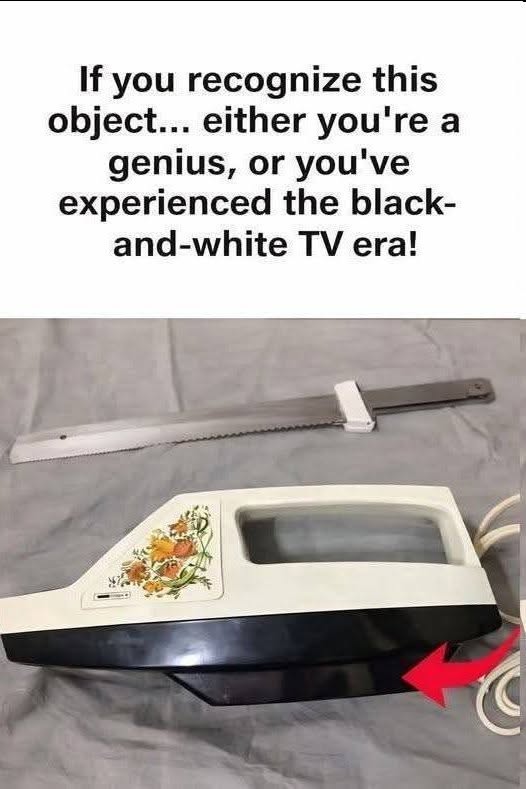
Why Did Electric Carving Knives Become Popular?
Electric kitchen appliances represented convenience and modern living during the middle decades of the twentieth century. Families were purchasing electric mixers, can openers, coffee makers, skillets, and other labor-saving devices.
The electric knife fit perfectly into that trend. It promised faster carving, consistent slices, and less physical effort.
Historical kitchen documents preserved by the Smithsonian include Hamilton Beach promotional material titled The Electric Knife Way to Better Carving. A Smithsonian collection record dates related material to the 1960s, demonstrating how these appliances were marketed to home cooks during that period. You can view the Smithsonian electric-knife archival record.
The floral decoration on the appliance in the photo is also characteristic of an era when kitchen equipment was often designed to coordinate with household décor.
Historical kitchen documents preserved by the Smithsonian include promotional material titled The Electric Knife Way to Better Carving, showing how electric carving knives were marketed to home cooks. Explore the Smithsonian electric carving knife archive for more historical information.
Seven Surprising Facts About the Vintage Electric Carving Knife
1. It Uses Two Blades
What appears to be a single thick blade is usually a pair of thin, serrated blades attached together. They slide against each other when the motor runs.
2. The Blades Are Removable
The blades can normally be removed for cleaning. Older models often have a release button or lever near the front of the handle.
The appliance must always be unplugged before installing or removing the blades.
3. It Was a Holiday Appliance
Many families did not use their electric knife every day. It often remained stored in its box until Thanksgiving, Christmas, or another large family meal.
4. It Helped People With Limited Hand Strength
Because the motor creates the sawing movement, the user does not need to apply as much force. This made electric knives appealing to some people with reduced hand or wrist strength.
However, anyone with limited coordination should only operate a sharp electrical appliance when they can do so safely.
5. It Could Slice Soft Bread
The rapid motion allowed certain electric knives to pass through soft bread without compressing the loaf as much as a dull manual knife might.
6. Many Models Had Decorative Designs
Older models were frequently made in cream, beige, brown, avocado green, or harvest gold. Floral patterns and decorative panels helped the appliances blend into kitchens of the period.
7. Electric Knives Still Exist
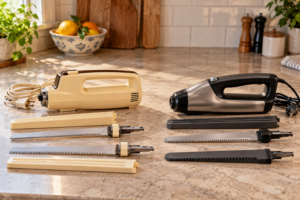
The technology did not disappear. Modern electric knives are generally lighter and may have ergonomic handles, safety locks, storage cases, or cordless batteries.
Why Do the Blades Look Like a Small Saw?
The teeth along the blade help grip the food and concentrate the cutting action. Smooth blades would be more likely to slide across a tough surface.
The blade resembles a saw because the motor creates a similar back-and-forth movement. However, it is designed for food preparation and should never be treated as a workshop tool.
A carving knife should only be used for the foods and purposes listed by its manufacturer.
Is an Old Electric Carving Knife Still Safe to Use?
Age alone does not prove that an appliance is unsafe, but a Vintage Electric Carving Knife must be inspected carefully before use.
Check the following components:
- Power cord
- Plug
- Handle and housing
- Blade-release mechanism
- On-and-off switch
- Blade connection
- Serrated edges
- Signs of corrosion
- Unusual sounds or odors
Do not plug in an old appliance if the cord is cracked, stiff, frayed, repaired with tape, or separated from the handle. Stop using it if the motor sparks, overheats, smells burned, or operates inconsistently.
General electrical-safety guidance recommends inspecting appliances and following their original instructions. An appliance with visible damage should be examined by a qualified repair professional or retired from service.
Essential Safety Rules
Unplug It Before Touching the Blades
Never insert, remove, adjust, or clean the blades while the appliance is connected to electricity.
Hold the Blades by Their Safe Area
Some blades have a designated plastic grip or dull section for installation. Avoid touching the serrated edges.
Keep Fingers Away From the Cutting Path
Secure the food with a carving fork positioned away from the blade. Never hold small food directly beneath the cutting edge.
Use a Stable Cutting Board
Place the food on a dry, stable board that will not slide across the counter.
Keep the Cord Away From the Blade
Arrange the cord behind the cutting area. It should never cross beneath or in front of the knife.
Keep It Away From Water
Do not immerse the motorized handle. Clean only as directed in the original manual.
Never Allow Children to Operate It
Store the appliance and its blades where children cannot reach them.