
Common Mistakes to Avoid
Using thick, completely raw potato slices. The topping may brown while the potatoes remain firm. Slice them evenly and give them the short simmer described above.
Overmixing the meat. Mixing for too long can make the meatballs dense. Stop as soon as the egg, crumbs, and seasonings are incorporated.
Packing everything tightly. A dish filled right to the rim may bubble over, and densely packed ingredients cook less evenly. Use a dish with a little space above the sauce.
Making the sauce too thick before baking. It needs to flow between the potatoes and meatballs. If necessary, loosen it with a splash of milk before pouring.
Skipping the rest time. Straight from the oven, the sauce will be very hot and loose. Ten minutes gives it time to settle and makes serving easier.
Variations and Substitutions
Ground turkey or chicken: You can use ground poultry in place of beef, though the flavor and texture will change. Choose a blend with some fat for better moisture, and confirm the casserole reaches 165°F (74°C) in the center. FoodSafety.gov also specifies 165°F for ground poultry.
A different cheese blend: Replace part of the mozzarella with cheddar for a sharper flavor. A little Gruyère is another good choice if you want a more pronounced baked-cheese taste.
More herbs: Add chopped thyme to the meatball mixture, or finish the baked dish with parsley. Fresh herbs on top brighten a rich casserole without changing its basic character.
A lighter topping: Use less cheese if you want the potato and meatball pattern to show more clearly. The casserole will still be creamy from the sauce.
Extra vegetables: Thinly sliced, briefly cooked mushrooms can fit between some of the meatballs. Avoid adding a large amount of raw, watery vegetables: the liquid they release may dilute the sauce.
If you make a variation, keep an eye on the texture of the filling and use the center temperature, rather than the clock alone, to decide when it is ready.
What to Serve with It
This casserole is rich and filling, so simple sides work especially well. Try a green salad with a tangy vinaigrette, steamed broccoli, green beans, or roasted carrots. The fresh or lightly cooked vegetables give the plate a welcome change in texture.
For a casual dinner, bring the baking dish to the table and serve generous spoonfuls. For a more composed plate, let it rest a little longer, then lift out a meatball with several potato slices and spoon a little sauce from the dish over the top.
If your site has a simple green salad or roasted green beans article, link to it here where readers are deciding what to serve. Those links would help them finish the meal without interrupting the recipe instructions.
Make-Ahead, Storage, and Reheating
Can you prepare it ahead?
You can shape the meatballs a day ahead and keep them covered in the refrigerator. You can also mix the dry seasonings and shred the cheese ahead of time.
For the best potato texture, simmer and assemble the potatoes closer to baking time. If you assemble the whole casserole in advance, keep it refrigerated and allow for additional baking time because the dish will start cold. Check that your baking dish is suitable for going from the refrigerator into a hot oven; some glass dishes can be damaged by sudden temperature changes.
How to store leftovers
Transfer leftovers to shallow, covered containers and refrigerate promptly. Use them within 3–4 days. The USDA includes casseroles in its guidance for refrigerated leftovers and recommends prompt chilling rather than leaving a large, hot dish on the counter for an extended period.
How to reheat
Reheat a portion in the microwave or a covered oven-safe dish until it is hot throughout and reaches 165°F (74°C). A small splash of milk can help loosen the sauce if it has thickened in the refrigerator.
Can you freeze it?
Yes, although the creamy sauce and potatoes may have a softer texture after thawing. Cool the cooked casserole, divide it into portions, and freeze in suitable airtight containers. Thaw in the refrigerator when convenient, then reheat thoroughly to 165°F (74°C). Freezing individual portions makes reheating easier than freezing the entire baking dish.
Frequently Asked Questions
Do I need to brown the meatballs first?
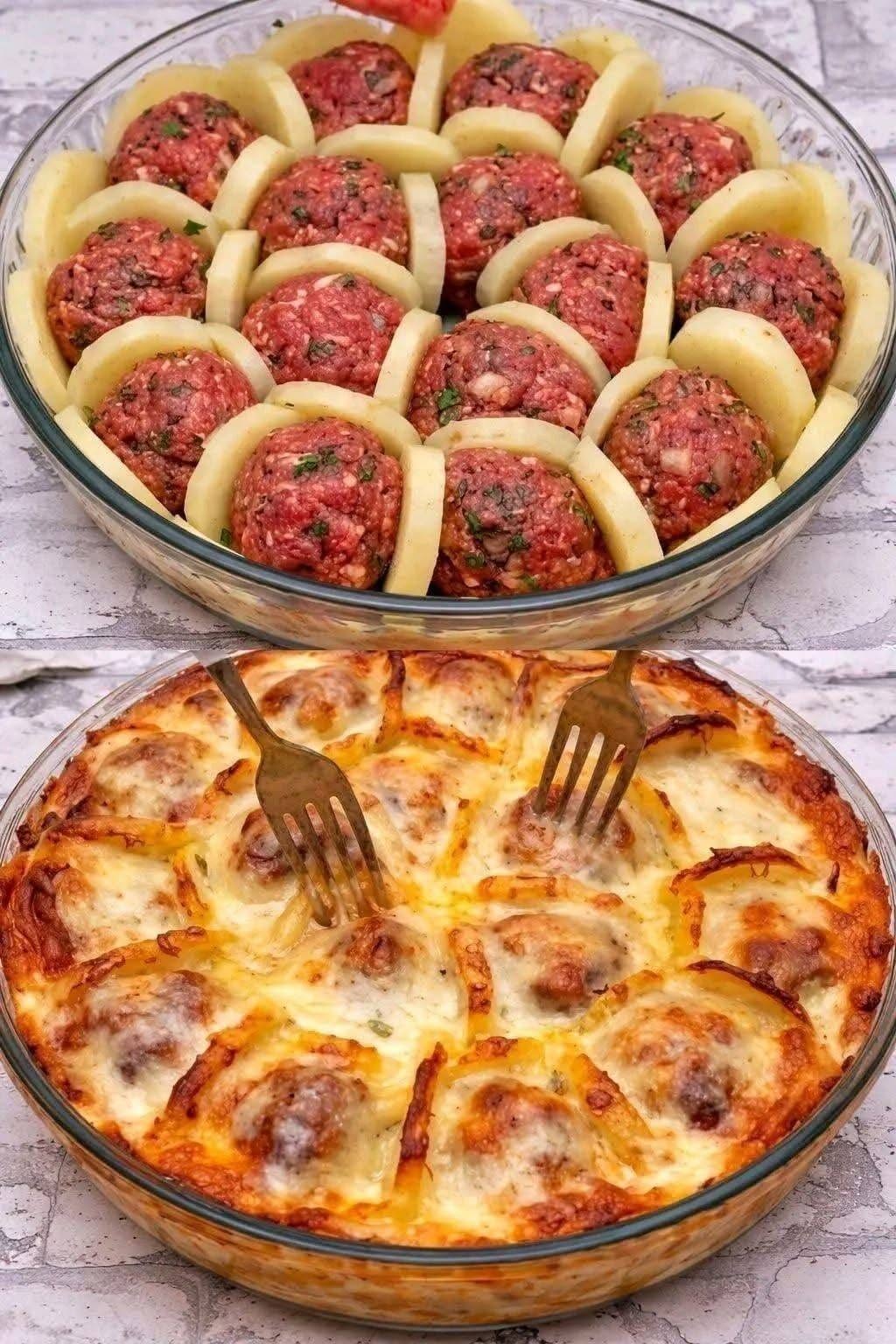
No. This version places the raw meatballs directly in the casserole, as suggested by the preparation stage in the image. Baking them in the sauce keeps the method simple. The important step is checking the center temperature before serving.
You can brown the meatballs first for extra color, but that adds a step and may change how long the assembled dish needs in the oven.
Can I use raw potatoes without simmering them?
You can, but their cooking time will be less predictable, especially if the slices are thick. Briefly simmering them gives you tender potatoes without having to bake the cheese topping for too long.
Why is my casserole watery?
The potatoes may not have drained well, the sauce may have been too thin, or added vegetables may have released liquid. Let drained potatoes steam briefly, cook the milk sauce until it lightly coats a spoon, and rest the baked casserole before serving.
Why are my meatballs tough?
The most common causes are overmixing the beef or packing the meatballs too firmly. Mix just until combined and shape them gently. Breadcrumbs, egg, and grated onion also help keep the texture tender.
Can I use a round baking dish?
Yes. A round dish will resemble the reference image more closely. Choose one with a similar capacity to a 9 × 13-inch dish, and avoid stacking the meatballs in multiple layers. A deeper, more crowded casserole may need longer in the oven; always check the center.
How do I know the potatoes are done?
Pierce a thick slice near the middle of the casserole with a small knife. It should slide through without meeting a firm center. Check the meatball temperature separately before serving.
Recipe Card: Creamy Meatball and Potato Casserole
Yield: About 6 servings
Preparation: About 30 minutes
Baking: About 40–50 minutes
Oven: 375°F (190°C)
Ingredients: 1½ pounds ground beef; 1 small grated onion; 2 minced garlic cloves; ⅓ cup breadcrumbs; 1 egg; 2 tablespoons parsley; 1 teaspoon salt; ½ teaspoon black pepper; optional 1 teaspoon paprika; 2 pounds potatoes; 1 tablespoon oil or butter for the dish; 2 tablespoons butter; 2 tablespoons flour; 1¾ cups milk; an additional ½ teaspoon salt and ¼ teaspoon pepper for the sauce; optional nutmeg; 1½ cups mozzarella; and ½ cup Parmesan.
Method:
- Slice the potatoes ¼ inch thick. Simmer in salted water for 5–7 minutes, then drain.
- Gently combine the beef, onion, garlic, breadcrumbs, egg, parsley, salt, pepper, and optional paprika. Shape into about 15 meatballs.
- Melt 2 tablespoons butter. Whisk in the flour for 1 minute, then gradually whisk in the milk. Cook until lightly thickened; season.
- Grease the baking dish. Arrange the meatballs with potato slices standing between them. Pour the sauce into the gaps.
- Cover and bake at 375°F (190°C) for 25 minutes.
- Uncover, add both cheeses, and bake for another 15–25 minutes, until the potatoes are tender and the center of the casserole reaches 165°F (74°C).
- Rest for 10 minutes before serving.
Final Thoughts
Meatball and potato casserole turns familiar ingredients into a dinner that looks as good as it tastes. The upright potato slices give it its distinctive appearance, while the creamy sauce and browned cheese bring everything together. Give the potatoes their brief head start, check the center for doneness, and let the dish rest before you serve it.