
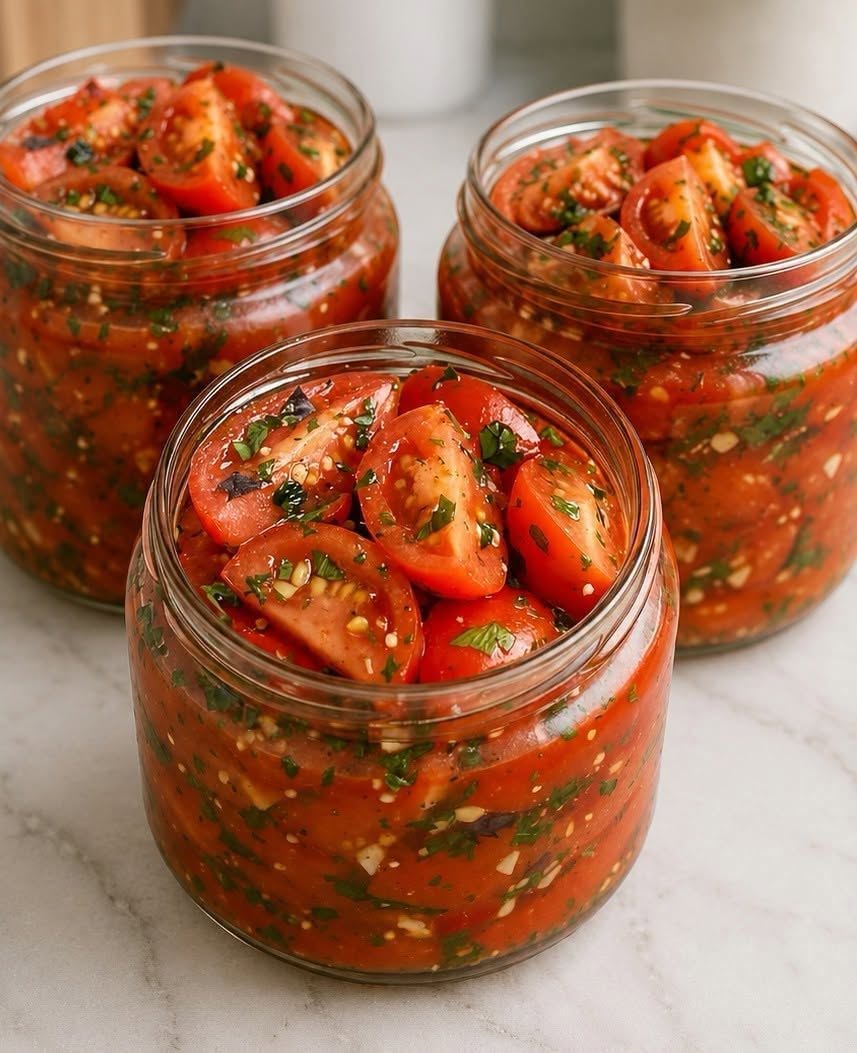
How to Make Marinated Tomatoes
1. Wash and dry the produce
Wash your hands, then rinse the whole tomatoes and fresh herbs under running water. Dry them with clean towels or paper towels. Wash the jars, lids, cutting board, and knife before you begin.
Wash the tomatoes before cutting them, even if you plan to remove part of the core. The FDA’s guidance on preparing fresh produce recommends washing produce under running water and advises against using soap or commercial produce wash.
2. Cut the tomatoes
Remove the cores and cut medium tomatoes into wedges. If your tomatoes are small, quarter them; if they are large, cut each into six to eight pieces. Try to keep the wedges similar in size so the jars are easy to fill and every portion has a similar texture.
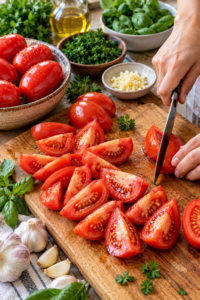
There’s no need to scoop out the seeds. Their juices are part of the dressing that develops while the marinated tomatoes rest.
3. Mix the dressing
In a large bowl, whisk the red wine vinegar, olive oil, sugar, salt, pepper, and optional oregano until the sugar and salt have mostly dissolved. Add the minced garlic, parsley, and basil. Stir to distribute the herbs.
Taste a drop of dressing. It may seem a little strong on its own, which is expected: the tomatoes will release juice and mellow it. If your vinegar tastes exceptionally sharp, wait to adjust the dressing until after the tomatoes have rested.
4. Coat and pack the tomatoes
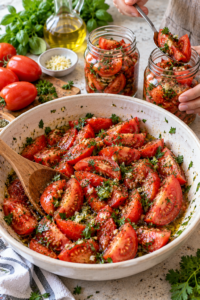
Add the wedges to the bowl and fold them gently through the dressing. Use a large spoon or flexible spatula, turning the tomatoes from the bottom of the bowl to coat them without crushing them.
Divide the tomatoes among the three jars. Spoon any herbs and dressing left in the bowl evenly over the top. Leave a little space beneath each lid so you can gently turn the jars later. If you have more tomatoes than your jars comfortably hold, place the extra in another covered container rather than pressing the wedges down.
5. Refrigerate, then serve
Cover the jars and refrigerate for at least 30 minutes, preferably 1–2 hours. Once during that time, gently turn each tightly closed jar over and back, or open it and stir with a clean spoon. This helps the wedges at the top meet the dressing below.
The marinated tomatoes are ready when they look glossy, taste seasoned, and have released some juice. Before serving, turn or stir the jars again. Taste a wedge and add a small pinch of salt if needed.
Tips for the Best Texture and Flavor
Cut the tomatoes into generous wedges. Thin slices soften quickly, especially once salted. Wedges keep the chunky look of the reference photo and are easier to lift out of a jar.
Chop the herbs just before mixing. Freshly chopped parsley and basil give marinated tomatoes a brighter appearance and aroma. Don’t worry if basil darkens slightly during refrigeration; that can happen after it is cut.
Give the dressing time to develop. A 30-minute rest works when dinner is near, but an hour or two gives the garlic and herbs more time to mingle with the tomato juices. Gently mix before serving so the flavor is shared throughout each jar.
Use the liquid. The seasoned tomato juice is delicious over bread, rice, or greens. When you serve marinated tomatoes, spoon up some of that liquid along with the wedges.
Taste after chilling. Cold food can taste less intensely seasoned. Rather than adding extra salt immediately, taste a tomato once the batch has marinated and adjust only if necessary.
Common Mistakes to Avoid
Using tomatoes that are too soft
A very soft tomato may fall apart as soon as it is tossed. Save those tomatoes for a cooked sauce, and choose firmer ripe fruit when you want distinct wedges in the jar.
Packing the jars too tightly
The dressing needs a little room to move. If you push the tomatoes into a tightly packed jar, you may crush the bottom layer and have trouble mixing it later. Fill the jars comfortably and use another container for any overflow.
Expecting the dressing to cover every wedge immediately
These marinated tomatoes are not submerged in a canning brine. The recipe starts with a modest amount of dressing, then the tomatoes contribute their own liquid. Stir or gently turn the jars during the refrigerator rest.
Leaving the jars on the counter
Refrigerate the jars promptly after assembly. Keep them chilled when taking them to a picnic or gathering, and return leftovers to the refrigerator without delay. The vinegar in this recipe has not been tested to make the finished mixture safe for room-temperature storage.
Variations and Substitutions
These changes are for flavor and serving convenience. They do not turn the recipe into a canning recipe.
- Add red onion: Thinly slice ¼ of a small red onion and distribute it among the jars for a sharper bite.
- Make it spicy: Add a small pinch of crushed red pepper flakes to the dressing.
- Use another vinegar: White wine vinegar gives a lighter flavor. Start with the same amount, then taste after marinating.
- Change the herbs: Replace the basil with more parsley, or try a little fresh dill for a different finish.
- Use cherry tomatoes: Halve them so the dressing can reach the cut surfaces. Their texture and liquid release may differ from larger wedges.
- Skip the sugar: If your tomatoes are especially sweet, you can leave it out and taste before serving.
For a different presentation, make the dressing and tomatoes in one covered bowl and spoon portions into jars when you are ready to serve. The flavor of marinated tomatoes depends on the ingredients and chilling time, not the shape of the container.
Serving Suggestions
Put a jar in the center of the table beside grilled chicken, fish, or a bean dish and let everyone spoon out a portion. The tomatoes bring both a vegetable side and a light dressing to the plate.
For lunch, pile marinated tomatoes onto toasted bread. A spoonful of ricotta or whipped feta underneath catches the juices; add the tomatoes just before eating so the toast stays crisp. They also make a flavorful addition to a sandwich with sliced mozzarella or leftover roast chicken.
To turn the jars into a simple pasta meal, cook pasta, let it cool slightly, then toss it with the tomatoes and a little of their liquid. Finish with more herbs or grated Parmesan if you like. For a lighter plate, spoon the wedges over greens and use the liquid as the salad dressing.
These marinated tomatoes are also good with grilled vegetables, baked potatoes, or a bowl of rice. If your site has a bruschetta, pasta salad, or grilled chicken recipe, those are natural places to add contextual internal links from the serving suggestions above.
Storage, Food Safety, and Freezing
Keep the jars refrigerated at 40°F (4°C) or colder and use them within 4 days of preparation. They are at their best in the first 1–2 days, when the wedges still have a pleasing texture. Label the jars with the date you made them.
This limit matters because the recipe combines fresh garlic and herbs with oil. Oregon State University Extension’s guidance on herbs and vegetables in oil calls for refrigeration and use within four days. The dressing here also contains vinegar, but this particular mixture has not been tested as a preserved food, so treat it as a refrigerated recipe throughout.
Do not store these jars in a pantry or process them in a water-bath canner. Shelf-stable tomato preserves need a tested canning recipe and its specified ingredients and processing steps. The jars in the photo may resemble preserves, but their appearance cannot establish that they are safe for canning.
There is no need to reheat marinated tomatoes; they are intended to be eaten cold or cool. Freezing is possible if you plan to use the mixture later in a cooked dish, but thawed tomato wedges lose their fresh, firm texture. For serving on toast or as a salad, make a fresh batch instead.