How a Terry Towel Is Constructed
To understand the lines on bath towels, it helps to examine how terry fabric is woven.
Understanding the lines on bath towels is easier when you understand basic towel construction.
A typical terry towel contains three important systems of yarn:
- Ground warp yarns, which form the fabric’s foundation.
- Pile warp yarns, which create the raised loops.
- Weft yarns, which run across the width and hold the structure together.
The terry loops produce the towel’s familiar soft texture and increase the amount of exposed fibre available to collect water.
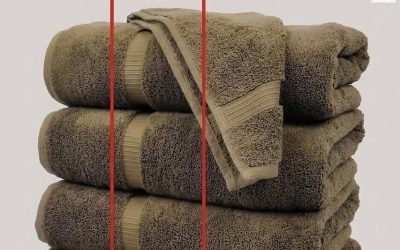
When the loom creates a dobby border, it temporarily changes the arrangement of the yarns. The result is a flatter and often denser section.
Manufacturing details vary, and not every manufacturer uses exactly the same yarn arrangement. Some borders are simple, while others incorporate intricate patterns.
Do All Towels Have Dobby Borders?
No. Many towels have the familiar woven lines, but they are not required for a towel to work.
Some towels use:
- Simple hems without decorative bands
- Ribbed sections
- Waffle weaves
- Jacquard patterns
- Sewn decorative trim
- Fringe
- Borderless modern designs
A towel without a dobby border can still be soft, absorbent, and durable. Fibre quality, weave, weight, stitching, and laundering practices may be more important than the presence of a decorative band.
When choosing a towel, evaluate the entire product rather than treating the border as proof of quality.
How to Choose a Good Bath Towel
However, the lines on bath towels should be considered alongside fibre quality, stitching, weight, and absorbency.
Examine the Fibre Content
Cotton is widely used because it is soft and absorbent. Common descriptions include:
- Turkish cotton
- Egyptian cotton
- Supima cotton
- Organic cotton
- Ring-spun cotton
- Cotton blends
The name alone does not guarantee performance. Construction, yarn quality, and finishing also matter.
Consider Fabric Weight
Towel weight is often described in grams per square metre, or GSM.
A heavier towel may feel plush and substantial, but it can take longer to dry. A lighter towel usually dries more quickly and may be convenient for travel or humid climates.
Inspect the Loops
Look for an even terry surface without large bare areas. Extremely long loose loops may snag more easily.
Check the Hem
The bottom hem should appear straight and securely stitched. Poorly sewn hems may unravel regardless of whether the towel has a dobby border.
Look at the Border
The dobby section should lie reasonably flat without severe puckering before purchase.
Minor texture is normal, but a distorted new towel may become more misshapen after washing.
Think About Drying Conditions
If you have limited ventilation or live in a humid area, a moderately weighted towel may be more practical than an extremely dense luxury towel.
How to Wash Towels Properly
Correct washing helps preserve the terry loops, stitching, and lines on bath towels.
For additional laundry-care advice, see our guide to using vinegar safely in the laundry.
Read the Care Label
Always begin with the manufacturer’s instructions. Fibre composition, colourfastness, decorative trim, and finishing treatments vary.
The label may specify:
- Recommended water temperature
- Whether chlorine bleach is permitted
- Appropriate dryer setting
- Whether ironing is safe
- Special instructions for decorative elements
Wash New Towels Before Use
New towels may contain residual lint or manufacturing finishes. Washing them before the first use can improve their feel and remove loose fibres.
Separate Colours
Wash white towels separately from dark or brightly coloured items, especially during the first several cycles.
New coloured towels may release dye.
Avoid Overloading the Machine
Towels need enough room to move through water and detergent. An overloaded washer may rinse poorly and create more friction.
Use the Correct Amount of Detergent
Excess detergent can remain in the fibres and make towels feel stiff or less absorbent.
More detergent does not necessarily produce cleaner towels. Follow the product and washing-machine instructions.
Limit Fabric Softener
Liquid fabric softeners and dryer sheets can leave water-repellent residue on towel fibres. Occasional use may not ruin a towel, but repeated heavy application can reduce absorbency.
Avoid Excessive Heat
High dryer temperatures may increase shrinkage and place unnecessary stress on the dobby border and hem.
Use the care-label setting and remove towels when dry rather than continuing to heat them for a long period.