
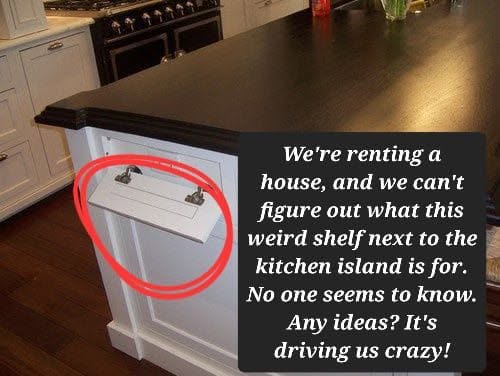
Why Was It Installed on the Side of the Island?
A kitchen island is often the main area used for chopping, mixing, kneading, and assembling food. Placing the cookbook holder beside this space allows a person to read instructions without laying a book among wet or messy ingredients.
The side installation also provides several benefits:
- It preserves valuable countertop space.
- It keeps recipes away from food splashes.
- It positions instructions close to the preparation area.
- It allows the accessory to fold away neatly.
- It avoids adding another freestanding object to the counter.
- It can keep a cookbook open without requiring the cook to touch it repeatedly.
The particular placement in the photograph may appear low by modern standards. It may have been designed for reading while seated, for use from the island’s end, or simply to fit within the available cabinet space.
Evidence That It Is a Cookbook Holder
Several visible characteristics support this identification.
First, the panel folds out from the cabinet instead of opening into a storage compartment. This suggests that its surface, rather than the area behind it, is the useful component.
Second, the two metal clips resemble the restraints used on traditional book and recipe stands. There would be little reason to install such clips on an ordinary shelf.
Third, the feature is positioned directly beside a kitchen work surface. A recipe holder makes practical sense in this location, while a letter desk or ironing shelf would be less convenient.
Finally, historical recipe-stand designs describe hinged supporting panels and clips that hold recipes or book pages open. One documented recipe-stand patent describes a hinged support with clips designed to display recipes while someone cooks. Although it may not be the exact product shown, it demonstrates how the same components are commonly used in recipe holders.
What Can You Put on It?
The original purpose was probably to hold an open cookbook, but the feature can be useful with several lightweight items.
A Traditional Cookbook
Place the bottom edge of the book securely on the ledge and use the clips to keep the selected pages open. Test the panel with a small book before trying a large hardcover edition.
Printed Recipes
A single printed recipe or several pages can be held beneath the clips. If the paper is thin, place a rigid board or lightweight clipboard behind it.
Recipe Cards
Larger recipe cards can be clipped directly to the panel. Small cards may require an additional clip or transparent sleeve.
A Tablet
The shelf may accommodate a lightweight tablet, but only if the hinges and supporting hardware are strong and stable. Do not assume an older cookbook shelf was designed for the weight or shape of a modern electronic device.
If you use a tablet, keep it away from the sink, hot cookware, steam, and splattering oil. A non-slip case can help prevent movement.
A Shopping List
The clips can hold a shopping list, weekly meal plan, cleaning checklist, or family note when the shelf is not being used for cooking.
How to Use It Correctly
Before placing anything on the holder, inspect it carefully. Rental properties and older kitchens may contain hardware that has loosened over time.
- Open the panel slowly while supporting it with one hand.
- Check whether chains, brackets, or hinge arms stop it securely.
- Tighten nothing unless the homeowner or property manager authorises it.
- Test the shelf with a lightweight book first.
- Position the book so its weight is centred.
- Secure the pages gently beneath the clips.
- Keep liquids, raw ingredients, and hot cookware away from it.
- Remove the book before folding the panel closed.
- Close it gently rather than allowing it to drop or slam.
If the panel shifts, sags, or pulls away from the cabinet, stop using it and report the problem to the property owner.
Safety Checks Before Using an Older Holder
Examine the Hinges
Look for loose screws, corrosion, bent metal, cracked wood, or separation between the hinges and cabinet. A panel that appears stable while empty may fail when a heavy book is added.
Find the Support Mechanism
The panel should have some mechanism that limits its opening angle. This may be a chain, folding arm, bracket, cable, or specialised hinge.
Do not place weight on it if it simply hangs from ordinary hinges without visible support.
Check the Clips
Old clips may have sharp edges, strong springs, or rust. Open them carefully and keep fingers away from pinch points.
Avoid Excess Weight
A Kitchen Island Cookbook Holder is not a seat, step, cutting board, dining shelf, or support for a heavy appliance. Do not lean on it or allow children to pull themselves up using the panel.
Protect Electronic Devices
If you adapt it for a phone or tablet, confirm that the device cannot slide off. Keep charging cables away from cooking zones, water, and cabinet hinges.
Ask the Landlord Before Repairing It
Because the house is rented, do not drill new holes, replace hardware, paint the panel, or permanently alter it without permission. Photograph any damage and contact the landlord or property manager.
Is It a Cutting Board?
Probably not.
A cutting board needs to be horizontal, stable, durable, and capable of resisting significant downward pressure. The photographed panel appears angled and has metal clips that would interfere with chopping.
Using it as a cutting board could damage the hinges, scratch the finish, loosen the cabinet, or cause the panel to collapse. It could also be difficult to sanitise thoroughly because it is attached to painted cabinetry and contains hardware.
Is It a Breakfast Table?
It is unlikely to be a table. The panel appears too narrow and too lightly supported to hold plates, drinks, or a person’s weight.
Some kitchen islands do contain fold-out breakfast ledges, but those typically use strong brackets and provide a larger horizontal surface. They would not normally include two clips positioned like page holders.
Is It a Towel Rack?
The hardware does not resemble a conventional towel rail, and the folding panel would make an inefficient towel holder. A towel bar normally remains fixed and includes an open rail for hanging fabric.
The clips and sloped panel are much more consistent with a reading stand.
Is It a Vintage Telephone Shelf?
Older houses sometimes contain small wall-mounted telephone shelves, often with space for a telephone directory. However, those are generally fixed or include a separate directory compartment. They do not commonly use two page clips in this arrangement.
Because this feature is directly connected to the kitchen work area, a cookbook holder remains the stronger explanation.
Is It Still Useful in a Modern Kitchen?
Yes. Even though many cooks now follow recipes on phones and tablets, a fold-down holder can remain practical.
It can reduce clutter and keep instructions at a readable angle. It also prevents users from repeatedly touching a device with hands covered in flour, dough, oil, or raw ingredients.
Current cookbook and tablet stands use many of the same basic ideas: an angled supporting surface, a lower ledge, page clips, and a foldable design. For example, IKEA describes its VIVALLA tablet stand as suitable for displaying a tablet or cookbook while keeping the work surface organised.
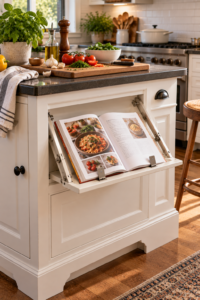
Image 2 placement: Insert the second supporting image here, after the modern-use section and before the cleaning instructions.