
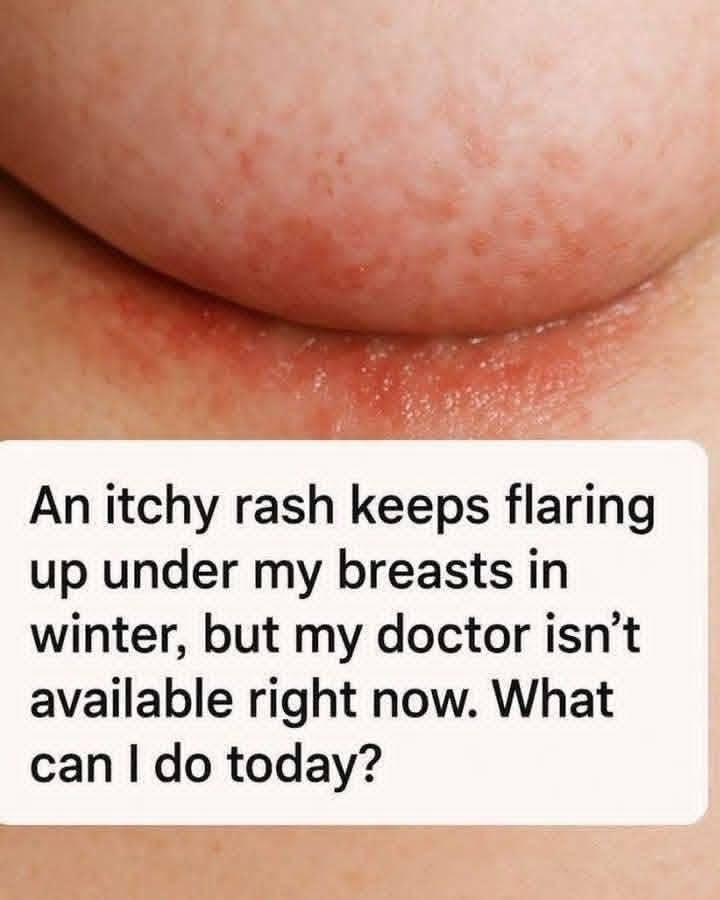
Even in winter, heavy clothing and indoor heating can create warmth and perspiration beneath the breasts.
What Can You Do Today?
Until you can get medical advice, focus on keeping the area clean, cool, and dry.
Wash gently with lukewarm water and a mild, fragrance-free cleanser if needed. Avoid aggressive scrubbing because irritated skin can become even more inflamed.
After washing, dry the fold carefully. Pat rather than rub. Make sure the area is completely dry before getting dressed.
Choose loose, breathable clothing and change out of damp clothing promptly. A clean, supportive bra made from a breathable material may also help reduce skin-on-skin friction.
If perspiration builds up during the day, gently drying the area can help.
Avoid Experimenting With Too Many Products
When skin is already inflamed, applying several creams, perfumes, essential oils, deodorants, powders, or home remedies can make the situation worse.
Be particularly cautious with strong or fragranced products.
A pharmacist can often help you decide whether an over-the-counter treatment is appropriate based on how the rash looks and your symptoms. This is especially useful when your regular doctor is temporarily unavailable.
Avoid using prescription creams that were prescribed to somebody else.
What About Antifungal Cream?
Some rashes in skin folds involve yeast or fungi, and antifungal medication may sometimes be appropriate. But redness and itching do not automatically mean a fungal infection.
Because eczema, irritation, bacterial infections, and other conditions can look similar, ask a pharmacist or clinician before choosing treatment if you are uncertain—particularly when the rash keeps returning.
Should You Use Steroid Cream?
Do not automatically reach for a steroid cream simply because the area itches.
Steroids can be useful for certain inflammatory skin conditions, but they may be inappropriate for some infections and skin folds can absorb medication differently from thicker areas of skin.
A clinician or pharmacist can advise you about whether a steroid is appropriate and, if so, which strength and how long it should be used.
Small Habits That May Help Prevent Future Flare-Ups
Once the current irritation settles, prevention becomes important.
Dry carefully beneath the breasts after every shower. Change sweaty bras or clothing rather than leaving damp fabric against the skin. Wear breathable fabrics when possible and avoid products that repeatedly irritate the area.
If you experience frequent episodes, keeping a simple note of when they occur can sometimes reveal a pattern involving heat, exercise, clothing, detergents, or particular skincare products.
When Should You Seek Medical Care?
A recurring rash deserves medical evaluation, particularly if home measures are not helping.
Seek prompt medical advice if the rash is rapidly spreading, increasingly painful, very swollen or hot, producing pus or significant drainage, developing open sores or blisters, or accompanied by fever or feeling generally unwell.
You should also arrange an evaluation if it repeatedly returns, lasts despite appropriate self-care, or you are unsure what is causing it.
People with diabetes, weakened immune systems, or other conditions that can complicate infections should be especially cautious about persistent skin problems.
The Bottom Line
An itchy rash beneath the breasts is common, but there is no single treatment that is correct for every case.
For today, the safest general approach is simple: keep the area gently clean and thoroughly dry, minimize heat and friction, avoid irritating products, and ask a pharmacist or healthcare professional about treatment if symptoms persist or worsen.
The appearance of a rash can provide clues, but a proper diagnosis matters—especially when the problem keeps coming back.