
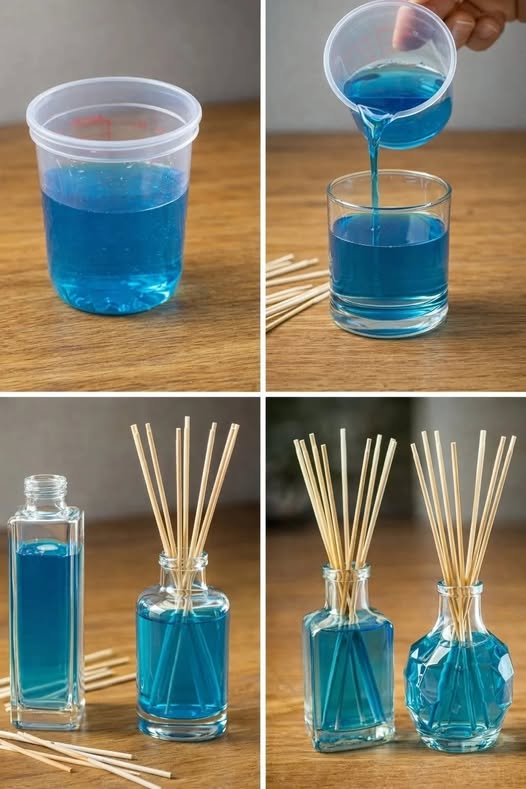
No Electricity or Flame Required
Many home fragrance products require electricity or an open flame.
A homemade reed diffuser works naturally through absorption and evaporation.
This makes it convenient for:
- Nightstands
- Office desks
- Bathroom counters
- Bookshelves
- Entry tables
You can enjoy fragrance without worrying about turning something on or replacing batteries.
How Does a Reed Diffuser Work?
A reed diffuser is based on a simple physical process called absorption.
The reeds used in the bottle contain tiny channels that allow liquid to travel upward. When the reeds absorb the scented mixture, the fragrance slowly evaporates into the surrounding air.
Several factors affect how well your diffuser works:
Reed Quality
High-quality diffuser reeds absorb liquid more effectively and release fragrance more consistently.
Room Temperature
Warmer rooms usually increase evaporation, which can make the scent stronger but may reduce how long the diffuser lasts.
Air Movement
A room with gentle airflow helps distribute fragrance more effectively.
Bottle Design
A bottle with a narrow opening slows evaporation and helps extend the life of the diffuser.
Ingredients for Homemade Reed Diffuser
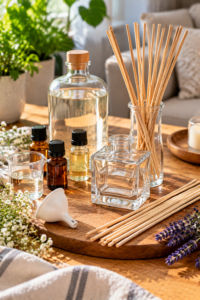
1. Glass Bottle
The bottle is both functional and decorative.
Choose a container that has:
- A narrow opening
- A stable base
- Enough space for liquid and reeds
Glass bottles are usually preferred because they look elegant and work well with fragrance oils.
You can reuse:
- Small perfume bottles
- Decorative glass jars
- Empty diffuser containers
Make sure the bottle is completely clean before use.
2. Diffuser Reeds
Reeds are one of the most important parts of the diffuser.
The best diffuser reeds are made specifically for fragrance products because they have a porous structure that absorbs liquid efficiently.
Avoid using random wooden sticks because many types of wood do not absorb fragrance properly.
3. Diffuser Base
The base carries the fragrance oil through the reeds.
Common choices include:
- Commercial diffuser base
- Alcohol-based diffuser liquid
- Lightweight carrier oils
A proper diffuser base helps create better scent distribution.
4. Fragrance Oils
Fragrance oils are designed specifically for creating scented products.
They come in many varieties:
- Floral
- Citrus
- Fresh
- Woody
- Sweet
- Seasonal
Choose scents based on the mood you want to create.
5. Essential Oils
Some people prefer using essential oils because of their natural origin.
Popular options include:
- Lavender
- Peppermint
- Lemon
- Tea tree
- Rosemary
- Eucalyptus
However, essential oils are highly concentrated. They should always be used carefully and according to safety recommendations.
For general information about household chemical safety and indoor air quality, the U.S. Environmental Protection Agency provides helpful guidance:
https://www.epa.gov/indoor-air-quality