
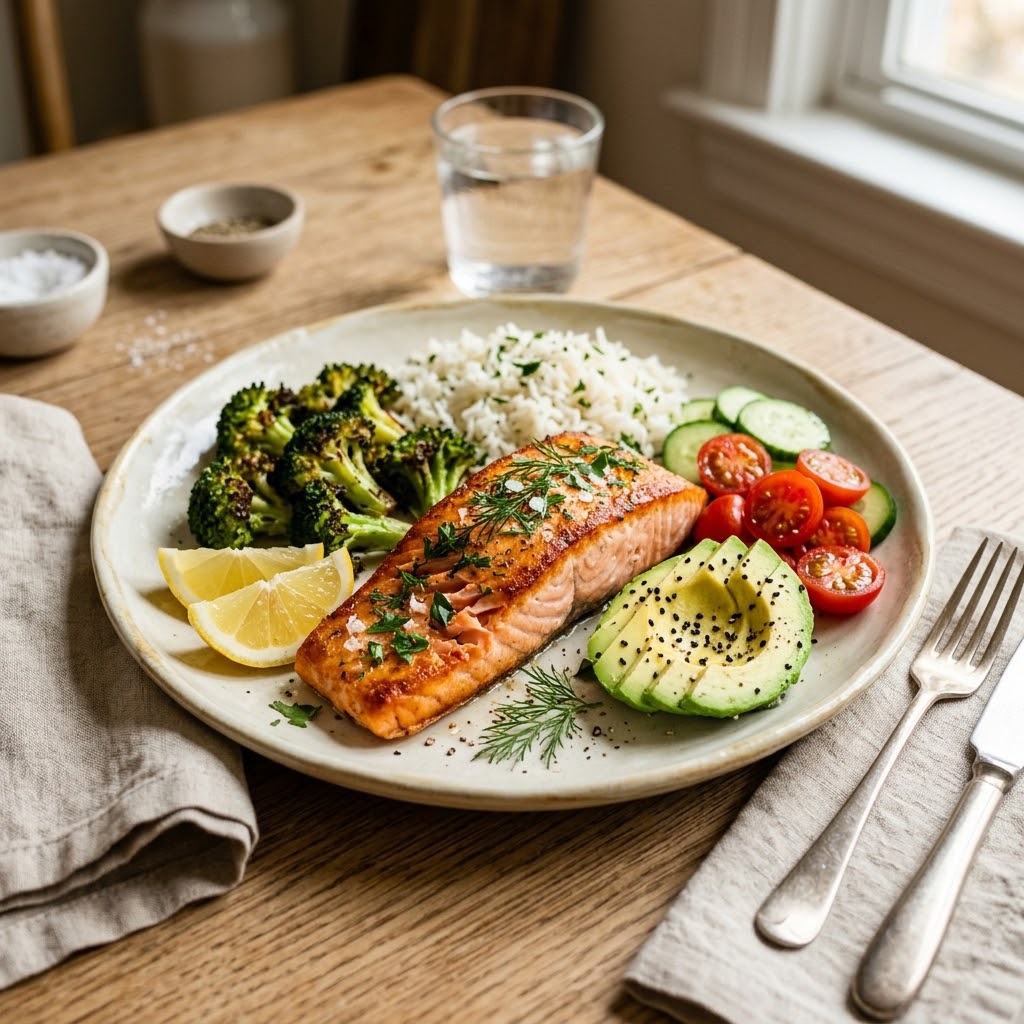
Salmon can be useful for meal preparation because cooked salmon can be paired with different sides throughout the week.
For example, cook several salmon fillets and use them in:
Day 1: Salmon with roasted potatoes and broccoli.
Day 2: Salmon rice bowl with cucumber and avocado.
Day 3: Salmon tacos with cabbage slaw.
This approach gives you variety without having to cook completely different proteins every day.
Store cooked salmon in a clean, covered container in the refrigerator and follow current food-safety guidance for leftovers. USDA guidance generally recommends using cooked leftovers within 3–4 days when refrigerated properly.
How to Build Your Own High Protein Salmon Dinner
You don’t always need a specific recipe.
Use this simple formula:
Salmon + vegetable + carbohydrate + sauce + fresh topping
For example:
Mediterranean Style
Salmon + roasted potatoes + tomatoes + lemon yogurt sauce + parsley.
Asian-Inspired
Salmon + rice + broccoli + soy-garlic glaze + sesame seeds.
Mexican-Inspired
Salmon + tortillas + cabbage + avocado + lime salsa.
Creamy Comfort
Salmon + pasta + spinach + Parmesan sauce + lemon.
This makes it much easier to create new dinners from ingredients already in your kitchen.
Frequently Asked Questions
What are the best High Protein Salmon Recipes?
Some of the easiest options are garlic lemon salmon, salmon rice bowls, salmon tacos, salmon pasta, salmon patties, honey garlic salmon, and creamy spinach salmon.
Is salmon a good source of protein?
Yes. Salmon is a protein-rich fish. A typical cooked 3-ounce serving provides around 22 grams of protein, although the exact amount depends on the type and serving size.
What should I serve with salmon?
Rice, potatoes, quinoa, broccoli, asparagus, green beans, spinach, salads, and roasted vegetables all pair well with salmon.
Can I use frozen salmon?
Yes. Frozen salmon can be a convenient option for these recipes. Thaw it safely before cooking and pat it dry before seasoning.
How do I know when salmon is cooked?
The FDA recommends cooking fish to 145°F (63°C) or until the flesh is opaque and separates easily with a fork.
Can I meal prep salmon?
Yes. Cooked salmon can be portioned with rice, vegetables, or salad ingredients for convenient meals. Refrigerate leftovers promptly and follow recommended storage times.
Can I use canned salmon?
Absolutely. Canned salmon is particularly useful for salmon patties, salads, wraps, and quick lunch bowls.
What seasoning tastes best with salmon?
Garlic, lemon, paprika, dill, parsley, black pepper, chili powder, cumin, honey, soy sauce, and Italian herbs all work well with salmon.
Final Thoughts
These High Protein Salmon Recipes show just how versatile salmon can be.
You can keep things incredibly simple with garlic lemon salmon and roasted vegetables, or create something more exciting with colorful salmon tacos and rice bowls. When you’re craving comfort food, creamy salmon pasta and spinach salmon deliver rich flavor, while crispy salmon patties offer a completely different texture.
The best part is that you don’t need a long list of unusual ingredients to make salmon taste fantastic.
A few basic seasonings can take you a long way. Garlic and lemon create a bright classic combination. Honey and soy sauce bring sweet and savory flavors together. Greek yogurt, herbs, and lemon make a fresh sauce for bowls and tacos. Parmesan and spinach turn salmon into a cozy pasta dinner.
You can also use these recipes as starting points rather than strict rules. Change the vegetables, switch the grain, add a different sauce, or turn leftover salmon into tacos or a salad the next day.
If you’re planning your weeknight dinners, keep salmon in your freezer or refrigerator and stock up on a few easy side ingredients such as rice, potatoes, broccoli, spinach, lemons, garlic, and fresh herbs.
That simple combination gives you countless possibilities.
Whether you’re cooking for your family, preparing lunches ahead of time, or simply looking for an easy seafood dinner, these High Protein Salmon Recipes make it easier to put a flavorful meal on the table without complicated techniques.
And once you’ve tried the basic recipes, don’t be afraid to experiment. Salmon works with fresh Mediterranean flavors, spicy seasonings, creamy sauces, bright citrus, sweet glazes, and crunchy vegetables.
Start with the garlic lemon version, try the salmon rice bowl next, and then branch out into tacos, pasta, patties, and honey garlic salmon.
With a few reliable recipes in your rotation, salmon can become one of the most versatile ingredients in your kitchen.