
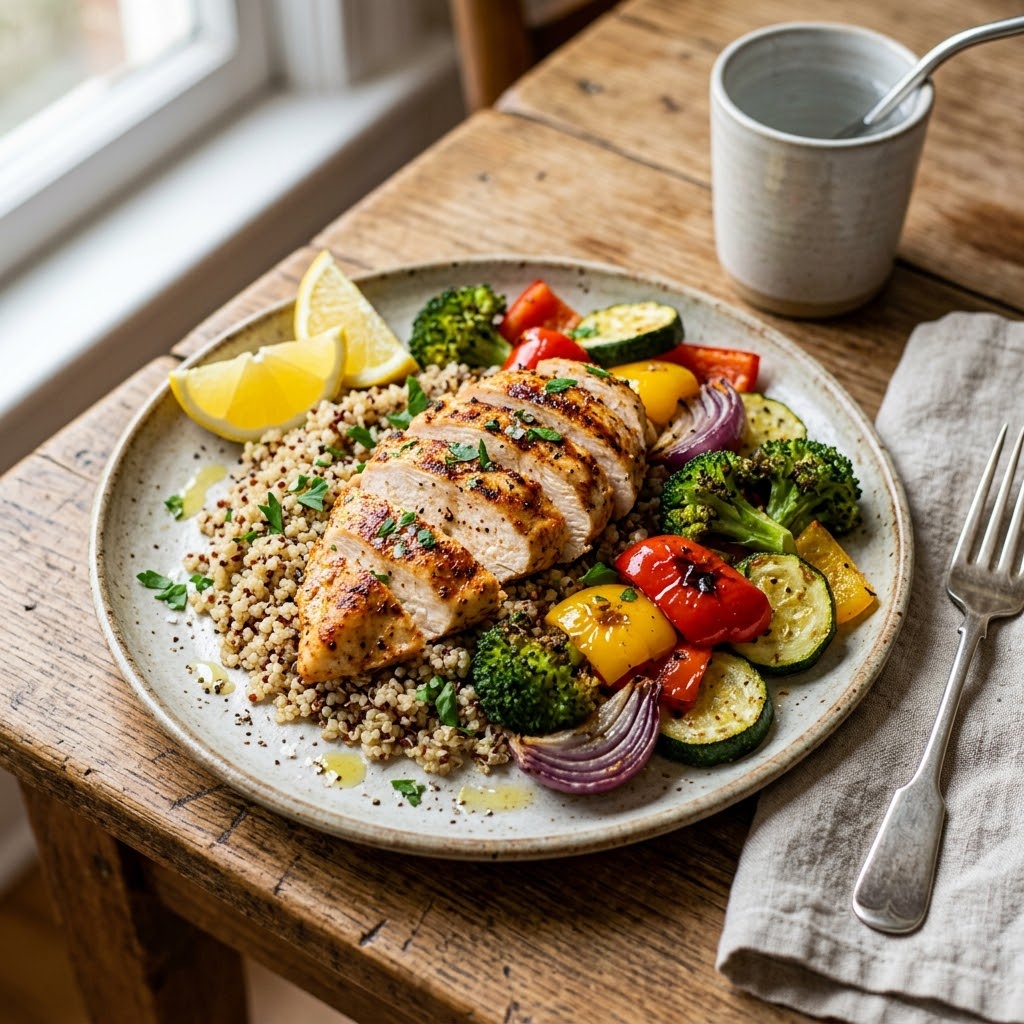
For a creamy variation, prepare a quick sauce using plain Greek yogurt, lemon juice, garlic, black pepper, and fresh herbs.
Serve the sauce on the side rather than covering the entire plate.
How to Make This Recipe Meal-Prep Friendly
This High Protein Chicken Dinner is especially useful when you want to prepare several meals in advance.
Cook the chicken, quinoa, and vegetables according to the recipe.
Allow the components to cool appropriately before portioning them into suitable food-storage containers.
Divide the quinoa between containers first.
Add the roasted vegetables and sliced chicken.
Keep sauces and fresh toppings separate when possible.
When you’re ready to eat, reheat the main components thoroughly and add fresh lemon, parsley, or yogurt sauce afterward.
For the best texture, avoid over-reheating the chicken.
You can also prepare the components separately and create different combinations throughout the week.
For example:
Monday: Chicken + quinoa + broccoli
Tuesday: Chicken + brown rice + peppers
Wednesday: Chicken + quinoa + roasted zucchini
Thursday: Chicken salad bowl with the remaining vegetables
This makes one cooking session much more versatile.
What to Serve With a High Protein Chicken Dinner
This recipe is already a complete meal, but you can add simple sides if you’re feeding a larger group.
Fresh salad
A simple green salad with lettuce, cucumber, tomatoes, and lemon vinaigrette works beautifully.
Roasted vegetables
If you’re serving several people, add another tray of seasonal vegetables.
Whole-grain bread
A small serving of whole-grain bread can work well alongside the meal.
Yogurt sauce
A simple garlic-lemon yogurt sauce adds coolness and creaminess without requiring a complicated preparation.
Fresh fruit
For a refreshing finish, serve seasonal fruit after dinner.
Why Chicken Works So Well for a Protein-Rich Dinner
Chicken is a versatile ingredient because it can absorb a wide range of seasonings while remaining relatively simple to prepare.
Skinless poultry is also included among the protein choices highlighted by Harvard’s Nutrition Source, which emphasizes considering the overall “protein package” rather than looking only at protein quantity.
That idea is useful when building a dinner like this one.
Instead of focusing only on adding more protein, this recipe combines chicken with vegetables, quinoa, olive oil, herbs, and lemon to create a varied meal.
Harvard’s Healthy Eating Plate also recommends building meals around vegetables and fruits, whole grains, healthy protein sources, and healthy plant oils.
For more information about choosing protein-rich foods and understanding the overall nutritional “package” of different protein sources, see Harvard T.H. Chan School of Public Health – Protein.
Storage and Leftovers
Store leftovers in airtight food-safe containers in the refrigerator and use them within the appropriate food-safety window for cooked leftovers.
For best quality, keep the chicken, quinoa, vegetables, and sauce separate when possible.
This prevents the vegetables from becoming overly soft and makes reheating easier.
You can also transform leftovers into completely different meals.
Turn it into a chicken bowl
Add the chicken and vegetables to fresh greens with quinoa and a lemon dressing.
Make a chicken wrap
Slice the chicken and vegetables and place them inside a whole-grain wrap with yogurt sauce.
Make a chicken salad
Chop the cooled chicken and mix it with leafy greens, cucumber, tomatoes, and a light dressing.
Make a quick rice bowl
Use leftover chicken with rice, vegetables, and a little homemade sauce.
This is one reason this recipe is so practical for busy households.
Common Mistakes to Avoid
Cooking cold, thick chicken directly from the refrigerator
Very thick chicken can cook unevenly.
Allowing the chicken to sit briefly while preparing the seasoning and vegetables can make preparation easier.
Using too much oil
The vegetables only need enough oil to become lightly coated.
Too much can make them greasy instead of nicely roasted.
Cutting vegetables into very different sizes
Large pieces take longer to cook while tiny pieces can become soft too quickly.
Aim for relatively similar sizes.
Skipping the resting time
Letting the cooked chicken rest before slicing helps keep it juicy.