
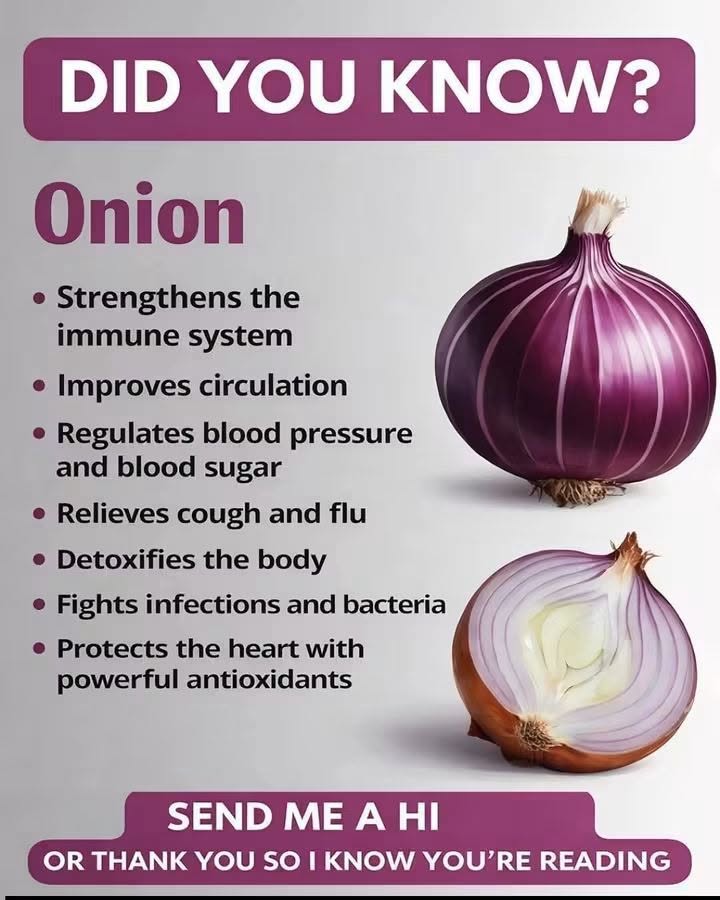
11 Health Benefits of Onions
1. Rich Source of Antioxidants
One of the most discussed health benefits of onions is their antioxidant content.
Onions contain plant compounds called flavonoids, including quercetin, which has been researched for its antioxidant properties.
Antioxidants help protect cells from oxidative stress caused by unstable molecules called free radicals.
Eating a variety of colorful fruits and vegetables is one of the best ways to increase antioxidant intake naturally.
2. Supports Heart Health as Part of a Balanced Diet
Onions contain compounds that have been studied in relation to cardiovascular health.
Research has examined how onion compounds may influence factors such as cholesterol levels and blood vessel function.
However, onions should be viewed as one part of an overall heart-supportive eating pattern that includes:
- Vegetables
- Fruits
- Whole grains
- Lean proteins
- Healthy fats
- Regular physical activity
No single food can replace healthy lifestyle habits.
3. Provides Dietary Fiber
Onions contribute a small amount of dietary fiber.
Fiber is important because it supports normal digestion and helps maintain a healthy digestive system.
Including fiber-rich foods throughout the day from sources such as:
- Vegetables
- Fruits
- Beans
- Whole grains
- Nuts and seeds
can help you reach recommended fiber intake.
4. Contains Vitamin C
Onions provide vitamin C, an essential nutrient involved in many body functions.
Vitamin C contributes to:
- Normal immune system function
- Collagen formation
- Protection of cells from oxidative stress
A varied diet containing fruits and vegetables helps provide adequate vitamin C.
5. May Help Support Healthy Blood Sugar Management
Some research has explored the relationship between onion consumption and blood sugar regulation.
The compounds naturally found in onions are being studied for their possible effects on glucose metabolism.
However, onions are not a treatment for diabetes. People managing blood sugar levels should follow medical advice and focus on overall dietary patterns.
6. Supports Digestive Health
Onions contain prebiotic fibers that can help support beneficial bacteria in the gut.
Prebiotics serve as food for certain helpful microorganisms in the digestive system.
A healthy gut is supported by a diverse diet containing different plant foods.
7. Adds Nutrients Without Excess Calories
Many flavorful ingredients can add calories, but onions provide strong taste while remaining relatively light.
They are useful for:
- Flavoring vegetable dishes
- Enhancing homemade sauces
- Improving soups
- Adding texture to salads
This makes them a practical ingredient for everyday cooking.
8. Contains Natural Sulfur Compounds
The sulfur compounds in onions are responsible for their distinctive smell.
These compounds are one reason onions have been studied in nutrition research.
Cooking methods can affect the amount of certain compounds available, so eating onions in different ways can provide variety.
9. Helps Increase Vegetable Intake
Sometimes the easiest way to eat more vegetables is to make them taste better.
Adding onions can encourage people to enjoy:
- Vegetable soups
- Stir-fries
- Roasted vegetables
- Homemade meals
Small cooking habits can make healthy eating easier and more enjoyable.
10. Different Onion Colors Offer Different Compounds
Not all onions are exactly the same.
Red onions
Red onions often contain higher amounts of certain antioxidant pigments called anthocyanins.

Yellow onions
Yellow onions are versatile and commonly used in cooking because they develop a sweet flavor when cooked.
White onions
White onions have a cleaner, sharper taste and are often used in fresh dishes.
Trying different varieties can add more flavor and diversity to meals.
11. Affordable and Easy to Store
Another advantage of onions is their accessibility.
They are:
- Affordable
- Available year-round
- Easy to cook
- Simple to store
This makes them a practical ingredient for families and home cooks.
Raw Onion vs Cooked Onion: Which Is Better?
Both raw and cooked onions can be part of a healthy diet.
Raw onions
Raw onions provide a stronger flavor and crunchy texture.
They work well in:
- Salads
- Sandwiches
- Salsas
- Fresh toppings
Cooked onions
Cooking onions creates a sweeter, softer flavor.
They are excellent for:
- Soups
- Sauces
- Roasted dishes
- Caramelized onion recipes
The best choice depends on your recipe and personal preference.