
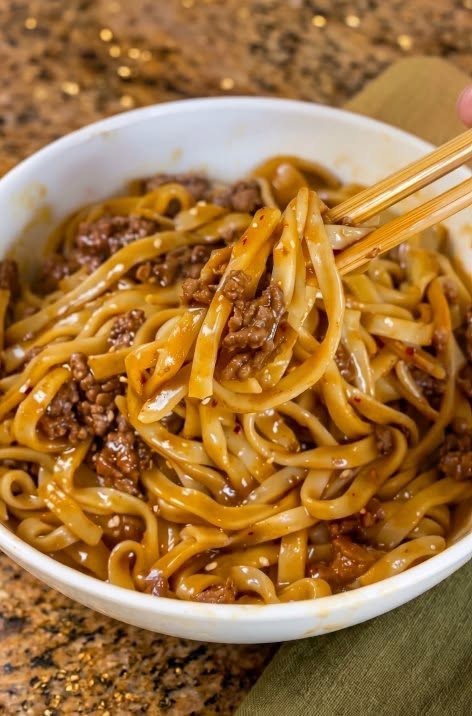
Ingredient Notes
Ground beef
Ground beef makes this recipe particularly easy because it doesn’t need to be sliced or marinated.
For a richer result, you can use beef with a moderate fat content. If the cooked beef releases a large amount of fat, carefully drain some of it before continuing.
Lo Mein noodles
Fresh or dried lo mein noodles work well.
If you can’t find lo mein noodles, spaghetti or another similar wheat noodle can work as a substitute. The texture won’t be exactly the same, but the sauce will still work beautifully.
Soy sauce
Low-sodium soy sauce gives you more control over the saltiness.
If you’re using regular soy sauce, you may want to start with slightly less and add more later if needed.
Oyster sauce
Oyster sauce adds depth and a slightly sweet-savory flavor.
If you don’t have it, you can make the dish without it, although the finished sauce will have a slightly different flavor.
Vegetables
Don’t feel limited to the vegetables listed above.
This is a great recipe for using small amounts of vegetables already sitting in the refrigerator.
Try:
- Broccoli
- Snow peas
- Baby corn
- Bok choy
- Zucchini
- Bean sprouts
- Spinach
- Thinly sliced onions
How to Make Ground Beef Lo Mein
Step 1: Prepare the Sauce
Start by mixing the soy sauce, oyster sauce, hoisin sauce, sesame oil, brown sugar, water, and red pepper flakes in a small bowl.
Whisk until the sugar is mostly dissolved.
Set the sauce aside while you prepare the noodles and beef.
Preparing the sauce first makes the cooking process much easier because everything can move quickly once the skillet gets hot.
Common mistake to avoid: Don’t pour the sauce ingredients into the pan one at a time while you’re trying to cook everything else. Having the sauce ready prevents overcooking the vegetables while you measure ingredients.
Step 2: Cook the Noodles
Bring a large pot of water to a boil.
Cook the noodles according to the package directions until they’re just tender.
Try not to overcook them. The noodles will spend additional time in the skillet with the beef and sauce, so they should still have some texture when they leave the cooking water.
Drain well.
If your noodles tend to stick together, toss them lightly with a small amount of sesame oil.
Step 3: Brown the Ground Beef
Heat a large skillet or wok over medium-high heat.
Add the cooking oil if your beef needs it, then add the ground beef.
Break the meat apart with a wooden spoon or spatula as it cooks.
Continue cooking until the beef is browned and cooked through.
For food-safety guidance, the USDA recommends cooking ground meats to 160°F (71°C) measured with a food thermometer. USDA Food Safety and Inspection Service
If there is excessive rendered fat, carefully drain some of it.
Step 4: Add Garlic and Ginger
Add the minced garlic and grated ginger to the cooked beef.
Stir for about 30 seconds to 1 minute, just until fragrant.
Be careful not to burn the garlic. Burned garlic can quickly make the entire dish taste bitter.
Step 5: Stir-Fry the Vegetables
Add the carrots, bell pepper, cabbage, and mushrooms if using.
Stir-fry over medium-high to high heat until the vegetables are tender-crisp.
You don’t want them completely soft.
A little crunch gives the finished Ground Beef Lo Mein much better texture.
If you’re using vegetables that cook quickly, such as green onions or spinach, save them for later.
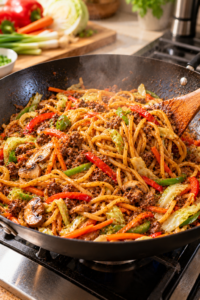
Step 6: Add the Noodles
Add the cooked noodles directly to the skillet.
Use tongs to gently toss everything together.
Don’t stir too aggressively, especially if you’re using fresh noodles, because they can break.
Step 7: Add the Sauce
Pour the prepared sauce over the noodles and beef.
Toss continuously for a couple of minutes so the sauce coats the noodles evenly.
You’ll notice the noodles become glossy as the sauce heats and clings to them.
Taste before adding additional salt. Soy sauce and oyster sauce can already provide plenty of sodium.
Step 8: Finish With Green Onions
Add the sliced green onions during the final minute of cooking.
Toss once more and remove the skillet from the heat.
Serve immediately while the noodles are hot and glossy.
Tips for the Best Ground Beef Lo Mein
Use a large skillet
Overcrowding makes stir-frying difficult.
A large wok or skillet gives the ingredients enough room to cook rather than steam.
Keep the heat relatively high
Lo mein benefits from quick cooking.
A properly heated pan helps brown the beef and keeps the vegetables from becoming watery.
Don’t overcook the noodles
This is one of the easiest ways to ruin the texture.
Cook them just until tender, then let the skillet finish the job.
Prepare everything before cooking
Once the pan is hot, the recipe moves quickly.
Have the sauce mixed and the vegetables chopped before you start.
Keep some vegetable crunch
Carrots, cabbage, peppers, and mushrooms shouldn’t become mushy.
Cook them until they’re tender but still have some bite.
Taste before seasoning
Because soy sauce and oyster sauce are salty, you may not need additional salt.
Add spice gradually
Red pepper flakes are optional. Start with a small amount and add more at the table if you prefer extra heat.
Common Mistakes to Avoid
Using noodles that are too soft
Overcooked noodles can become mushy when tossed with the sauce.
Cooking everything at once
Adding cold beef, vegetables, noodles, and sauce to a crowded pan can cause the ingredients to steam instead of developing good flavor.
Cooking in stages gives you better texture.
Burning the garlic
Garlic only needs a short amount of time in the hot skillet.
Once it becomes fragrant, move on to the vegetables.
Adding too much sauce
More sauce doesn’t necessarily mean more flavor.
Too much liquid can make the noodles heavy and salty.
Start with the recommended amount and adjust after tasting.
Not draining excess beef fat
If your ground beef releases a lot of fat, draining some of it helps prevent a greasy finished dish.
Easy Variations
Spicy Ground Beef Lo Mein
Add extra crushed red pepper flakes or a spoonful of chili crisp.
You can also add a little sriracha to the sauce.
Vegetable-Loaded Lo Mein
Increase the vegetables and reduce the amount of noodles slightly.
Broccoli, cabbage, carrots, peppers, mushrooms, and snow peas are particularly good choices.
Ground Turkey Lo Mein
Ground turkey can replace the beef if you prefer a leaner protein.
Because turkey has a milder flavor, you may want to add a little extra garlic, ginger, or sesame oil.
Ground Chicken Lo Mein
Ground chicken works in the same way and absorbs the savory sauce nicely.
Extra-Garlic Lo Mein
If you’re a garlic lover, increase the garlic to three or four cloves.
Add some sliced green onions at the very end for even more freshness.
Peanut Lo Mein
For a richer variation, whisk a small spoonful of creamy peanut butter into the sauce.
Add a splash of warm water if the sauce becomes too thick.
Vegetarian Lo Mein
Skip the beef and add extra mushrooms, tofu, broccoli, cabbage, and peppers.
You can also use a vegetarian oyster-style sauce.