
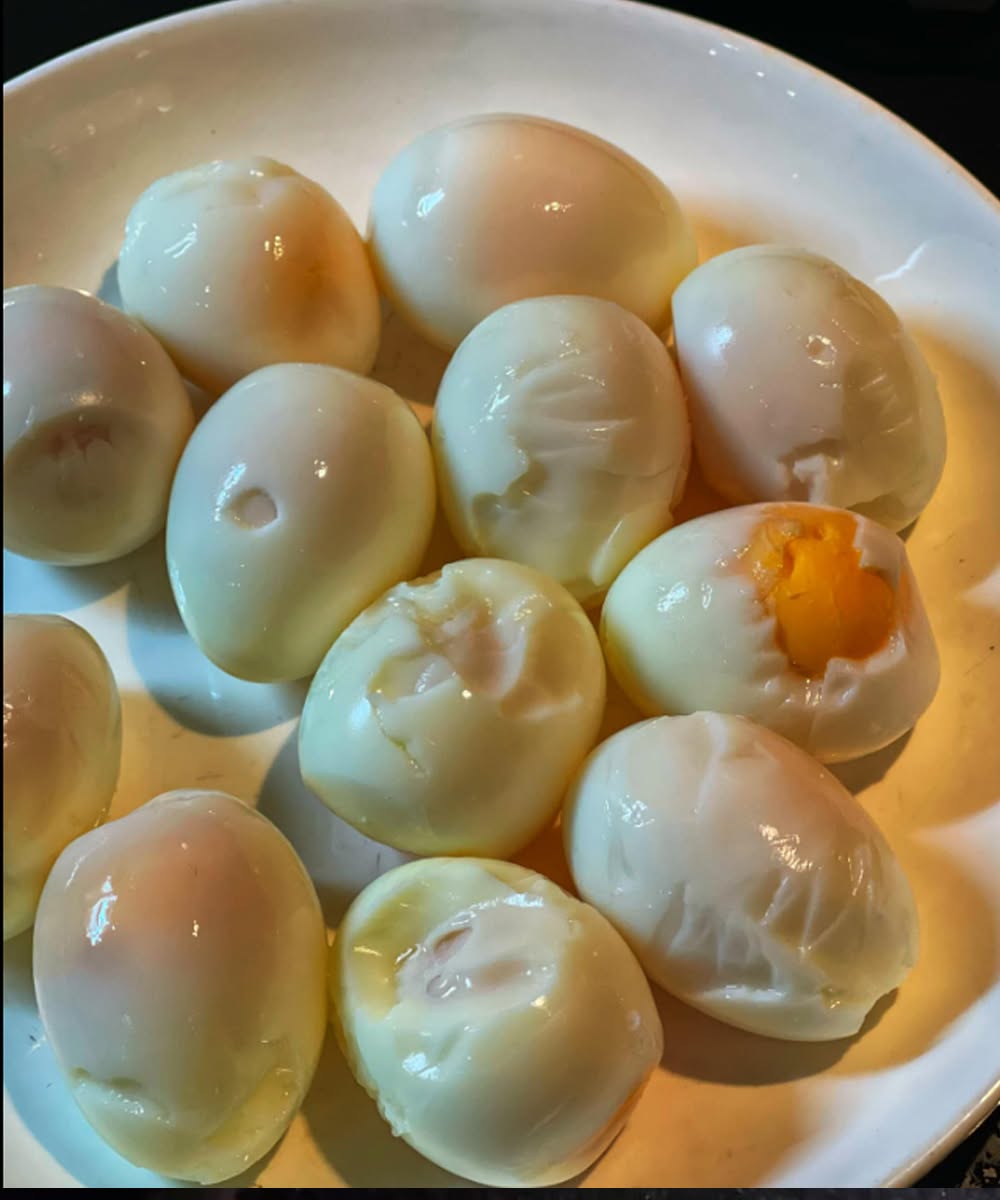
Common Mistakes to Avoid
Boiling the Eggs Too Aggressively
A rapid, rolling boil can crack the shells. After adding the eggs, reduce the heat enough to maintain controlled bubbling.
Skipping the Ice Bath
Cooling the eggs at room temperature allows them to continue cooking. It also misses the temperature shock that can make peeling easier.
Peeling From the Narrow End
The narrow end usually offers less room to reach beneath the membrane. Start with the wider end and locate the air pocket.
Digging With Your Fingernails
Fingernails can cut deeply into the egg. Use the soft side of your thumb to push the shell and membrane away.
Expecting Every Egg to Be Perfect
Egg freshness, shell thickness, storage history, and small temperature differences can affect peeling. A reliable method greatly improves the results, but an occasional stubborn egg is normal.
Do Vinegar or Baking Soda Make Eggs Easier to Peel?
Some cooks add vinegar or baking soda to the cooking water.
Add links to articles already published on your website:
- Link classic egg salad in the “What Can You Do With Damaged Hard-Boiled Eggs?” section.
- Link perfect deviled eggs in the serving suggestions.
- Link high-protein breakfast ideas after the introduction.
- Link how to store eggs safely in the storage section.
- Link potato salad recipe where potato salad is mentioned.
Vinegar can help egg whites coagulate if a shell cracks, but it does not guarantee easy peeling. Baking soda raises the water’s alkalinity and may help in some cases, although results can be inconsistent.
The most dependable combination remains:
- Use eggs that are not extremely fresh.
- Lower them carefully into boiling water.
- Cook them for an accurate amount of time.
- Chill them immediately in ice water.
- Peel from the wide end.
What Can You Do With Damaged Hard-Boiled Eggs?
Do not throw away a safely cooked egg simply because its surface is uneven. Chopping or mashing it hides the damage completely.
Use torn hard-boiled eggs for:
- Classic egg salad
- Potato salad
- Cobb salad
- Tuna salad
- Breakfast sandwiches
- Chopped toast toppings
- Creamy sandwich fillings
- Ramen and noodle bowls
- Mashed deviled-egg filling
Reserve the smoothest eggs for deviled eggs or dishes where presentation matters.
These Easy-Peel Hard-Boiled Eggs are convenient for breakfast, salads, sandwiches, and weekly meal preparation. Their smooth surface also makes them ideal for deviled eggs.
Serving Suggestions
Easy-peel hard-boiled eggs are a convenient source of protein and can be served in many ways.
Try them:
- Sliced over avocado toast
- Quartered in a green salad
- Chopped into a breakfast bowl
- Seasoned with salt, pepper, and paprika
- Served with fresh vegetables and hummus
- Added to sandwiches
- Mixed into potato or pasta salad
- Packed in a refrigerated lunch box
Storage and Food Safety
Allow the eggs to cool and refrigerate them within two hours of cooking. If the surrounding temperature is above 90°F or 32°C, do not leave them unrefrigerated for more than one hour. FDA guidance also recommends cooking eggs until both the whites and yolks are firm.
For additional food-safety guidance, read the FDA’s egg safety recommendations, including advice about cooking, serving, and refrigerating eggs safely.
Store hard-boiled eggs in a covered container in the refrigerator and use them within one week.
Peeled Eggs
Place peeled eggs in an airtight container. A slightly damp paper towel can help keep them from drying out. Replace it if it becomes excessively wet.
Unpeeled Eggs
Leaving the shell intact offers additional protection against drying and refrigerator odors. Peel the eggs shortly before serving when convenient.
Can Hard-Boiled Eggs Be Frozen?
Freezing whole hard-boiled eggs is not recommended. The cooked whites become tough, watery, and rubbery after thawing.
Can They Be Reheated?
Hard-boiled eggs are normally served cold or at room temperature. Do not microwave a whole hard-boiled egg because pressure can accumulate and make it burst.
If you want it warm, place the unpeeled egg in a bowl of hot—but not actively boiling—water for several minutes.
Once you understand the role of egg freshness and temperature, preparing Easy-Peel Hard-Boiled Eggs becomes a dependable kitchen routine.
Frequently Asked Questions
Why do pieces of white come off with the shell?
The membrane between the shell and white has adhered tightly to the egg. This commonly happens with extremely fresh eggs, insufficient chilling, or a peeling technique that does not get beneath the membrane.
Are damaged hard-boiled eggs safe to eat?
A damaged appearance does not automatically make an egg unsafe. If it was handled correctly, fully cooked, promptly refrigerated, and does not have an unusual odor or appearance, it can still be eaten.
Why does my yolk have a green ring?
A gray-green ring usually results from overcooking or cooling the egg too slowly. It is generally harmless, but accurate timing and immediate ice-water cooling help prevent it.
Can I peel all the eggs in advance?
Yes. Peeled eggs can be refrigerated in a sealed container, although eggs stored in their shells generally retain moisture better.
Is steaming better than boiling?
Steaming can also produce eggs that peel easily. Place the eggs in a steamer basket over boiling water, cover, and steam for approximately 12–13 minutes before transferring them to an ice bath.
Why did an egg crack in the saucepan?
The egg may have been dropped into the pan, knocked against another egg, or exposed to extremely vigorous boiling. Lower eggs with a spoon and maintain a controlled boil.
Should I poke a hole in the shell?
It is unnecessary, and piercing the shell can introduce bacteria or cause the egg to leak. The boiling-water and ice-bath method works without puncturing the egg.
Conclusion
Smooth, easy-peel hard-boiled eggs depend on more than cooking time. Egg freshness, the starting water temperature, rapid cooling, and peeling technique all affect the final result.
Use eggs that are not extremely fresh, lower them gently into boiling water, cook for 11–12 minutes, and chill them in a generous ice bath. Crack the shell all over, begin at the wide end, and peel beneath cool water.
If a few eggs still emerge with torn surfaces, use them in egg salad or another chopped recipe. Their appearance may not be perfect, but they can still taste delicious.
With a little practice, Easy-Peel Hard-Boiled Eggs can become one of the easiest foods to prepare ahead for busy days.
Easy-Peel Hard-Boiled Eggs Recipe Card
Preparation Time: 5 minutes
Cooking Time: 12 minutes
Cooling Time: 10 minutes
Total Time: 27 minutes
Yield: 6 eggs
Category: Breakfast, Snack
Method: Boiling
Cuisine: American
Ingredients
- 6 large refrigerated eggs
- Water for boiling
- 2 cups ice
- Cold water for cooling
Instructions
- Fill a large bowl with ice and cold water.
- Bring enough water to cover the eggs by 1 inch to a boil.
- Reduce the heat slightly and lower the eggs into the water with a slotted spoon.
- Maintain a gentle boil and cook for 11–12 minutes.
- Transfer the eggs immediately to the ice bath.
- Cool for at least 10 minutes.
- Tap and gently roll each egg to crack the shell.
- Begin at the wide end and peel under cool running water.
- Serve immediately or refrigerate in a covered container.
Notes
- Eggs refrigerated for approximately one week are often easier to peel than extremely fresh eggs.
- Do not skip the ice bath.
- Refrigerate cooked eggs within two hours.
- Use refrigerated hard-boiled eggs within one week.
- Do not freeze whole hard-boiled eggs.