
Common Mistakes to Avoid
Putting raw chicken directly into the pastry. This recipe uses cooked chicken. Prepare it fully before mixing the filling; do not depend on the pastry’s baking time to cook raw chicken safely.
Using warm filling. Warm chicken softens the pastry during assembly. Let cooked chicken cool, then mix and fill the rolls.
Overfilling each rectangle. A generous parcel is appealing, but too much chicken mixture makes the edges difficult to seal. Divide the filling evenly among six pieces.
Skipping the steam slits. A couple of small cuts in the top give steam a place to escape. They also help the pastry rise without an unexpected tear along one edge.
Baking on an overcrowded tray. Puff pastry expands. Leave enough space for the rolls to rise and brown on their sides.
Removing them when the pastry is merely light gold. For chicken puff pastry rolls with crisp layers, wait until the surface is a confident golden brown and check the folded edges.
Variations and Substitutions
Try a different cheese
Cheddar contributes a sharper flavor, while mozzarella gives a milder, softer melt. You can use either in the stated quantity. A mixture of the two also works if that is what you have.
Add spinach
Cook a small handful of spinach, squeeze it thoroughly to remove water, chop it finely, and mix it into the filling. Spinach that has not been drained well can make the bottom pastry damp.
Change the herbs
Chives work well in place of parsley. A little finely chopped thyme gives the chicken a different savory note. Start with a modest amount so the herbs support rather than overwhelm the filling.
Make smaller appetizer portions
Cut the pastry into more, smaller rectangles and use less filling in each. Bake until the smaller parcels are puffed, golden, and hot; begin checking them earlier than the full-size rolls. The exact yield and baking time will depend on how you cut your pastry.
Leave out the mustard
If you prefer a very mild filling, omit the Dijon mustard. Taste the cooked filling mixture and adjust its seasoning before assembling the parcels.
These changes preserve the basic method of chicken puff pastry rolls: use cooked, cooled chicken; keep the filling thick; seal the cold pastry; and bake until fully risen and golden.
What to Serve with Chicken Puff Pastry Rolls
A crisp green salad is an easy partner for the rich filling and buttery pastry. Dress the greens lightly so the rolls remain the focus of the plate. Sliced tomatoes or simply cooked green vegetables are good choices too.
For a casual gathering, offer the rolls with a small bowl of tomato dipping sauce. Put the sauce on the side rather than over the pastry so the tops stay flaky. If you are serving them as appetizers, cut each roll in half after a short rest and arrange the pieces on a platter.
For more meal ideas to pair with these chicken puff pastry rolls, browse our dinner recipes. This is a direct internal link to the dinner section, where readers can choose another dish or side that suits their table.
Make-Ahead Instructions
You can prepare the cooked chicken filling earlier in the day and keep it covered in the refrigerator. When you are ready to bake, unroll the cold pastry, shape the parcels, and proceed with the egg wash and short chill.
You can also assemble the unbaked rolls and refrigerate them, covered, for a few hours before baking. Brush with egg wash closer to oven time if you want the neatest finish. Avoid leaving shaped rolls for so long that moisture from the filling softens the base.
If using leftover chicken, remember that its storage time began when the chicken was originally cooked, not when it was put into the pastry. Choose chicken that has been refrigerated properly and is still within its safe storage window.
Storage, Reheating, and Freezing
Refrigerate leftover chicken puff pastry rolls promptly in a covered container. Use them within 3–4 days of the chicken’s original cooking date. If the chicken was already several days old before you made the rolls, use or freeze the finished parcels sooner rather than restarting the clock.
The USDA’s leftovers and food safety guidance gives a 3–4 day refrigerator window for leftovers and recommends reheating leftovers to 165°F (74°C). Refrigerate promptly after serving and use a food thermometer when reheating the chicken filling.
To reheat, place the rolls on a baking sheet in a 350°F (175°C) oven until the filling reaches 165°F (74°C) and the pastry has crisped again. The time will vary with the size of the rolls and how cold they are. A microwave will heat the filling, but it tends to soften puff pastry.
For longer storage, freeze fully cooled, baked rolls in a single layer until firm, then transfer them to a suitable airtight container or freezer bag. For the best pastry quality, use within 2 months. Thaw in the refrigerator and reheat thoroughly in the oven. The filling may be slightly less creamy after freezing, but the oven helps restore some crispness to the pastry.
Frequently Asked Questions
Can I use rotisserie chicken?
Yes, provided it has been handled and refrigerated properly. Remove the skin and bones, shred the meat, and taste it before adding salt, since prepared chicken can already be well seasoned.
Can I use raw chicken in the filling?
Not with this method. Cook chicken to 165°F (74°C) first, then cool and shred it before mixing the filling. The recipe’s baking time is written for cooked chicken inside the pastry.
Why did the bottom pastry turn soggy?
The filling may have contained too much liquid, the pastry may have warmed during assembly, or the rolls may have needed longer in the oven. Drain juicy chicken, use a thick filling, chill the assembled parcels, and bake until the bottoms and sides are golden.
Can I make chicken puff pastry rolls without cream cheese?
You can try another thick, spreadable filling, but it may change how well the chicken holds together. A thin sauce is likely to leak or soften the pastry. Cream cheese is the simplest option for the recipe as written.
Can I prepare the rolls the night before?
Preparing the filling the night before is the most reliable choice. Assemble and bake the next day for crisp pastry. If you assemble them ahead, cover and refrigerate them well, and be aware that the bottoms may soften as they wait.
What if my puff pastry cracks while unfolding?
It may still be too cold. Let it sit according to its package directions until flexible, then press small cracks together. Keep it cool rather than leaving it out until it becomes sticky.
Do I need the egg wash?
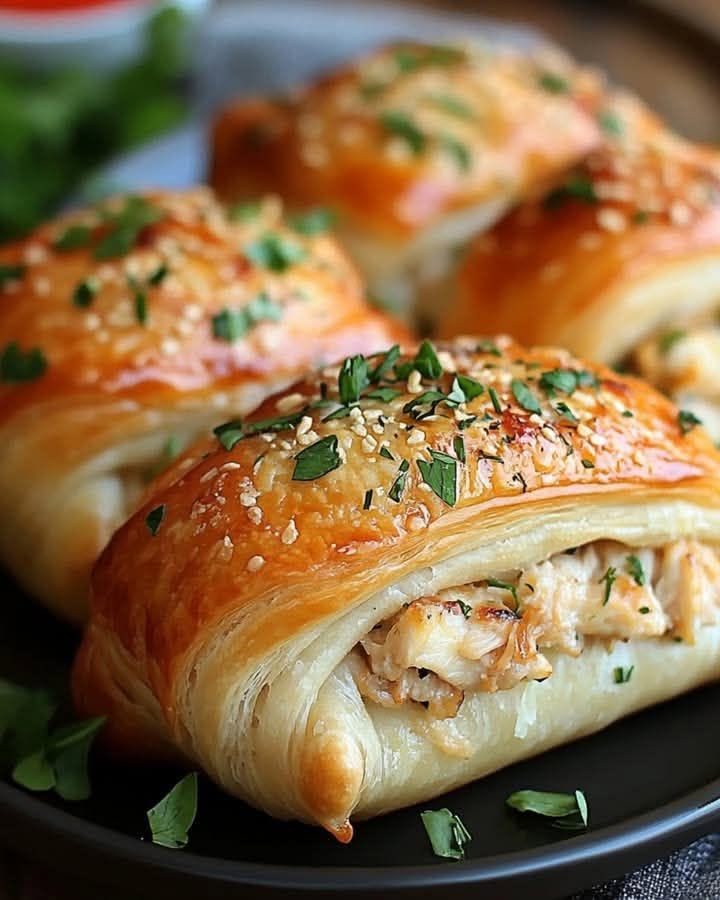
Egg wash produces the glossy, deep golden finish visible in the photo. You can omit it, but the baked pastry will look paler. The rolls will still need to bake fully.
How do I tell when the rolls are done?
Look for well-risen, deeply golden pastry, including the sides and folded edges. The filling should be hot. The exact time depends on your pastry sheet, parcel size, and oven.
Final Thoughts
These chicken puff pastry rolls turn a sheet of pastry and cooked chicken into six inviting parcels. The method is easy to repeat: mix a thick filling, fold it into cold pastry, chill briefly, and bake until the layers are golden. Serve them while the tops are crisp, with a salad or a dipping sauce alongside.
Recipe Card: Chicken Puff Pastry Rolls
Yield: 6 rolls
Prep time: 25 minutes
Assembly chill: 15 minutes
Bake time: 22–28 minutes
Total time: Approximately 1 hour 5 minutes
Oven: 400°F (200°C)
Ingredients
- 2 cups (about 280 g) fully cooked chicken, shredded or finely chopped
- 4 oz (115 g) full-fat cream cheese, softened
- ½ cup (55 g) grated mature cheddar or mozzarella
- 1 tablespoon finely chopped fresh parsley, plus extra for serving
- 1 teaspoon Dijon mustard
- ¼ teaspoon garlic powder
- ¼ teaspoon black pepper
- ¼ teaspoon fine salt, or to taste
- 1 sheet ready-rolled puff pastry, about 14 oz (400 g), thawed but cold
- 1 large egg, beaten with 1 teaspoon water
- 1 teaspoon sesame seeds, optional
Instructions
- Mix the cooked, cooled chicken with the cream cheese, grated cheese, parsley, mustard, garlic powder, pepper, and salt. The filling should be thick.
- Heat the oven to 400°F (200°C). Line a baking sheet with parchment.
- Cut the cold pastry into six similar rectangles. Divide the filling among them, placing it on one half of each rectangle and leaving a ½-inch (1 cm) border.
- Fold the empty halves over the filling. Press and crimp the edges, then place the parcels apart on the tray. Brush with egg wash, add sesame seeds if using, and cut small steam slits in the tops.
- Refrigerate the assembled rolls for 15 minutes.
- Bake for 22–28 minutes, until puffed and deeply golden, with hot filling. Rest for 5 minutes before serving.
Food safety: Cook chicken to 165°F (74°C) before using it in the filling. Reheat leftovers to 165°F (74°C).