
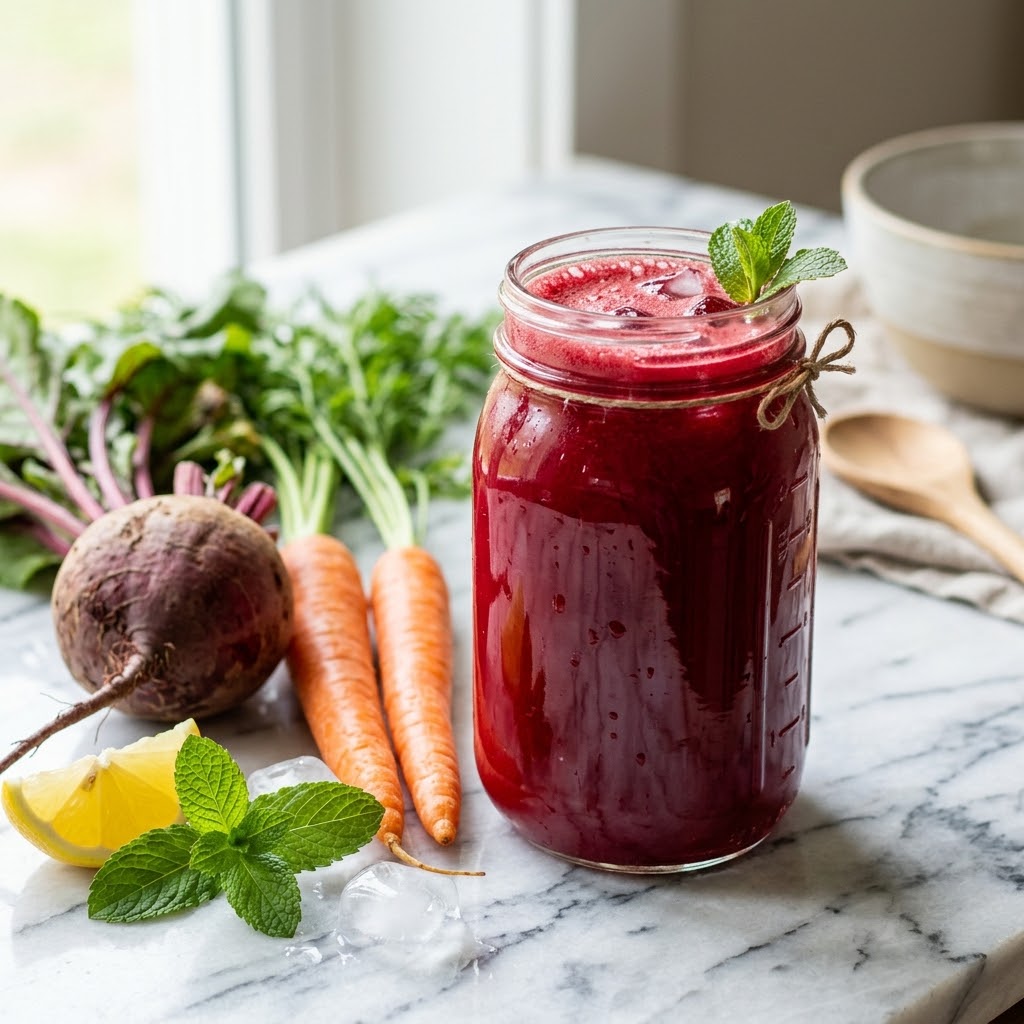
Beetroot is particularly interesting because of its nitrate content.
The body can convert dietary nitrate into nitric oxide, a molecule involved in blood-vessel relaxation and circulation. Beetroot juice has therefore been investigated in research involving blood pressure and exercise performance.
That doesn’t mean beetroot juice will automatically improve circulation or treat a medical condition. It simply means beetroot contains a naturally occurring compound that has been studied for cardiovascular and exercise-related effects.
For everyday eating, beetroot can be one enjoyable way to add variety to your vegetable intake.
3. It Can Complement an Iron-Rich Diet
This is where carrot and beetroot juice is sometimes discussed in relation to anemia.
Beetroot does contain iron, but it is important not to overstate the amount. Plant foods provide non-heme iron, which is generally absorbed less efficiently than heme iron from animal foods.
Vitamin C can improve the absorption of non-heme iron.
That’s why adding a little lemon juice to this recipe can be a sensible nutritional combination.
However, drinking beetroot juice alone is not a treatment for iron-deficiency anemia.
Iron-deficiency anemia can have different causes, including blood loss and inadequate iron intake. NIH guidance notes that women and girls with heavy periods are among the groups at greater risk of iron deficiency.
If anemia has been diagnosed, the appropriate treatment depends on the cause and severity. A doctor may recommend dietary changes, iron supplementation, or investigation of ongoing blood loss.
4. Lemon Can Improve Non-Heme Iron Absorption
If you want to make this juice more useful as part of an iron-conscious diet, lemon is a good optional addition.
Vitamin C improves the absorption of non-heme iron from plant foods.
That’s one reason the recipe includes optional lemon juice.
You can also pair meals containing plant-based iron with vitamin-C-rich foods such as:
- Bell peppers
- Citrus fruits
- Strawberries
- Tomatoes
- Broccoli
- Kiwi
This broader approach is more useful than relying on one particular juice.
Beetroot for Eye Health: The Powerful Superfood Your Vision Needs
5. It Adds Folate to the Diet
Beetroot contains folate, a B vitamin involved in normal cell division and red blood cell formation.
Folate is important for normal blood-cell production, but that doesn’t mean beetroot juice can independently correct every type of anemia.
Anemia can result from iron deficiency, vitamin B12 deficiency, folate deficiency, chronic disease, blood loss, and other causes. Treating the correct cause matters.
So if you’re drinking this juice because you are concerned about anemia, think of it as one nutritious addition to your diet—not your treatment plan.
6. It Can Be a Convenient Way to Enjoy More Vegetables
Some people simply find it easier to consume vegetables in drink form.
A fresh carrot and beetroot drink can be useful when you want something:
- Naturally colorful
- Refreshing
- Vegetable-based
- Easy to prepare
- Naturally sweet
- Customizable with lemon or ginger
Still, whole vegetables should remain an important part of your diet because they provide fiber and require more chewing, which can contribute to fullness.
7. It Adds Variety to a Balanced Diet
Healthy eating doesn’t need to be complicated.
You don’t need one magical ingredient or one special drink to improve your diet. A better approach is to build meals around a variety of vegetables, fruits, whole grains, legumes, nuts, seeds, and appropriate protein sources.
Carrot and beetroot juice can simply be one enjoyable option within that pattern.
Can Carrot and Beetroot Juice Treat Fibroids?
Continue on the next page