
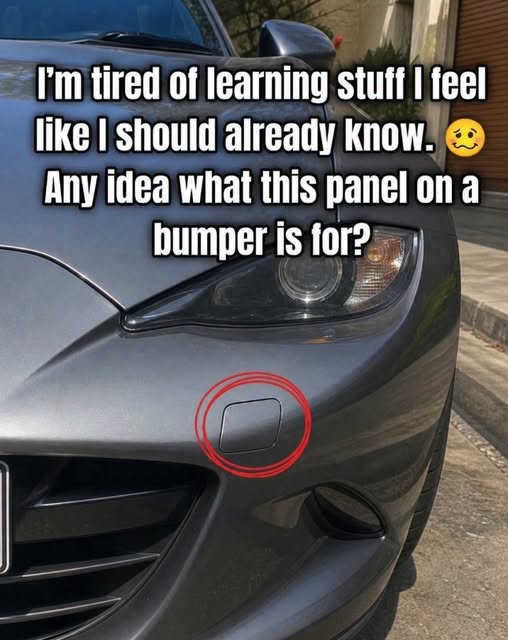
Why Pulling Direction Matters
Even when the eyelet is approved for a particular towing operation, direction matters.
The attachment point may be designed primarily for a straight load.
Applying force at a severe sideways angle can damage the hardware or vehicle.
Manufacturer instructions for applicable Mazda models specifically warn users to pull in a straight direction and not apply sideways force to the eyelet.
This is another reason professional towing assistance is often safer than improvising.
Can You Tow the Entire Car Using This Point?
Not necessarily.
How a vehicle should be transported depends on factors such as:
- Front-, rear-, or all-wheel drive
- Transmission design
- Whether the wheels can rotate
- Whether the parking brake can release
- Manufacturer specifications
- Vehicle damage
For example, Mazda recommends professional towing and specifies flatbed or wheel-lift arrangements depending on drivetrain and condition.
Incorrect towing can damage the transmission, drivetrain, brakes, body, or other components.
The existence of a car bumper tow hook cover therefore does not mean you should attach another vehicle and start towing.
What If the Cover Goes Missing?
Because the panel is small and removable, it can occasionally be lost or damaged.
The car will usually still drive normally, but leaving the opening uncovered may expose the receiver and makes the bumper look unfinished.
Replacement covers are generally model-specific because shape, mounting tabs, and bumper contours vary.
If you need a replacement, match it using your exact:
- Make
- Model
- Model year
- Bumper version
Paint color may also need to be matched.
Why Do Some Cars Have Covers at Both Ends?
Some vehicles have access points at both the front and rear, while others may have different arrangements.
Again, having an access point does not automatically mean both ends are approved for identical uses.
The owner’s manual should explain the purpose of each location.
Common Mistakes to Avoid
One common mistake is assuming the panel hides a sensor. Parking sensors are generally visible as small round components, whereas the larger removable bumper panel often covers an attachment point.
Another mistake is forcing the cover open and damaging its retaining tabs or scratching the paint.
The more serious mistake is installing an eyelet and assuming it can withstand any pulling force. Towing and vehicle recovery can involve substantial loads, and incorrect attachment can cause serious damage or injury.
Finally, never attach a strap to random suspension, bumper, steering, or underbody components simply because they look strong.
What Should You Do During an Actual Breakdown?
If your vehicle becomes disabled, first move yourself and passengers to a safe location when possible.
Consult the owner’s manual for the correct towing procedure for your exact vehicle. If there is any uncertainty about the attachment point, drivetrain, or towing method, use a professional roadside or towing service.
A flatbed is often required or preferred for vehicles that cannot safely be towed with wheels on the ground.
7 Useful Facts About the Car Bumper Tow Hook Cover
The mystery becomes much simpler once you understand the design:
- The visible plastic panel is only a cover.
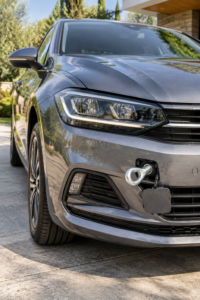
- An equipped vehicle may have a threaded receiver behind it.
- A removable eyelet may be stored with the vehicle’s tools.
- Its approved purpose varies by vehicle.
- Some eyelets are intended only for tiedown rather than towing.
- Heavy recovery is not automatically safe from this point.
- Your vehicle’s owner’s manual determines the correct procedure.
That last point is the most important.
Frequently Asked Questions
What is the small square panel on my front bumper?
On many vehicles, it is an access cover for a removable towing or tiedown eyelet. Other designs are possible, so verify it in your owner’s manual.
Is there actually a hook behind the cover?
Usually there is a threaded mounting receiver rather than a permanent hook. The removable eyelet is installed into that receiver when needed.
Can I pull my car using the tow eyelet?
Only if your manufacturer’s instructions specifically permit that use and you follow the prescribed procedure. Some eyelets are only tiedown points.
Can I use it to pull a car stuck in mud?
Do not assume so. Some manufacturers specifically prohibit using towing eyelets for heavy recovery from mud, sand, ditches, or similar situations.
Why doesn’t the manufacturer just leave a hook exposed?
A removable system provides access when needed while allowing a cleaner bumper design during normal driving.
Can I remove the cover myself?
Often yes, but use the procedure specified by the manufacturer. Excessive force can break the cover or damage the bumper paint.
Where can I find instructions for my car?
Look in the owner’s manual under terms such as “towing,” “emergency towing,” “towing eyelet,” or “tiedown hooks.”
Final Thoughts
That mysterious little panel on the bumper is a good example of how cars hide practical features in plain sight.
On many vehicles, the car bumper tow hook cover conceals a threaded mounting point for a removable towing or tiedown eyelet. It can be useful when a vehicle needs assistance or transportation, but its exact purpose depends on the manufacturer’s design.
The most important lesson is not simply knowing what the panel hides. It is knowing that towing and recovery points are not interchangeable. Before attaching anything to the eyelet, check the owner’s manual and follow the procedure specified for your particular vehicle.
For an example of manufacturer-specific instructions, Mazda’s official owner’s manual guidance shows how the bumper cap and towing eyelet are handled on an applicable model.