How Many Eggs Are in the Pan!?

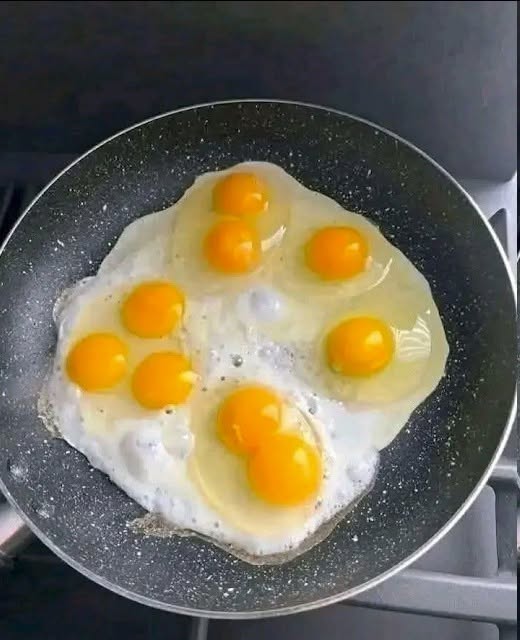
At first glance, it’s just a simple scene: golden yolks glistening in a hot pan, whites gently bubbling at the edges. But look closer, and you’ll realize it’s more than breakfast—it’s a small moment of culinary poetry. A pan filled with eggs invites curiosity, care, and a bit of counting. How many are there, really? And why does it matter?

2. The Science Behind a Perfect Fried Egg

Frying eggs may seem effortless, but it’s a delicate dance of heat and timing. Each egg is a self-contained system of proteins, fats, and water. As heat hits the pan:

The whites (mostly protein and water) begin to turn opaque around 62–65°C.

The yolks, richer in fats and nutrients, thicken more slowly, remaining silky and tender when cooked gently.

When several eggs share one pan, the challenge increases. Heat distribution becomes critical. Too much heat, and the whites crisp before the yolks warm. Too little, and everything turns pale and rubbery. Cooking multiple eggs successfully is a quiet mark of skill.

3. What the Yolk Color Tells You

Those glowing yolks aren’t just visually pleasing. Their color can reveal a lot:

Deep orange or golden yolks often come from hens fed a varied diet rich in carotenoids (greens, corn, insects).

Paler yolks usually indicate a more limited feed.

Nutritionally, eggs are powerhouses—rich in high-quality protein, vitamin D, B12, choline (essential for brain health), and healthy fats. One pan with several eggs isn’t indulgence; it’s nourishment.

4. Counting Eggs: More Than a Numbers Game

So… how many eggs are in the pan?

Click the “Next→” button below to continue reading!


Read more

Lemon Ginger Water

A refreshing, revitalizing, and simple infused water with the bright zing of lemon and the warming kick of ginger. Perfect for staying hydrated, aiding digestion, and adding a spa-like touch to your day.

Prep Time: 5 mins | Infusion Time: 1 hour (or more) | Makes: 1 Pitcher (about 8 cups)

Ingredients

· 1 lemon, thinly sliced (preferably organic)
· 1-2 inch piece fresh ginger, peeled and thinly sliced or grated
· 8 cups cold water (filtered, if possible)

· Optional add-ins: Fresh mint leaves, cucumber slices, a dash of honey or maple syrup, a pinch of turmeric

Instructions

Prepare the Ingredients

· Lemon: Wash thoroughly (especially if not organic). Slice into thin rounds, removing any seeds.

· Ginger: Peel the ginger using a spoon or vegetable peeler, then slice thinly or grate for a stronger flavor.

Infuse

· In a large pitcher (glass is best), combine the lemon slices and ginger slices.
· Pour in the cold water.

· Stir gently, then cover and refrigerate for at least 1 hour to allow the flavors to infuse. For maximum flavor, let it steep for 4-6 hours or overnight.

Serve

· Pour into glasses over ice, if desired. You can eat the ginger slices if you like a spicy bite!
· Keep the pitcher refrigerated and consume within 24 hours for the freshest taste.

Tips for the Best Flavor

· Adjust to Taste: Use more ginger for a stronger, spicier kick or more lemon for extra tartness.

· Muddle Gently: Before adding water, gently press the lemon slices and ginger with a muddler or spoon to release more juices and oils.

· Grating Ginger: For a much stronger and faster infusion, grate the ginger using a microplane. The flavor will infuse more quickly and intensely.

· Warm Version: For a soothing tea, pour hot water over the lemon and ginger, steep for 5-10 minutes, then add honey to taste.

Health & Hydration Benefits

continued on the next page’

Read more

How Many Eggs Are in This Pan?

Take a careful look at the pan before you answer.

Don’t rush.

At first glance, the answer seems obvious.

Most people simply count the egg yolks they can see.

But is that really the right way to count?

Some eggs can have two yolks.

Discover more
Blog
Special Occasions
Apple cider vinegar

Some egg whites can overlap.

And sometimes two separate eggs look like one.

That is what makes this puzzle so interesting.

Discover more
Family
Cooking & Recipes
Condiments & Dressings

Slow down and examine every part of the picture.

Notice how some yolks share the same white.

Notice how others have their own separate white.

The challenge is not just counting yolks.

The challenge is figuring out how many actual eggs were cracked into the pan.

Let’s break it down.

At the top of the pan, you can see two eggs with single yolks.

On the right side, there are two more eggs, each with one yolk.

On the left side, there is one large white that contains two yolks.

That could be one double-yolk egg.

Or it could be two separate eggs that merged together after being cracked.

Near the bottom, there is another large white with two yolks.

Again, this could be one double-yolk egg.

For Complete Cooking STEPS Please Head On Over To Next Page Or Open button (>) and don’t forget to SHARE with your Facebook friends.

Read more