
Variations and Substitutions
Use another sausage
You can make bangers and mash with chicken, turkey, or beef sausages if you prefer. Choose a style that pairs well with onion gravy, follow any package instructions, and check the appropriate safe internal temperature. A heavily spiced sausage will change the character of the dish, which may be exactly what you want.
Change the mash
Replace up to half the potatoes with cooked parsnips for a slightly sweet mash. You could also fold roasted garlic into the finished potatoes. If you use a different vegetable, adjust the milk gradually because it may hold a different amount of moisture.
Make a different gravy
For a deeper flavor, replace a small portion of the stock with a dark ale and let it simmer with the onions before adding the remaining stock. For an alcohol-free version, simply use all stock as written. A teaspoon of mustard stirred into the finished gravy adds a gentle sharpness.
Swap the peas
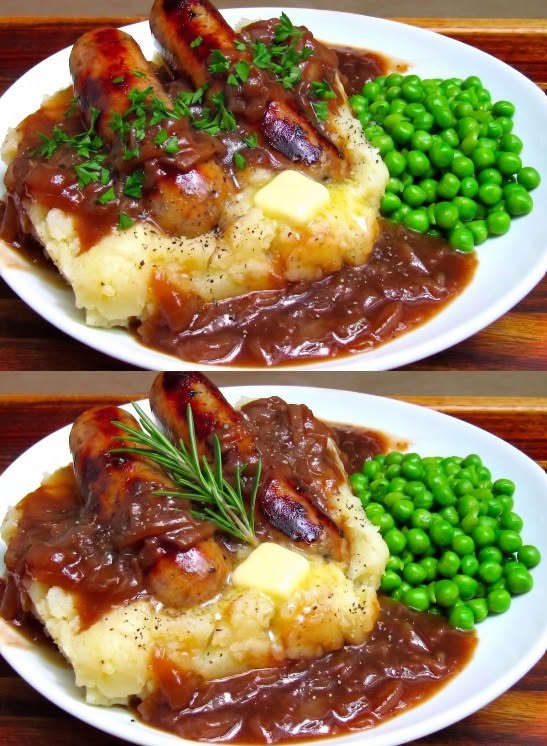
Steamed green beans, sautéed cabbage, or roasted carrots can take their place. Peas are especially quick when you want the classic plate shown in the photo, but the sausages, mash, and gravy remain the heart of the meal.
Adjust the dairy
Use your preferred unsweetened milk in the potatoes, adding it gradually. A suitable plant-based butter alternative can replace the butter. Check the sausage and Worcestershire sauce labels if you are cooking for a particular dietary need.
What to Serve with Bangers and Mash
With peas on the plate, this bangers and mash recipe already feels like a full meal. If you would like another vegetable, try simply cooked cabbage or carrots. Their mild flavors sit comfortably beside onion gravy.
A little mustard at the table is useful for anyone who likes a sharper bite with sausages. You can also put extra gravy in a small jug so each person can add as much as they like.
If your website has a recipe for [roasted carrots] or [simple sautéed cabbage], link it naturally here as an optional side. A [homemade onion gravy] article would also fit in the gravy section, if you have one. Replace those bracketed suggestions with links to your actual published recipes rather than adding unrelated links.
Make-Ahead, Storage, and Reheating
You can prepare the gravy ahead and refrigerate it in a covered container. When it is time for dinner, reheat it gently in a saucepan, stirring in a little water or stock if it has thickened. The potatoes have their best texture when freshly mashed, though they can also be made ahead and reheated.
After dinner, refrigerate leftover sausages, mash, gravy, and peas promptly in covered, shallow containers. Store the components separately where practical; that makes it easier to reheat the gravy without drying out the potatoes. Use refrigerated leftovers within 3–4 days.
Reheat sausages and gravy thoroughly, and warm the potatoes gently with a splash of milk, stirring until evenly hot. The USDA’s leftovers guidance recommends reheating leftovers to 165°F (74°C).
For freezing, cool the cooked sausages and gravy, then pack them in suitable airtight containers for later meals. Mash can be frozen too, although its texture may change when thawed. Thaw in the refrigerator and reheat thoroughly. Cook fresh peas when you serve the reheated bangers and mash for the brightest color and texture.
Frequently Asked Questions
What are the best sausages for bangers and mash?
Mildly seasoned pork sausages are a good starting point because they let the onion gravy stand out. Cumberland-style sausages are another suitable choice. Use sausages you enjoy, and remember that thickness affects cooking time.
Can I bake the sausages instead?
Yes. Arrange them on a baking tray and bake according to their package directions until they reach the correct internal temperature. Cook the onions in a separate skillet with a little butter or oil. You will have fewer sausage drippings for the gravy, but the dish will still work.
How do I fix gravy that is too thick?
Stir in a splash of warm stock or water and simmer briefly. Add liquid a little at a time until the gravy flows easily from a spoon.
How do I fix gravy that is too thin?
Simmer it uncovered for a few more minutes, stirring occasionally. It will thicken as some liquid evaporates. Give it a moment before making changes: gravy also thickens slightly as it cools.
Why are my mashed potatoes gluey?
Potatoes can turn sticky when they are overworked. Use a masher or ricer, mix in the butter and warm milk gently, and stop once the texture is where you want it.
Can I prepare bangers and mash for guests?
Yes. Make the gravy in advance, measure the potato ingredients, and have the peas ready to heat. Cook the sausages and potatoes near serving time, then reheat the gravy and assemble the plates. Keeping the components separate until the end makes serving easier.
Is the butter on top necessary?
No. It echoes the plate in the photo and adds a little richness as it melts into the mash, but the potatoes already contain butter. Leave the finishing pat off if you prefer.
Final Thoughts
Good bangers and mash does not need complicated technique. Cook the sausages all the way through, give the onions time to brown, and make the potatoes soft enough to catch the gravy. Add a spoonful of peas, bring the plates to the table while everything is hot, and you have a satisfying dinner built from simple parts.
Recipe Card: Bangers and Mash with Onion Gravy
Servings: 4
Prep time: 15 minutes
Cook time: 35 minutes
Total time: About 50 minutes
Method: Stovetop
Ingredients
Sausages
- 8 raw pork sausages, about 1½–2 lb (680–900 g) total
- 1 tablespoon neutral oil, if needed
Mashed potatoes
- 2 lb (900 g) Russet or Maris Piper potatoes
- 4 tablespoons (55 g) unsalted butter, divided
- ½ cup (120 ml) warm milk, plus more if needed
- ¾ teaspoon fine salt, or to taste
- ¼ teaspoon black pepper
Onion gravy
- 2 medium yellow onions, thinly sliced
- 1 tablespoon unsalted butter
- 2 tablespoons all-purpose flour
- 2 cups (475 ml) low-sodium beef stock
- 1 teaspoon Worcestershire sauce
- ½ teaspoon fresh thyme leaves, or ¼ teaspoon dried thyme
- Black pepper and salt, to taste
To serve
- 2 cups (about 280 g) peas
- Chopped parsley or rosemary, optional
Instructions
- Cook the potatoes: Peel and cut the potatoes into even chunks. Cover with cold, salted water, bring to a boil, and simmer for 15–20 minutes until tender.
- Cook the sausages: Brown in a skillet over medium heat, turning regularly, for approximately 15–20 minutes. Check that raw pork sausages reach 160°F (71°C). Transfer to a clean plate.
- Brown the onions: Leave about 1 tablespoon of fat in the skillet. Add the onions and 1 tablespoon butter; cook over medium-low heat for 12–15 minutes until soft and golden.
- Make the gravy: Stir the flour into the onions for 1 minute. Gradually add the stock, then the Worcestershire sauce and thyme. Simmer 5–8 minutes until pourable and lightly thickened. Season to taste.
- Mash the potatoes: Drain well. Return to the warm saucepan briefly to dry, then mash with 3 tablespoons butter, warm milk, salt, and pepper. Reserve the remaining butter for serving, if desired.
- Finish and serve: Cook and drain the peas. Divide the mash, sausages, and peas among four plates. Spoon over the onion gravy and add the reserved butter and herbs if using.
Storage: Refrigerate leftovers promptly and use within 3–4 days. Reheat leftovers to 165°F (74°C).