
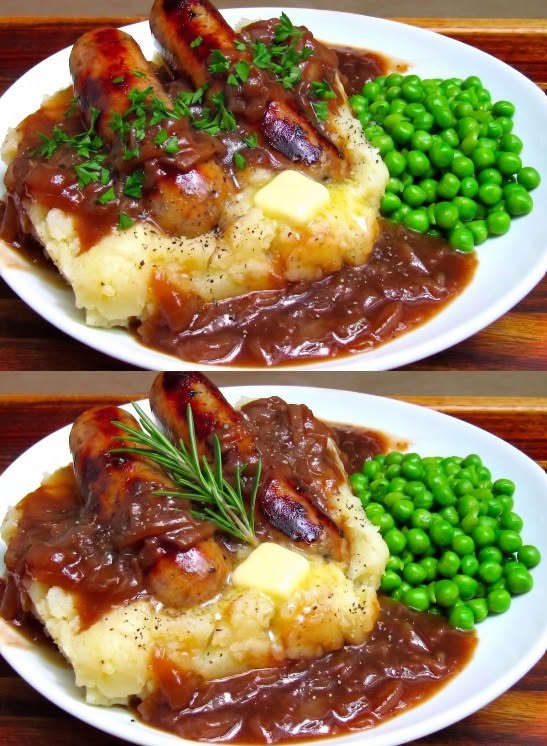
How to Make Bangers and Mash
1. Start the potatoes
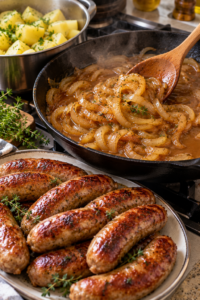
Peel the potatoes and cut them into roughly 2-inch (5 cm) pieces. Put them in a large saucepan and add enough cold water to cover them by about an inch. Add a generous pinch of salt.
Bring the water to a boil, then reduce the heat and simmer for 15–20 minutes, until a knife slides easily into the center of a piece. Cut the potatoes into similar-sized chunks so they finish cooking together.
Starting in cold water helps the potato pieces heat through more evenly. While they simmer, turn your attention to the sausages.
2. Brown and cook the sausages
Place a large skillet over medium heat. Add the oil if your pan needs it; sausages with enough fat may cook well without additional oil. Add the sausages in a single layer.
Cook for 15–20 minutes, turning them regularly so they brown on all sides and cook through. Lower the heat if the outside is darkening before the centers are ready. Once cooked, transfer the sausages to a clean plate and cover them loosely to keep warm. Leave about 1 tablespoon of fat in the skillet for the onions; carefully remove any excess.
Cooking time depends on sausage thickness and the heat of your pan. According to the USDA’s sausage food-safety guidance, raw pork sausages should reach 160°F (71°C) in the center; raw chicken or turkey sausages should reach 165°F (74°C). Check with a food thermometer rather than judging by the browned exterior.
3. Cook the onions
Add the sliced onions and the tablespoon of butter to the sausage skillet. Cook over medium-low heat for 12–15 minutes, stirring occasionally. They should become soft and golden, with some deeper brown edges.
If browned bits stick to the bottom of the skillet, add a tablespoon or two of water and scrape them up as you stir. That flavor belongs in the gravy. Avoid turning the heat high to hurry this step: onions need time to soften before they can give the gravy its mellow taste.
4. Make the gravy
Sprinkle the flour over the onions and stir for 1 minute. It will coat the onions and absorb some of the fat. Slowly pour in the stock, stirring or whisking as you go to prevent lumps.
Add the Worcestershire sauce and thyme. Bring the mixture to a gentle simmer and cook for 5–8 minutes, stirring occasionally, until it coats the back of a spoon. Grind in some black pepper, then taste before deciding whether it needs salt.
For bangers and mash, the gravy should be pourable rather than pasty. If it becomes too thick while you finish the potatoes, stir in a splash of water or stock. If it seems thin, let it simmer a few minutes longer.
5. Mash the potatoes
When the potatoes are tender, drain them thoroughly. Return them to the warm, empty saucepan over low heat for 30–60 seconds, shaking the pan gently to let excess moisture evaporate. Turn off the heat.
Add 3 tablespoons of butter, the warm milk, salt, and pepper. Mash until the potatoes reach the texture you like. Add another small splash of warm milk if they need loosening. Taste and adjust the seasoning.
Don’t work the potatoes longer than necessary. A potato masher gives you control and keeps the mash pleasantly fluffy. If you want a very smooth result, pass the cooked potatoes through a ricer before adding the butter and milk.
6. Cook the peas and assemble
Cook the peas according to their package directions, usually just a few minutes in simmering water. Drain them well.
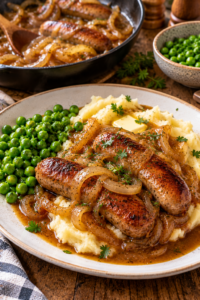
Spoon mashed potatoes onto four warm plates. Arrange two sausages per plate, add peas alongside, and ladle onion gravy over the sausages and part of the mash. Divide the reserved tablespoon of butter among the plates if using. Finish with parsley or a little rosemary.
Serve bangers and mash immediately, while the potatoes are soft and the gravy is hot.
A Practical Cooking Timeline
You do not need four burners running at full speed to make this dinner. The components overlap naturally:
- Minute 0: Put the potatoes on to boil and begin browning the sausages.
- Around minute 15: Check the potatoes. Transfer cooked sausages to a clean plate and start the onions in their skillet.
- Around minute 25: Make the gravy while the drained potatoes sit briefly in their warm pan.
- Around minute 35: Mash the potatoes, heat the peas, and check the gravy’s thickness.
- Around minute 40–45: Warm the sausages in the gravy briefly if necessary, then plate everything.
These times are a guide. Large sausages may take longer; smaller potato pieces may be tender sooner. Let doneness and texture determine when each component is ready.
If the sausages cool while you finish the gravy, nestle them into the simmering gravy for a few minutes before serving. This also coats them with sauce and gives you one less plate to manage.
Tips for Better Sausages, Mash, and Gravy
Brown the sausages patiently
Good browning adds flavor, but very high heat can split the skins or scorch them before the centers cook. Use medium heat, turn the sausages often, and reduce the heat if necessary. The thermometer reading tells you when they are cooked through.
Let the onions earn their place
For the best bangers and mash, give the onion gravy more than a token handful of quickly fried onions. Slice them thinly and let them soften and brown before adding flour and stock. You should see tender onion strands throughout the finished gravy, as in the photo.
Drain the potatoes well
Water left in the potatoes makes the mash loose before you have added any milk. A short return to the warm saucepan dries them a little and helps them take up the butter. Add milk gradually; you can always pour in more.
Season at the end
Sausages, stock, and Worcestershire sauce can all vary in saltiness. Taste the gravy after it has simmered, and taste the mash separately. Balanced seasoning in each component makes the finished plate taste complete.
Warm the plates if you can
Bangers and mash combines several hot components, and a cold plate cools them quickly. Place oven-safe plates in a low oven briefly, or rinse suitable plates with hot water and dry them just before serving.
Common Mistakes to Avoid
Adding all the stock at once. The flour can form lumps if liquid is poured in too quickly. Add a little stock first, stir until smooth, then gradually add the rest.
Stopping when the onions are merely translucent. Soft, pale onions make a mild gravy. A little golden color brings more depth to the sauce.
Mashing potatoes that are still firm. If the center resists a knife, keep simmering. Undercooked potato pieces make lumps that are difficult to remove later.
Overmixing the mash. A blender or food processor can leave potatoes gluey. Mash by hand, or use a ricer for a smoother finish.
Judging sausages by color alone. Their outsides can brown before their centers are safely cooked. Check the center of a sausage with a thermometer.
Drowning the whole plate in gravy. Spoon on enough to coat the sausages and run into the mash, then offer any remaining gravy at the table. Keeping some peas uncovered preserves their bright color and distinct flavor.