
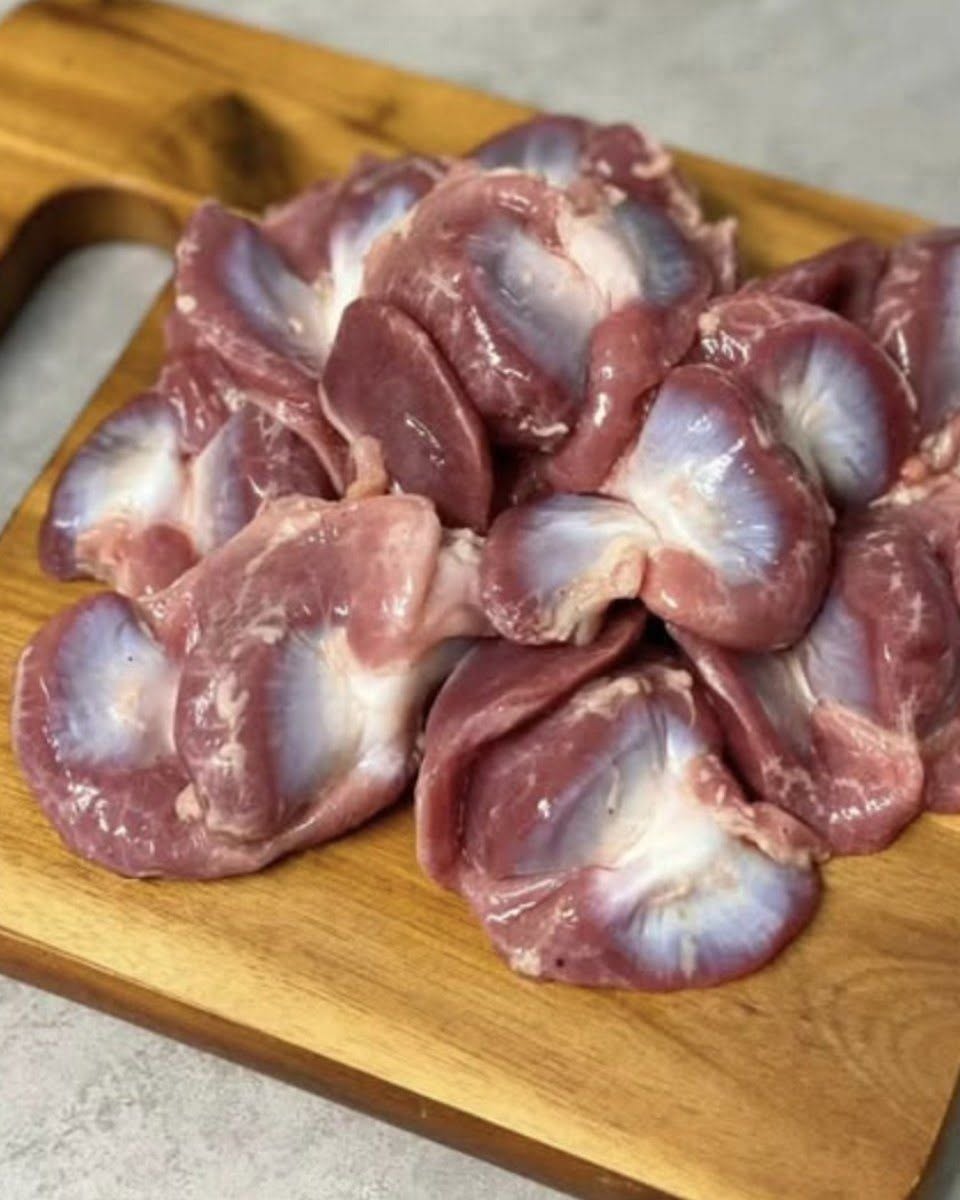
- At a butcher shop
- In the poultry section of larger supermarkets
- In the frozen poultry section
- At international grocery stores
- At farmers markets
- Packaged with chicken giblets
If you don’t see them in the refrigerated meat section, ask the butcher or meat counter.
Because they’re not as commonly purchased as chicken breast or thighs, availability varies considerably from one store to another.
For food safety, the USDA FSIS guidance on cooking giblets confirms that chicken gizzards and other poultry giblets should reach 165°F (73.9°C).
Frequently Asked Questions
Are chicken gizzards healthy?
Yes, they can be part of a balanced diet. They’re particularly rich in protein and provide nutrients including vitamin B12, selenium, zinc, niacin, phosphorus, and choline. However, they’re also very high in cholesterol, so they aren’t something to describe as an unlimited “superfood.”
Are chicken gizzards high in protein?
Yes. USDA-derived data show approximately 30 grams of protein per 100 grams of cooked, simmered gizzard.
Are chicken gizzards low in fat?
Cooked, simmered gizzards are relatively low in fat, with about 2.7 grams per 100 grams in the cited USDA dataset. Preparation method can significantly increase the final fat content.
Do chicken gizzards have carbs?
Plain cooked chicken gizzards contain essentially no carbohydrate in the USDA-derived data used here. Breaded, fried, or sauced preparations can contain carbohydrates depending on the ingredients.
Why are chicken gizzards so tough?
Gizzards are muscular tissue, so they naturally have a firm texture. Long, gentle cooking with moisture helps break down connective tissue and makes them much more tender.
How long should you cook chicken gizzards?
A braising or simmering time of around 60–90 minutes is a useful starting point for tenderizing them, but the actual time varies. Cook until tender and verify that the poultry reaches at least 165°F (73.9°C).
Should you rinse chicken gizzards before cooking?
No. USDA advises that washing raw poultry isn’t necessary and can spread bacteria through splashing water. Handle the gizzards carefully and cook them thoroughly instead.
Can you freeze chicken gizzards?
Yes. USDA lists 3–4 months as the recommended freezer period for best quality for poultry giblets. They remain safe indefinitely while continuously frozen, but quality can deteriorate over time.
Can you fry chicken gizzards?
Yes. Fried gizzards are popular in many cuisines, but frying and breading substantially change the nutritional profile compared with plain simmered gizzards.
What is the best way to make chicken gizzards tender?
Slow simmering or braising is one of the easiest methods. The combination of moisture and gentle heat gives the tough muscle tissue time to soften.
Final Thoughts
So, are chicken gizzards healthy?
They can certainly be a nutritious part of a varied diet.
They’re packed with protein and provide several important micronutrients, including vitamin B12, selenium, zinc, niacin, phosphorus, and choline. They’re also relatively inexpensive, which makes them an interesting choice for budget-conscious home cooks.
But balance matters.
Chicken gizzards are also particularly high in cholesterol, and the way you prepare them can dramatically change the nutritional profile. A slow-braised gizzard dish with vegetables is very different from a heavily breaded, deep-fried version.
The most important culinary lesson is simple: give gizzards time.
Cook them gently with aromatics and flavorful broth until tender, then finish them however you like. Add them to rice, soups, stews, tacos, skewers, or your favorite comfort-food recipes.
Once you learn how to cook them properly, chicken gizzards can go from an overlooked ingredient to one of the most flavorful and economical proteins in your kitchen.