
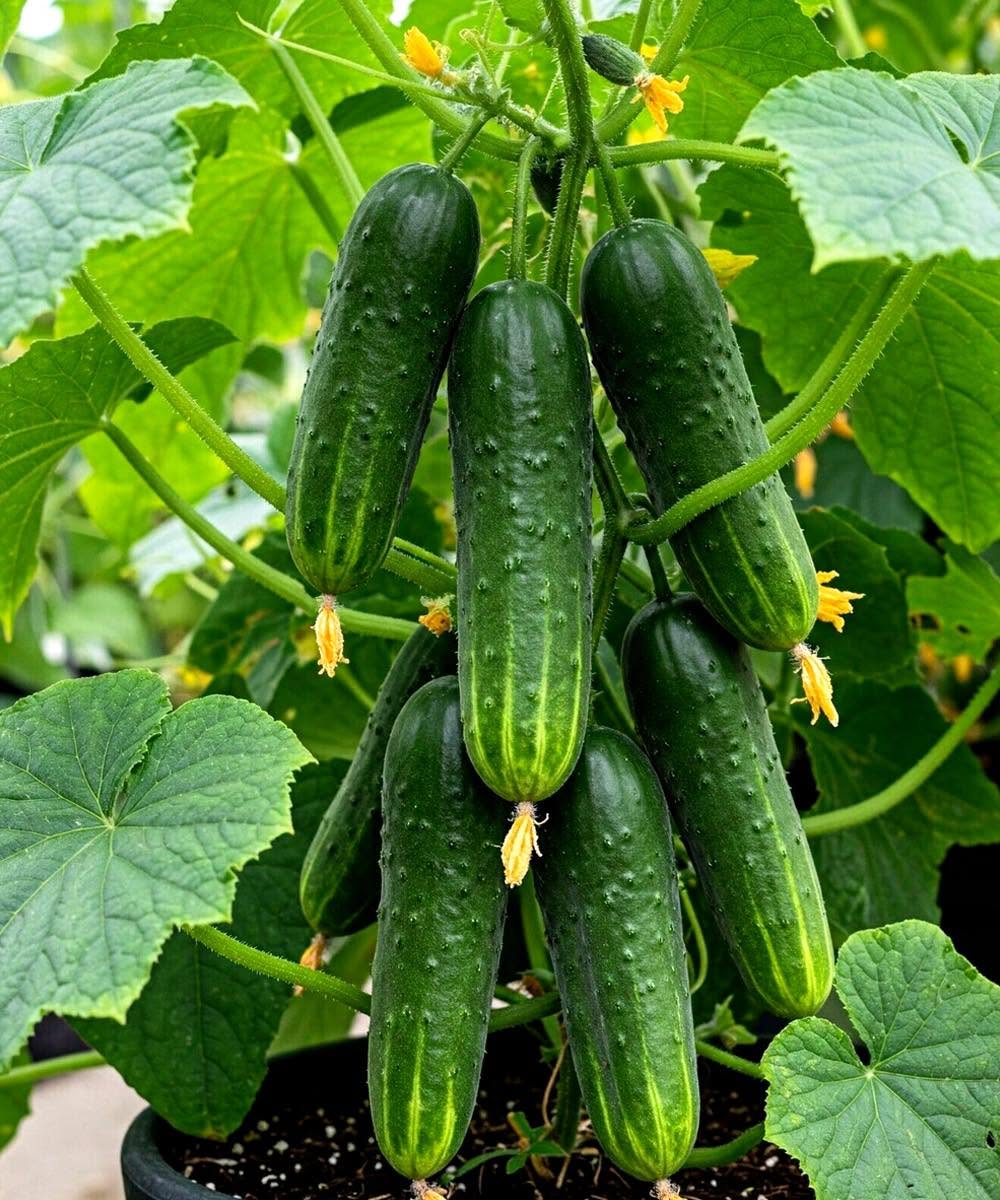
Growing Cucumbers in Containers: 9 Easy Tips
Growing Cucumbers in Containers also makes it easier to control soil quality, move plants into better sunlight, and protect them from certain garden pests. The key is choosing an appropriate variety and giving its roots enough room to develop.
This complete guide explains how to select a container, sow cucumber seeds, support the vines, maintain consistent moisture, encourage pollination, and harvest the fruit at the right time.
Why Grow Cucumbers in Containers?
Container gardening is especially useful for people with limited outdoor space. It also provides several practical advantages:
- You can control the quality and drainage of the soil.
- Plants can be positioned where they receive the most sunlight.
- Vertical vines use very little floor space.
- Fruits remain cleaner when supported above the soil.
- Container plants are easier to inspect for pests.
- Harvesting is convenient and accessible.
- The containers can be moved during extreme weather.
- Growing Cucumbers in Containers is a practical solution for gardeners with limited outdoor space. With the right setup, container plants can remain healthy and produce fresh cucumbers throughout the warm season.
The University of Minnesota Extension explains that cucumbers grow best in warm conditions and that long-vining varieties may require a trellis, while bush varieties are more suitable for limited spaces. You can consult its detailed cucumber-growing guide for additional gardening information.
Success with Growing Cucumbers in Containers begins with choosing a variety that matches the available space. Compact and bush varieties are usually easier to manage, while climbing types require a strong trellis.
Choosing the Best Cucumber Variety
Variety selection is important when Growing Cucumbers in Containers. Some cucumber plants produce long, vigorous vines, while others remain compact.
Bush Cucumbers
Bush varieties have shorter vines and are generally easier to manage in containers. They are a good choice for balconies, patios, and areas where a large trellis is not practical.
Look for seed packets containing terms such as:
- Bush
- Patio
- Compact
- Spacemaster
- Miniature
Vining Cucumbers
Vining varieties can also grow successfully in containers if they receive strong vertical support. They often produce fruit over a longer period but may grow several feet tall.
Mini, pickling, Persian, and smaller slicing varieties are often practical choices because their fruit places less weight on the vines.
Selecting the Right Container
The container must be large enough to support vigorous roots while retaining moisture during warm weather.
Choose a pot that is:
- At least 12 inches deep
- Approximately 14–18 inches wide
- Able to hold at least 5 gallons of soil
- Equipped with several drainage holes
- Strong enough to support a trellis
A larger container is generally better because it dries out more slowly and provides more room for the roots.
One cucumber plant per 5-gallon container is the safest arrangement. A larger 10-gallon container may hold two compact plants, depending on the variety.
Best Container Materials
Plastic containers retain moisture well and are relatively lightweight.
Fabric grow bags provide excellent drainage and root aeration but may require more frequent watering.
Terracotta pots are attractive and stable, but they lose moisture quickly in hot conditions.
Wooden planters provide good insulation, although they must be made from material that is safe for edible plants.
Never use a container that previously held paint, chemicals, oil, or other potentially harmful substances.