
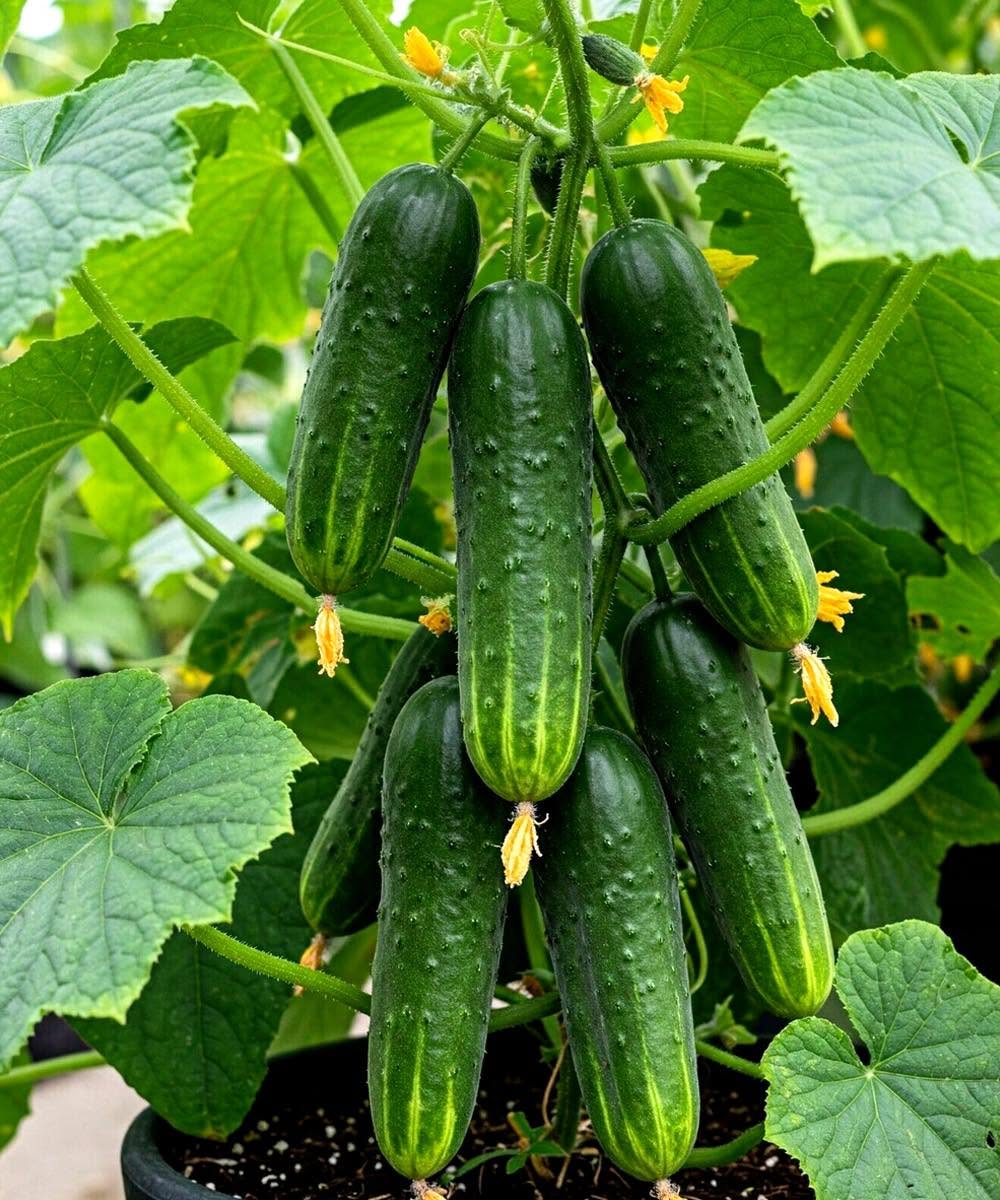
Watering Container Cucumbers
Consistent watering is one of the most important parts of Growing Cucumbers in Containers. Cucumbers contain a large amount of water, and irregular moisture can result in poor growth, misshapen fruit, or a bitter flavor.
Check the soil daily during warm weather. Insert a finger approximately one inch into the soil. If it feels dry at that depth, water the plant thoroughly.
Continue watering until excess water drains from the bottom of the container.
Important Watering Tips
- Water the soil instead of repeatedly wetting the leaves.
- Water early in the morning when possible.
- Do not allow the container to stand in stagnant water.
- Check fabric and terracotta containers more frequently.
- Increase watering during hot, windy conditions.
- Apply a thin layer of clean mulch to reduce evaporation.
Avoid following a rigid watering schedule without checking the soil. Container size, weather, plant maturity, and pot material all affect how quickly the mixture dries.
Fertilizing Cucumbers in Pots
Cucumbers grow quickly and require a steady supply of nutrients. Container soil has limited reserves, and frequent watering gradually carries nutrients out through the drainage holes.
Mix a balanced slow-release vegetable fertilizer into the potting mix according to its label. Once the plant begins flowering, use an appropriate liquid vegetable fertilizer at the recommended strength.
Avoid applying excessive nitrogen. Too much nitrogen can produce a large plant with many leaves but relatively few flowers and cucumbers.
Never assume that more fertilizer will create more fruit. Overfertilization may damage the roots, cause leaf problems, and reduce production.
Pollination and Fruit Production
Traditional cucumber varieties produce separate male and female flowers on the same plant. Male flowers often appear first, so it is normal for the earliest flowers to fall without producing fruit.
Female flowers have a tiny cucumber-shaped swelling behind their petals. These flowers generally need pollen from male flowers to produce properly formed cucumbers.
Bees and other pollinating insects usually perform this job. Encourage them by avoiding broad-spectrum insecticides and growing pollinator-friendly flowers nearby.
How to Hand-Pollinate Cucumbers
If flowers appear but no fruit develops, you can pollinate them manually:
- Identify a freshly opened male flower.
- Remove it from the plant.
- Pull back its petals to expose the pollen-covered center.
- Touch the pollen gently against the center of an open female flower.
- Repeat with other female flowers.
A small, clean paintbrush or cotton swab can also transfer the pollen.
Some modern varieties are parthenocarpic, meaning they can produce fruit without traditional pollination. Check the seed description for information about the variety.
Nine Essential Tips for Growing Cucumbers in Containers
1. Start With a Large Container
A spacious pot holds more soil, protects the roots from rapid temperature changes, and retains moisture longer.
2. Choose a Compact Variety
Bush and patio varieties are easier to manage, especially on a small balcony.
3. Install Support Early
Adding a trellis after the roots have developed may damage them. Install it when preparing the container.
4. Provide Plenty of Sunlight
Insufficient sunlight may produce weak vines and fewer flowers.
5. Maintain Even Moisture
Do not allow the soil to alternate repeatedly between extremely dry and saturated conditions.
6. Feed the Plant Carefully
Use fertilizer according to its directions. Excessive nitrogen encourages leaves instead of fruit.
7. Improve Air Circulation
Train vines vertically and avoid overcrowding. Better airflow can reduce the humid conditions that encourage some diseases.
8. Inspect the Leaves Regularly
Look underneath the leaves for pests and check for discoloration, holes, webbing, or powdery growth.
9. Harvest Frequently
Picking mature cucumbers encourages the plant to continue producing. Overripe fruit can slow new production.
Regular observation makes Growing Cucumbers in Containers much easier. Checking leaves, flowers, soil moisture, and developing fruit allows you to identify problems before they become severe.
Common Cucumber Problems
Yellow Leaves
Yellow leaves may result from overwatering, poor drainage, nutrient deficiency, natural aging, or disease.
Check the soil before adding water or fertilizer. If the soil remains wet for long periods, confirm that the drainage holes are open.
Flowers but No Cucumbers
The plant may be producing only male flowers, pollinators may be absent, or extreme temperatures may be interfering with fruit development.
Wait for female flowers and hand-pollinate them when necessary.
Small Cucumbers Turning Yellow
Poor pollination is a common cause. Water stress or extreme temperatures can also make immature fruit stop growing.
Bitter Cucumbers
Bitterness is often associated with plant stress, especially irregular watering or excessive heat. Keep the soil evenly moist and protect the plant during severe temperature extremes.
Powdery White Leaves
White powdery patches may indicate powdery mildew. Improve airflow, avoid repeatedly wetting the foliage, remove badly affected leaves, and use an appropriate treatment labeled for edible cucumber plants when necessary.
Cucumber Beetles
These pests can damage leaves, flowers, and fruit. Inspect plants frequently and remove visible beetles. Fine insect netting can protect young plants, but it should be removed when pollination is required unless the variety does not need pollination.
When and How to Harvest
Harvest cucumbers while they are firm, green, and appropriate in size for their variety.
Do not wait for them to become oversized or yellow. Older cucumbers often contain large seeds, develop tough skin, and may taste bitter.
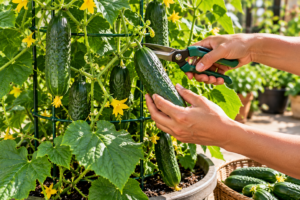
Use clean scissors or pruning shears to cut the fruit from the vine. Leave a short piece of stem attached. Pulling or twisting can damage the vine.
During peak production, inspect the plant every day or two because cucumbers can grow rapidly in warm weather.
Can Cucumbers Grow Indoors?
Growing cucumbers indoors is possible, but they require strong light, warmth, sufficient space, and reliable pollination.
A sunny window is often insufficient by itself. A suitable grow light may be required for healthy flowering and fruit development.
Choose a compact or parthenocarpic variety and install vertical support. Indoor plants also need airflow and careful moisture control.
End-of-Season Care
Cucumber plants are annuals and naturally decline when temperatures cool.
After the final harvest:
- Remove the plant and roots from the container.
- Discard diseased plant material rather than composting it.
- Wash and disinfect reusable containers.
- Clean the trellis and gardening tools.
- Replace or refresh the potting mixture before the next season.
Avoid repeatedly using depleted container soil without restoring its structure and nutrients.
Once the basic requirements are understood, Growing Cucumbers in Containers becomes a simple and rewarding gardening project for beginners.
Frequently Asked Questions
How many cucumber plants can I grow in one container?
A 5-gallon container should generally hold one cucumber plant. A larger container may support two compact plants if it has sufficient soil, drainage, and support.
How deep should a cucumber container be?
Choose a container at least 12 inches deep. Larger and deeper pots retain moisture more effectively and give the roots additional space.
Do container cucumbers need a trellis?
Bush varieties may grow without one, but even compact plants benefit from support. Vining cucumbers should have a sturdy trellis.
How often should I water container cucumbers?
Check the soil every day during warm weather. Water when the top inch feels dry. The plant may require daily watering during very hot or windy conditions.
Why is my plant producing flowers but no fruit?
Early flowers are frequently male. If female flowers appear without developing fruit, insufficient pollination may be the cause.
Can cucumbers grow in a hanging basket?
Compact, trailing varieties can grow in a large, strong hanging basket. Make sure it has sufficient soil and can safely support the weight of the wet potting mix, vines, and fruit.
Can I grow cucumbers from grocery-store cucumber seeds?
The seeds may be immature or come from hybrid varieties that will not reproduce the same characteristics. Packaged seeds from a reliable supplier provide more predictable results.
Should I prune container cucumbers?
Heavy pruning is unnecessary. Remove damaged or diseased leaves, and gently guide healthy vines onto the trellis. Light pruning may help control vigorous plants in very small spaces.
Conclusion
Growing Cucumbers in Containers is an excellent way to produce fresh vegetables without a traditional garden. Begin with a large container, use quality potting mix, select a compact variety, and install strong support before the plant becomes established.
Provide at least six hours of sunlight, maintain consistent moisture, fertilize carefully, and inspect the leaves regularly. Once the plant begins producing, harvest the cucumbers frequently while they are firm and green.
With proper care, a single healthy container plant can provide an impressive harvest throughout the warm season.