
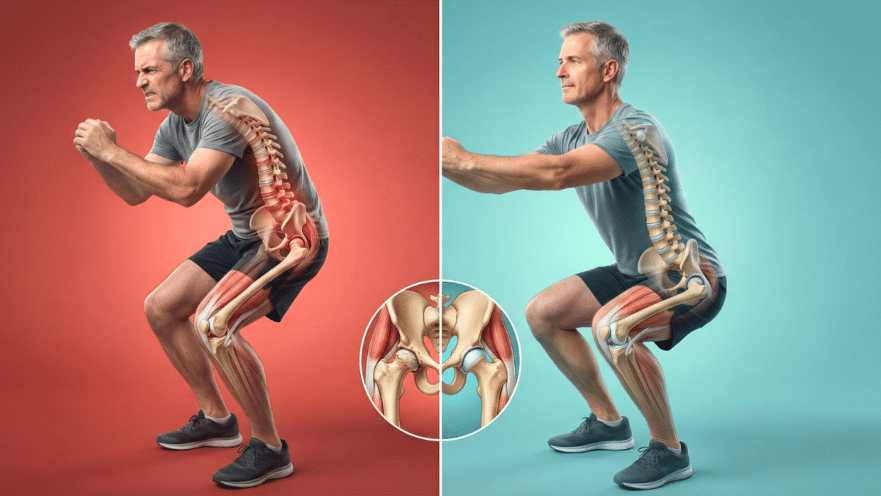
While my main goal was improving mobility, I was pleasantly surprised by the strength boost. Returning to the gym after my challenge, I noticed I could handle more weight with squats and leg presses. Why? Because deeper, pain-free squats build not just flexibility but also functional strength in your legs, hips, and core.
4. Not Every Problem Gets Fixed—And That’s Okay
Despite all the positives, my chronically stiff left ankle (from an old sports injury) didn’t budge. And that’s a real-world reminder: some issues take time, and progress may have limits. But don’t let one stubborn joint overshadow the wins in other areas. Patience is key!
5. Starting Out? Test Your Current Squat Comfortably
If you’re new to squats or have a history of pain, start slow. First, stand with feet wide, then squat as far as is comfortable. Use visual markers in the room to set progress points. Maybe you only get a third of the way down—that’s totally fine. Progress is about improvement, not perfection.
6. Chairs and Towels Are Your Best Friends for Progression
Can’t get down into a full squat? Don’t sweat it! Try holding onto a chair as you slowly sink into the squat position. This simple adjustment boosts confidence and removes fear of falling. When you’re ready, move the chair behind you and use stacked towels on the seat so you just barely tap your bottom, then stand back up. As you build strength and flexibility, gradually remove the towels to increase your squat depth. Fitness
ADVERTISEMENT
7. Heels Up: The Magic Towel Under Your Feet
For those whose ankles or hips limit depth, put a rolled towel under your heels. This slight elevation can help you get lower in your squat without strain. Practice holding the deep squat for 20 seconds at a time, resting between attempts, for three rounds. As you progress, try without the towel and work on holding the position longer.
8. Gentle Side-to-Side Rocking Mobilizes Ankles and Hips
Once you’re comfortable with deeper squats, use your elbows to press your knees apart and gently rock from side to side. This active movement helps loosen both hips and ankles even further—plus, it feels good!
9. Gradually Increase Hold Time and Reduce Supports
Continued on next page: