
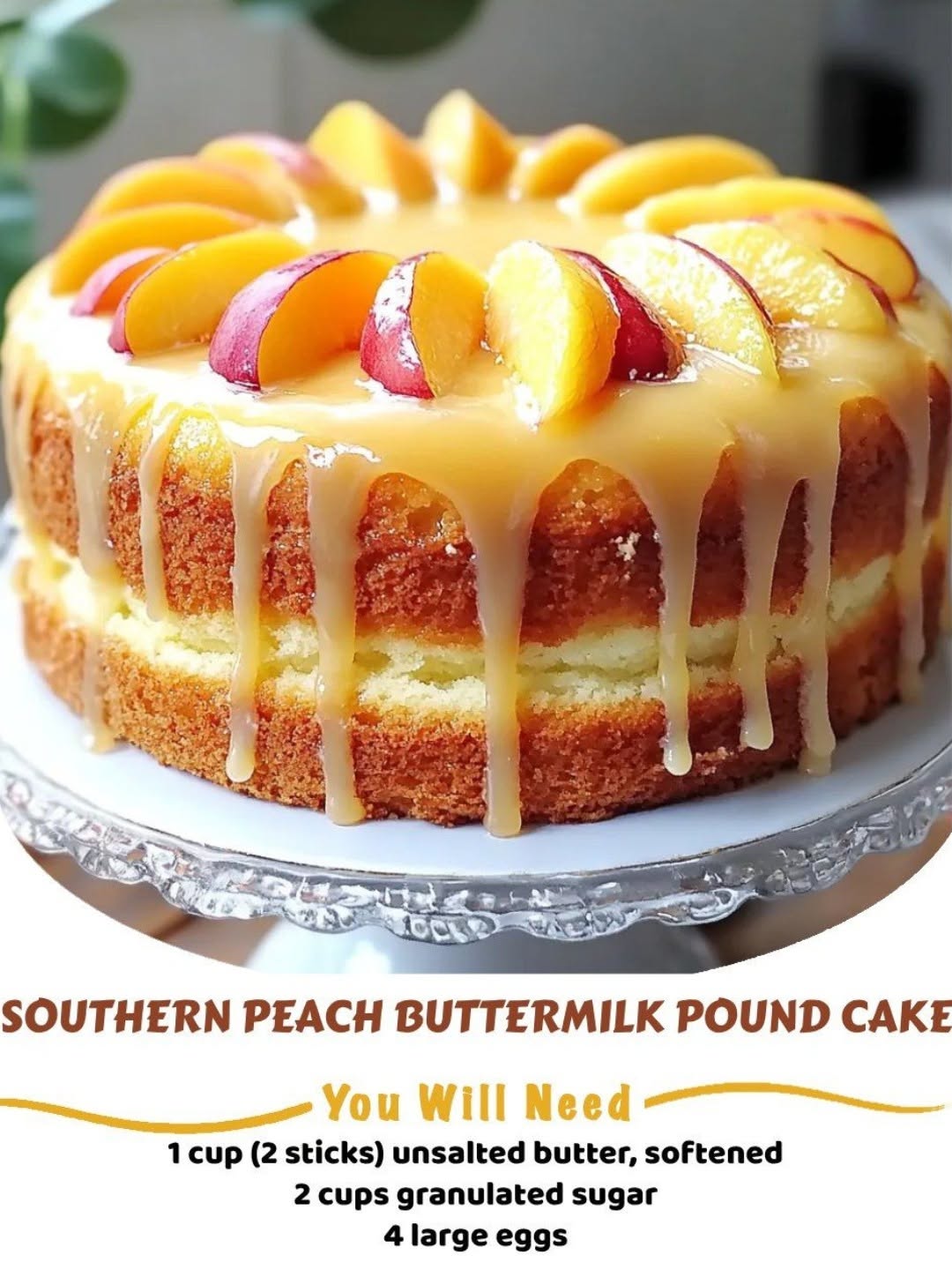
Equipment Needed
- Two 8-inch round cake pans
- Parchment paper
- Electric hand mixer or stand mixer
- Large mixing bowl
- Medium bowl
- Rubber spatula
- Fine-mesh sieve, optional
- Wire cooling racks
- Offset spatula
- Cake stand or serving plate
How to Make Southern Peach Buttermilk Pound Cake
1. Prepare the Pans and Oven
Preheat the oven to 325°F (165°C).
Grease two 8-inch round cake pans. Line the bottoms with parchment paper, then grease and lightly flour the parchment and sides.
Preparing the pans carefully is important because the peach pieces can make the cake slightly more delicate while it is warm.
2. Prepare the Peaches
Peel the peaches if desired, remove the pits, and cut the flesh into small pieces. Toss the diced peaches with the lemon juice.
Take 1 tablespoon of flour from the measured 3 cups and gently toss it with the peaches. Set them aside while preparing the batter.
Pat particularly juicy peaches with a paper towel before coating them. The fruit should be moist but not dripping with juice.
3. Combine the Dry Ingredients
In a medium bowl, whisk together the remaining flour, baking soda, and salt.
Whisking distributes the baking soda evenly. A concentrated pocket of baking soda may create an unpleasant flavour or uneven rise.
4. Cream the Butter and Sugar
Place the softened butter in a large bowl or the bowl of a stand mixer. Beat it for approximately one minute until smooth.
Gradually add the granulated sugar and continue beating at medium speed for four to five minutes. The mixture should become lighter in colour and visibly fluffy.
This is one of the most important steps in the recipe. Creaming creates tiny air pockets in the butter, helping the dense batter rise more evenly.
5. Add the Eggs
Add the eggs one at a time, beating well after each addition. Scrape down the sides and bottom of the bowl as needed.
Adding all four eggs simultaneously can cause the butter mixture to separate. Gradual mixing creates a smoother, more stable batter.
Use clean, uncracked eggs and avoid allowing raw batter to contact ready-to-eat foods. The FDA’s egg-safety guidance recommends keeping eggs refrigerated and cooking foods containing eggs thoroughly.
6. Add the Flavourings
Mix in the vanilla extract and optional almond extract just until incorporated.
If the batter looks slightly curdled after adding the eggs, do not panic. It will generally come together when the flour is introduced.
7. Alternate the Flour and Buttermilk
Add approximately one-third of the dry ingredients and mix on low speed only until nearly combined.
Add half of the buttermilk, followed by another third of the flour mixture. Add the remaining buttermilk, then finish with the remaining flour.
Begin and end with the dry ingredients. Stop mixing as soon as no obvious streaks of flour remain.
Overmixing at this stage develops too much gluten and can create a firm, rubbery cake rather than a tender pound-cake crumb.
8. Fold in the Peaches
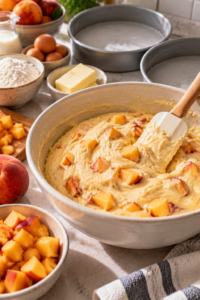
Use a rubber spatula to fold the flour-coated peaches into the batter gently.
Fold from the bottom of the bowl upward so the fruit is distributed without knocking out too much of the air created during creaming.
9. Fill the Pans
Divide the batter evenly between the prepared pans. A kitchen scale is useful for producing layers of equal height.
Smooth the surfaces without pressing heavily on the batter. Tap each pan gently on the counter once or twice to release large air pockets.
10. Bake
Bake at 325°F for approximately 38–48 minutes.
Begin checking at 38 minutes. The cakes are ready when:
- The tops appear golden
- The centres spring back lightly when touched
- The edges begin to pull slightly from the pans
- A wooden tester inserted near the centre comes out clean or with a few moist crumbs
Avoid opening the oven repeatedly during the first 30 minutes because a sudden temperature change can cause the centres to sink.
11. Cool Completely
Allow the cakes to cool in their pans for 15 minutes. Carefully run a thin knife around the edges, turn the cakes onto wire racks, and remove the parchment.
Turn them upright and allow them to cool completely before filling. Applying icing to warm cake will cause it to melt and slide.