
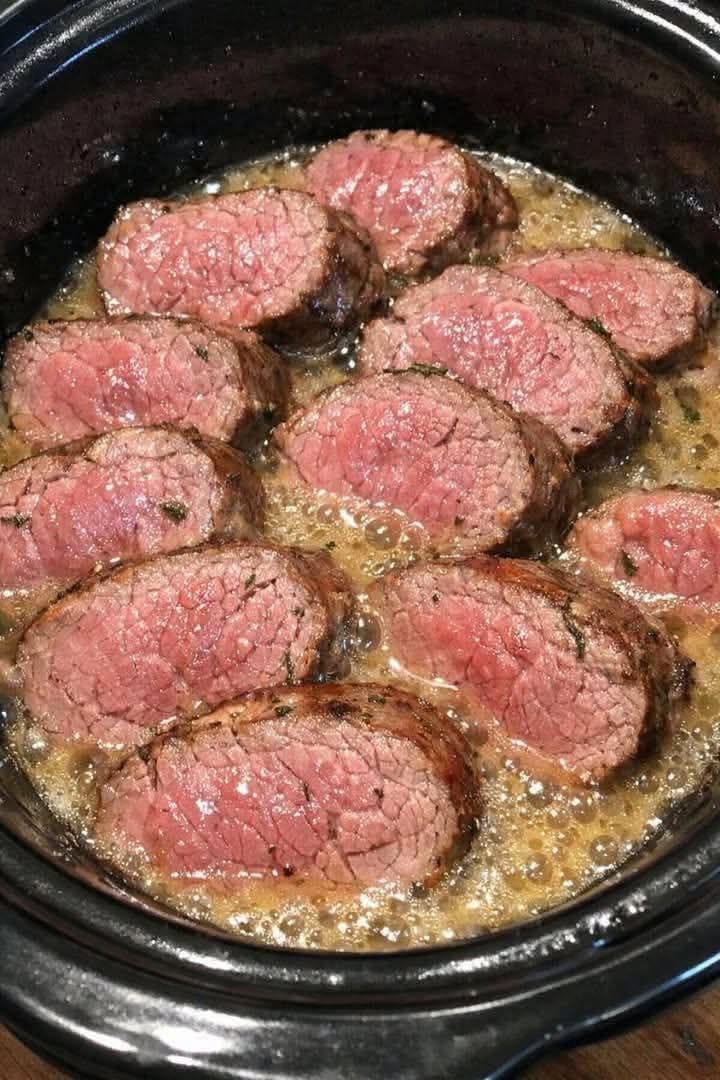
How to Prepare the Beef Tenderloin
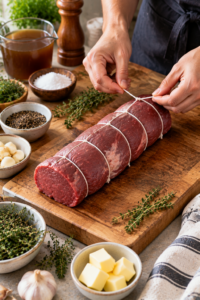
Trim and Tie the Roast
Remove any visible silver skin, which is the tough, shiny membrane covering part of the tenderloin. Unlike fat, silver skin does not melt during cooking.
Fold a thin tail underneath the roast and tie it in place. Add more pieces of butcher’s twine every one to two inches to maintain a consistent shape.
Dry the Surface
Pat the tenderloin thoroughly dry with paper towels. Removing surface moisture helps the beef brown instead of steaming in the skillet.
Season the Meat
Combine the salt, pepper, garlic powder, and dried thyme. Rub the seasoning evenly over every side of the tenderloin.
For deeper seasoning, complete this step several hours before cooking and refrigerate the uncovered or loosely covered roast. Remove it from the refrigerator while preparing the remaining ingredients, but do not leave raw beef at room temperature for an extended period.
How to Make Slow Cooker Beef Tenderloin
Step 1: Prepare the Slow Cooker
Lightly coat the slow cooker insert with a small amount of butter or cooking spray.
Pour the beef broth, Worcestershire sauce, and Dijon mustard into the insert. Whisk until the mustard is evenly distributed.
Add the rosemary and thyme sprigs.
Step 2: Heat the Skillet
Place a large heavy skillet over medium-high heat. Let it heat for approximately two minutes.
Add the olive oil and one tablespoon of butter. When the butter has melted and the pan is hot, carefully add the seasoned tenderloin.
Step 3: Sear the Tenderloin
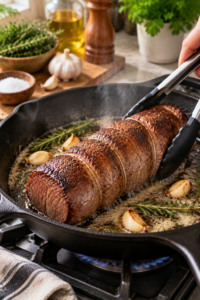
Sear the beef for approximately two minutes per side, turning it with tongs until most of the exterior is well browned.
Do not attempt to cook the centre during this step. The goal is to develop colour and flavour on the surface.
Transfer the seared tenderloin to the slow cooker.
Step 4: Deglaze the Skillet
Reduce the skillet heat to medium. Add approximately two tablespoons of the broth mixture from the slow cooker.
Scrape the browned bits from the bottom of the skillet using a wooden spoon. Pour this flavourful liquid back into the slow cooker.
Avoid pouring cold liquid into a dangerously hot or fragile pan that is not designed for sudden temperature changes.
Step 5: Add the Garlic Butter
Add the minced garlic and remaining three tablespoons of butter around the tenderloin.
Cover the slow cooker and set it to LOW. Do not use the warm setting to cook raw beef.
Step 6: Cook and Check the Temperature
Begin checking the internal temperature after approximately 1½ hours. Insert the thermometer into the centre of the thickest section without touching the slow cooker insert.
Depending on the roast and appliance, cooking may take approximately 1½ to 3 hours on LOW. Treat this as an estimate, not a guarantee.
The official FoodSafety.gov temperature chart recommends cooking beef steaks and roasts to a minimum internal temperature of 145°F or 63°C, followed by a rest of at least three minutes.
Remove the tenderloin as soon as it reaches the temperature required for your household’s safety needs. Remember that the internal temperature may rise slightly while the meat rests.
Step 7: Rest, Slice and Finish
Transfer the beef to a clean cutting board and cover it loosely with foil. Allow it to rest for at least three minutes; resting for approximately 10 minutes will make slicing easier and help retain the juices.
Remove and discard the herb sprigs from the slow cooker.
Taste the sauce and adjust the seasoning. Add the optional lemon juice for brightness.
Remove the butcher’s twine and slice the tenderloin across the grain into pieces approximately ½- to ¾-inch thick.
Arrange the slices on a warm serving platter and spoon the garlic butter sauce over them. Alternatively, return the slices to the slow cooker for only a brief moment before serving.
Do not leave sliced tenderloin cooking in bubbling sauce, because thin slices overcook much faster than a whole roast.
Important Cooking Tips
Use a Meat Thermometer
The interior colour of beef can vary because of acidity, meat chemistry, lighting, cooking method, and other factors. A rosy centre can be safely cooked, while browned meat is not automatically safe.
Always confirm the temperature with a thermometer.
Do Not Cook It All Day
Slow cooker beef tenderloin is not an eight-hour pot roast. Start monitoring early, especially if your slow cooker runs hot.
Sear Before Slow Cooking
Searing is not required for safety, but it significantly improves the appearance and savoury flavour of the exterior.
Keep the Tenderloin Whole
Individual medallions cook too quickly and can become dry in a slow cooker. Cook the tied roast whole and slice it after resting.
Avoid Lifting the Lid Repeatedly
Each time the lid is removed, heat escapes. Begin checking near the earliest expected completion time, then work quickly.
Use the Correct Slow Cooker Size
The tenderloin should fit comfortably without being folded sharply. However, an excessively large appliance may heat a small amount of food differently from the manufacturer’s intended use.
Consult the instructions for your particular model.
Let the Meat Rest
Resting gives the temperature time to equalize and reduces the amount of juice lost while slicing. It is also part of the official safe-temperature recommendation for whole beef cuts.
Common Mistakes to Avoid
Using Tenderloin Like Chuck Roast
Chuck roast contains more fat and connective tissue and benefits from long, slow cooking. Tenderloin is leaner and already tender, so an all-day cooking time can ruin its texture.
Relying Only on Cooking Time
Two roasts of the same weight may have different shapes and thicknesses. Different slow cookers also heat at different rates.
Temperature is more dependable than time.
Slicing the Beef Before Cooking
Pre-sliced tenderloin has considerably more surface area exposed to heat. The pieces can become fully cooked before the sauce has developed sufficient flavour.
Skipping the Searing Step
The meat will still cook, but its exterior may look pale and lack the deeper roasted flavour created by browning.
Adding Too Much Broth
A slow cooker traps steam and prevents rapid evaporation. Too much broth produces a thin, diluted sauce.
Continuing to Cook After Slicing
This is particularly important if you want the appearance shown in the photograph. Once sliced, the beef will rapidly absorb heat from the sauce.
Place it in the sauce only when you are ready to serve.
Cooking From Frozen
Thaw the tenderloin completely in the refrigerator before placing it in the slow cooker. Frozen meat can spend too long warming through and may cook unevenly.
Garlic Butter Sauce Options
Thicker Sauce
Transfer the cooking liquid to a saucepan after removing the beef. Simmer it for several minutes until slightly reduced.
For additional thickening, mix one teaspoon of cornstarch with one tablespoon of cold water. Whisk the mixture gradually into the simmering sauce and cook until it reaches the desired consistency.
Creamy Sauce
After removing the tenderloin, stir approximately ¼ cup of heavy cream into the warm cooking liquid.
Heat gently and avoid a vigorous boil. Taste before adding more salt.
Mushroom Sauce
Sauté eight ounces of sliced mushrooms in butter until browned. Add them to the cooking liquid during the final 20 to 30 minutes.
Adding raw mushrooms at the beginning will create a softer texture and release more water into the sauce.
Peppercorn Sauce
Stir one to two teaspoons of lightly crushed peppercorns into the liquid. Green peppercorns packed in brine can also be used after draining.
Red Wine Variation
Replace ¼ cup of the broth with dry red wine. Simmer the wine briefly in the searing skillet before adding it to the slow cooker to soften its raw flavour.