
My parents did not own their house. Not really. Not anymore.
For years my father had been running the family finances the way he ran the family itself, on the appearance of solidity over a hollow core. The business he was so proud of, the one that paid for Lauren’s wedding and Lauren’s cars and Lauren’s house and Lauren’s endless crises, had been failing quietly for the better part of a decade. And rather than face it, my father had been borrowing against everything, refinancing the house again and again, opening
of credit was secured against a portion of their house that, through a series of transactions I needed the investigator to walk me through twice, was now effectively controlled by his creditors. My parents were living in a house they no longer owned in any meaningful sense, servicing debt in their daughter’s name, one crisis away from the whole structure collapsing.
The fifteen thousand for Lauren was never really for Lauren. Or it was, but it was also a payment coming due somewhere in the machine, and my father had reached the point where he needed cash fast enough that he was willing to demand it at a staged dinner, and when I refused, he panicked, and a panicking man who has already forged his daughter’s signature three times does not think clearly. He submitted a fourth loan application in my name that very night, which triggered the alert. And when even that felt too slow, he called the police on my car, some incoherent attempt to frighten me back into compliance before the alerts I didn’t yet know about could reach me.
He had gotten sloppy because he was drowning. And drowning men grab whatever is nearest, and what was nearest was me, because I had always been the one they could take from without consequence.
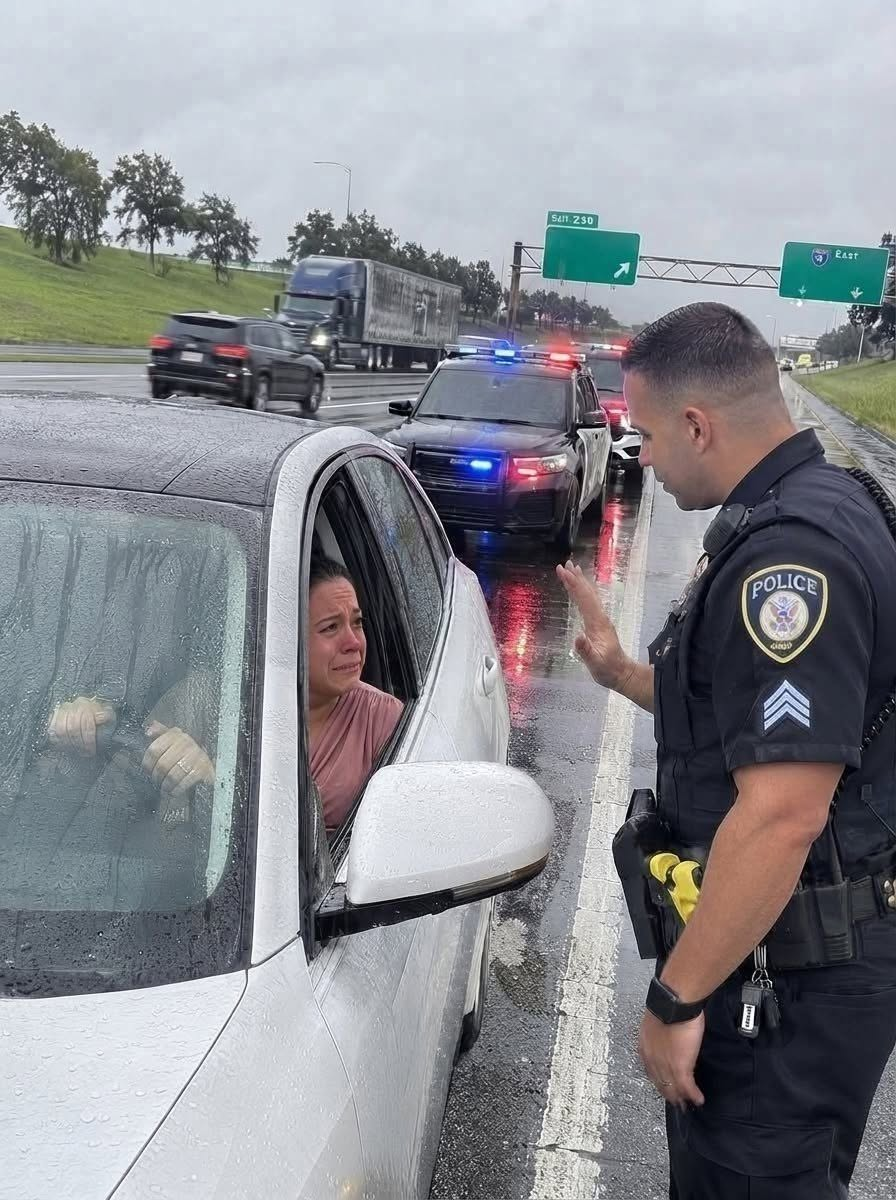
The detective explained all of this to me in fragments over the following days. In the conference room, that first morning, I understood only the outline of it, but the outline was enough. My father had not simply overstepped. He had committed identity theft, loan fraud, and forgery against his own daughter, systematically, for four years, and had filed a false police report that put me in the crosshairs of an armed felony stop on a highway.
I looked at him across that table, in his funeral suit, and I did not feel the thing I expected to feel. I did not feel rage. I felt a kind of terrible clarity, the same clarity I had felt in the car with the keys on the asphalt. I finally understood what I had always been to them. Not a daughter. An asset with a the truth would be the thing that destroyed the family, as though the forgery and the fraud and the false police report had been acts of preservation, and my refusal to absorb them silently was the real crime.
I had heard some version of that sentence my whole life. You’re tearing this family apart. Every time I declined to be drained, I was the one destroying us. It had worked on me for twenty nine years.
It did not work anymore.
“You destroyed it,” I said. “The night you signed the truth would be the thing that destroyed the family, as though the forgery and the fraud and the false police report had been acts of preservation, and my refusal to absorb them silently was the real crime.
I had heard some version of that sentence my whole life. You’re tearing this family apart. Every time I declined to be drained, I was the one destroying us. It had worked on me for twenty nine years.
It did not work anymore.
“You destroyed it,” I said. “The night you signed lenders as much as against me and the state has an interest in prosecuting them regardless. But my cooperation mattered enormously, and there was a version of events where I minimized, where I told the investigators it had been a genuine misunderstanding, a family arrangement gone sideways, and helped my father slip out from under the worst of it.
I did not do that. I told the truth, all of it, and I handed over the recording, and I let the process go where the facts took it.
My father was charged. The case took over a year. I gave a deposition. I sat in a room and described, under oath, the dinner and the demand and the highway and the keys on the asphalt, and my father’s attorney tried to make me into exactly what the false police report had claimed, hostile, unstable, a resentful daughter inventing a grievance, and it did not work, because the signatures were not alike and the recording existed and the loans were real.
He took a plea in the end. Most people do. He avoided the longest sentences by pleading to the fraud and the forgery, and there were consequences, real ones, the kind that follow a person, and I will not pretend I felt nothing watching my father become a man with a record. I felt a great deal. Grief, mostly, for a father I had apparently never actually had, only performed a relationship with.
The house was lost, of course. It was always going to be lost. The fraud had only delayed a collapse that the underlying debt made inevitable, and when everything came into the light, the structure came down. My parents moved into a rental. Lauren, whose crises had been fed for a decade by money that turned out to be borrowed against my name, had to face, at last, that the family safety net had never been real, that it had been a man drowning and pulling everyone down with him while pretending to swim.
My mother did not speak to me for a long time. She had known. That was the thing that came out in the investigation and that I have never fully recovered from. She had not forged the signatures herself, but she had known, for years, and had said Richard in that whispered voice in the conference room not out of shock but out of the fear of a woman watching a secret finally surface. She had let me be reported to the police. She had sat at that dinner and said family comes before weddings while knowing my name was already on three hundred thousand dollars of fraudulent debt.
I have made mypeace with not speaking to her. It took a while. A person only gets one mother.
Lauren, strangely, is the one thread that did not fully break, and I did not expect that.
About a year after the plea, she called me. Not to ask for money, which was itself so unprecedented that I almost didn’t recognize her voice. She called to say that she had spent the year going through her own accounting, figuring out how much of her adult life had been paid for by our father’s fraud, by money borrowed against me, and that she was sick about it, and that she didn’t know how to say sorry for something she hadn’t known she was part of but had benefited from for years. She said, “I always thought Dad just loved me more. I never once asked where the money came from. It came from you. Some of it literally came from your name.”
We are not close now. But we are something. She is standing on her own feet for the first time in her life, by money borrowed against me, and that she was sick about it, and that she didn’t know how to say sorry for something she hadn’t known she was part of but had benefited from for years. She said, “I always thought Dad just loved me more. I never once asked where the money came from. It came from you. Some of it literally came from your name.”
We are not close now. But we are something. She is standing on her own feet for the first time in her life, imperfect and real.
Caleb has never once made me feel that I owed him for stepping into my headlights that night. He recused himself, he did everything by the book, he protected the case by keeping his distance from it, and the only thing he ever said to me about the whole affair, months later, was, “The second I saw it was your plate, I knew. I’d been waiting three years for them to finally do the thing they were always going to do. I just never thought it would imperfect and real.
Caleb has never once made me feel that I owed him for stepping into my headlights that night. He recused himself, he did everything by the book, he protected the case by keeping his distance from it, and the only thing he ever said to me about the whole affair, months later, was, “The second I saw it was your plate, I knew. I’d been waiting three years for them to finally do the thing they were always going to do. I just never thought it would the size of a crime.
I got a call, near the end of everything, from Ms. Okafor, the bank investigator, tying off the last of the paperwork. And she said something I have thought about many times since.
She said, “In this job you see a lot of these. Family fraud. It’s the most common kind, and the hardest to prosecute, because the victim almost always protects the person who did it. They minimize, they recant, they’d rather eat the debt than put their own father in front of a judge. You didn’t. Can I ask why?”
And I told her the truth.
“Because they reported my car stolen,” I said. “The loans I might have swallowed. The forgery I might have found a way to explain to myself. I’ve been swallowing things from these people my whole life. But the night they put me in front of armed officers on a highway and told them I was dangerous, they didn’t just try to take my money. They tried to make the world believe I was the criminal. And I decided, sitting there with my keys on the road, that I was done being whatever they needed me to be. That night they needed me to be a threat. So I stopped protecting them, and I let the record show who the actual threat had always been.”
My credit is repaired now. The fraudulent accounts are discharged. My name is my own again, which is a strange thing to be grateful for and which I am grateful for every single day, because for four years it belonged, without my knowledge, to a drowning man.
I keep one thing from all of it. Not the recordings, though I still have those, filed away where I will never need them again. I keep the blank sheet of paper from the conference room, the one where Ms. Okafor asked me to write my full legal signature, the real one, the one that did not match the forgery.
I keep it because for twenty nine years my family treated my name as something that belonged to them, to spend, to sign, to demand against, to report to the police. And in that conference room, with a single honest signature, I took it back.
It’s my name. It was always my name.
They just never expected me to defend it.
Adrian Hawthorne is a celebrated author and dedicated archivist who finds inspiration in the hidden stories of the past. Educated at Oxford, he now works at the National Archives, where preserving history fuels his evocative writing. Balancing archival precision with creative storytelling, Adrian founded the Hawthorne Institute of Literary Arts to mentor emerging writers and honor the timeless art of narrative.