
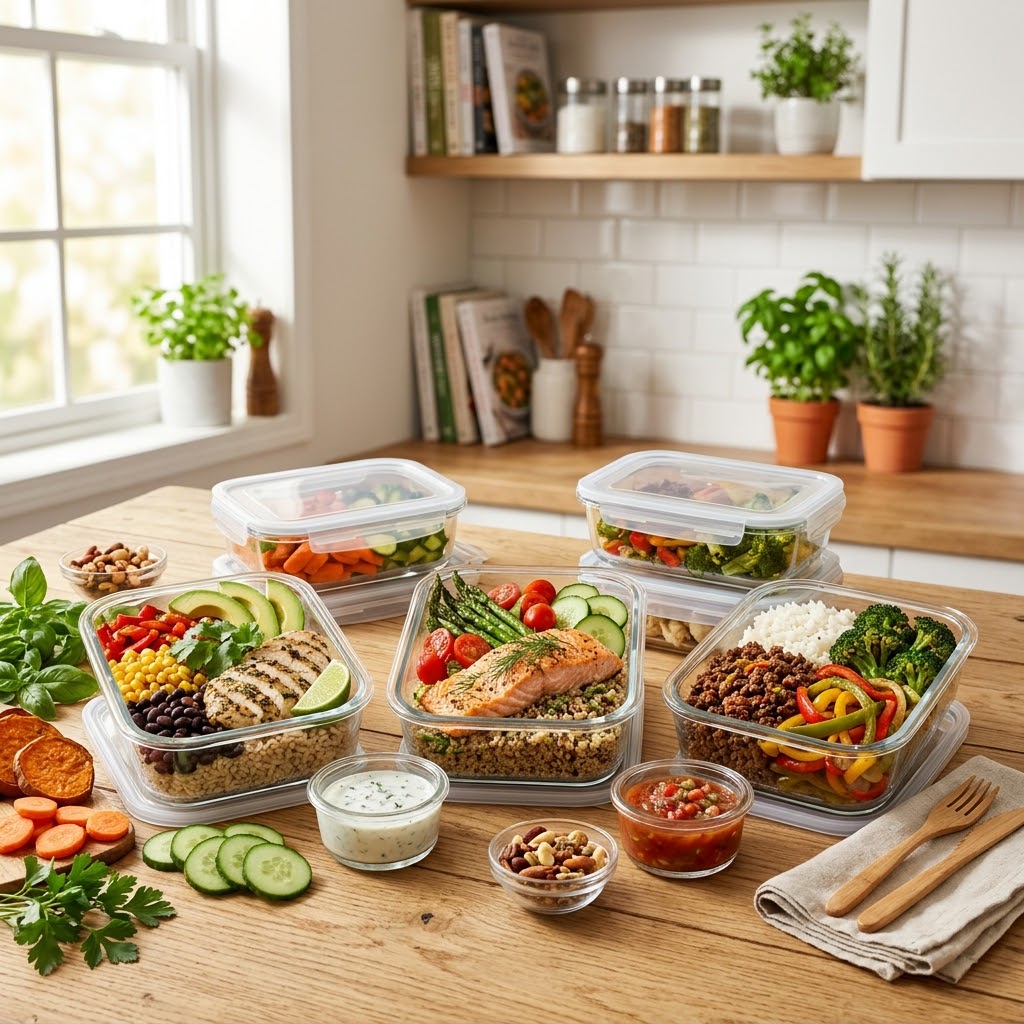
- 2 lb chicken breast
- 3 cups cooked rice
- 1 can black beans, drained
- 1 cup corn
- 2 bell peppers
- 1 avocado
- 1 cup salsa
- ½ cup Greek yogurt
- 1 lime
- 1 teaspoon cumin
- 1 teaspoon paprika
- ½ teaspoon chili powder
- Salt and pepper
Preparation
Season the chicken with cumin, paprika, chili powder, salt, and pepper.
Cook the chicken until fully cooked.
Allow it to rest before slicing.
Prepare the rice.
Sauté the bell peppers until tender.
Drain and rinse the black beans.
Divide rice into meal-prep containers.
Add chicken, beans, corn, and peppers.
Keep avocado, salsa, Greek yogurt, and lime separate until serving.
When you’re ready to eat, add the fresh toppings.
Why It Works
The combination of seasoned chicken, rice, beans, vegetables, and fresh toppings gives you plenty of flavor and texture without needing a complicated recipe.
How to Plan a High Protein Meal Prep Week
You don’t need to cook seven completely different meals.
Instead, choose two or three protein sources, two carbohydrates, several vegetables, and two sauces.
For example:
Proteins
- Chicken
- Ground beef
- Salmon
Carbohydrates
- Rice
- Potatoes
- Pasta
Vegetables
- Broccoli
- Bell peppers
- Spinach
- Carrots
- Cucumber
Sauces
- Lemon Greek yogurt sauce
- Tomato sauce
- Salsa
From those ingredients, you can create several different meals.
This approach saves time while still giving you variety.
A Simple Sunday High Protein Meal Prep Routine
Step 1: Choose your meals
Pick three or four recipes rather than trying to prepare everything.
Step 2: Make a shopping list
Check your refrigerator and pantry first.
Only buy what you actually need.
Step 3: Start with foods that take longest
Put potatoes, vegetables, rice, or other longer-cooking ingredients on first.
Step 4: Cook your proteins
While the oven or stovetop is working, prepare chicken, beef, turkey, eggs, or salmon.
Step 5: Prepare fresh ingredients
Wash and cut vegetables.
Prepare sauces separately.
Step 6: Portion everything
Divide meals into individual containers.
Don’t overcrowd containers because keeping ingredients separated can help preserve texture.
Step 7: Label the containers
Write the meal name and preparation date on each container.
This makes it much easier to keep track of what should be eaten first.
How to Keep Meal Prep From Becoming Boring
The easiest way to avoid repetitive meals is to change the flavor profile, not necessarily the main ingredients.
For example, one batch of chicken can become:
Mediterranean Chicken
Lemon + oregano + cucumber + tomato + yogurt sauce.
Mexican-Style Chicken
Cumin + paprika + black beans + corn + salsa.
Asian-Inspired Chicken
Soy sauce + garlic + ginger + broccoli + rice.
Italian Chicken
Italian herbs + tomato sauce + spinach + Parmesan.
The protein stays the same, but the finished meal feels completely different.
Best High Protein Meal Prep Ingredients
Keep a few reliable ingredients in your kitchen and meal prep becomes much easier.
Chicken Breast
A versatile protein that works with almost any seasoning.
Lean Ground Beef
Excellent for bowls, tacos, pasta, and stuffed vegetables.
Salmon
Great for bowls, salads, rice, and roasted vegetable meals.
Eggs
Useful for breakfast bowls, wraps, sandwiches, and snacks.
Greek Yogurt
A convenient ingredient for sauces, breakfast bowls, and creamy dressings.
Beans
Add protein, fiber, texture, and flavor to bowls and salads.
Cottage Cheese
Can be used in breakfast recipes, savory bowls, dips, and sauces.
Lentils
A practical plant-based ingredient for soups, bowls, and salads.
High Protein Meal Prep Storage Tips
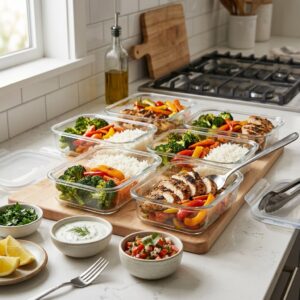
Meal prep only works well when food is stored safely.
After cooking, divide prepared food into shallow containers to help it cool more quickly and evenly. USDA guidance recommends refrigerating leftovers at 40°F (4°C) or below, and advises not leaving perishable food at room temperature for more than two hours.
Most refrigerated leftovers should be eaten within 3–4 days. Food you won’t eat within that window can be frozen for longer storage.
For meal-prep dishes that need reheating, USDA recommends reheating cooked leftovers to 165°F (74°C).
A useful strategy is to keep delicate ingredients such as avocado, fresh greens, crunchy vegetables, and sauces separate until serving.
That simple step can make a big difference in texture.