
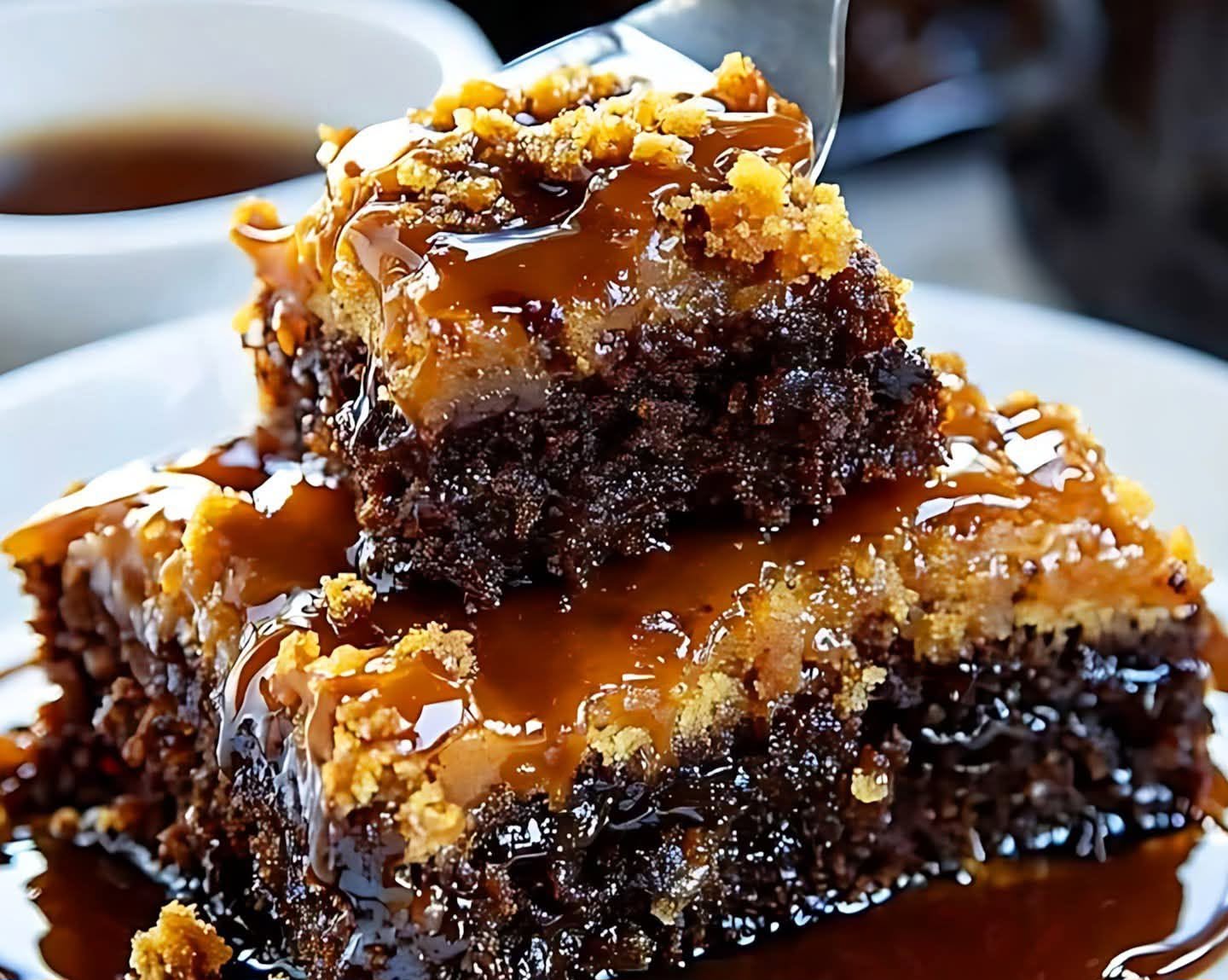
How to Make Caramel Brownie Bars
1. Prepare the Pan and Oven
Heat the oven to 350°F (175°C). Line an 8-inch (20 cm) square baking pan with parchment paper, leaving an overhang on two sides. Lightly grease any exposed parts of the pan.
The parchment overhang acts as a handle later. Brownies are delicate when warm, so wait until the pan has cooled before using it to lift them out.
If you have only a 9-inch (23 cm) square pan, the bars will be thinner and may bake sooner. Begin checking them several minutes before the time given below.
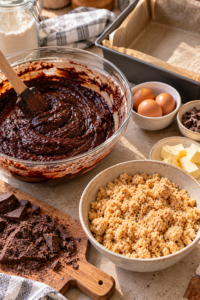
2. Make the Crumb Topping
In a small bowl, stir together the flour, brown sugar, and pinch of salt. Add the cold butter cubes. Rub the mixture between your fingertips or use a pastry cutter until you have a mix of small crumbs and a few larger pea-sized pieces.
Put the bowl in the refrigerator while you make the brownie batter. Keeping the butter cold helps the topping retain its craggy texture during baking.
Do not press the crumbs into a smooth dough. The uneven little clusters give the finished caramel brownie bars their golden, textured top.
3. Melt the Chocolate and Butter
Place the butter and chopped chocolate in a heatproof bowl. Melt them gently over a pan of barely simmering water, stirring until smooth. Alternatively, microwave in short bursts of about 20 seconds, stirring thoroughly between each burst.
Set the bowl aside for about 5 minutes. The mixture should be warm, but no longer very hot, before the eggs go in. Excess heat can begin cooking the eggs as you stir.
4. Mix the Brownie Batter
Whisk the granulated sugar and brown sugar into the melted chocolate mixture. Add the eggs, one at a time, whisking until each is incorporated. Stir in the vanilla.
In another bowl, briefly mix the flour, cocoa powder, and salt. Add the dry ingredients to the chocolate mixture and fold with a spatula just until you no longer see dry streaks.
The batter will be thick. Avoid vigorous mixing once the flour is added; gentle folding is enough to combine everything and helps preserve the dense brownie texture.
Food-safety note: Resist tasting the uncooked batter. The FDA explains that raw flour and raw eggs can carry harmful germs, and advises against eating raw dough or batter. fda.gov
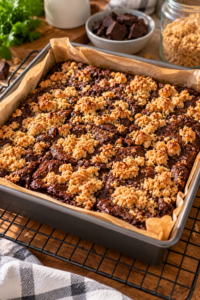
5. Add the Crumbs and Bake
Spread the brownie batter evenly in the prepared pan, pushing it into the corners. Scatter the chilled crumb mixture across the surface. Leave it loose rather than pressing it down.
Bake on the center rack for 28–35 minutes. The crumb topping should look lightly golden, and the brownie should appear set at the edges. A toothpick inserted into the center of the chocolate layer should come out with moist crumbs, rather than loose, glossy batter.
Start checking at 28 minutes. An extra few minutes can make a noticeable difference to a fudgy brownie, especially in a small pan.
6. Cool Before Cutting
Set the pan on a wire rack and let the brownies cool completely in the pan, about 1½–2 hours. For especially neat squares, refrigerate the cooled pan for another 30 minutes.
Lift the slab out using the parchment. Cut it into 16 squares with a large, sharp knife. Wipe the blade between cuts if chocolate collects on it.
Cooling is the step that turns a fragile warm brownie into tidy caramel brownie bars. If you cut them too soon, the chocolate layer can slump and the crumbs may break away.
7. Finish with Caramel
If the caramel is too firm to pour, warm it gently according to its package instructions until just fluid. Let it cool slightly if it becomes hot.
Arrange the bars on a plate or tray and drizzle them with about half the caramel sauce. Reserve the rest to spoon over individual servings. Add a tiny pinch of flaky salt if desired.
For the glossy, generously sauced presentation in the photo, place one or two bars on a dessert plate and spoon over additional caramel just before serving.