
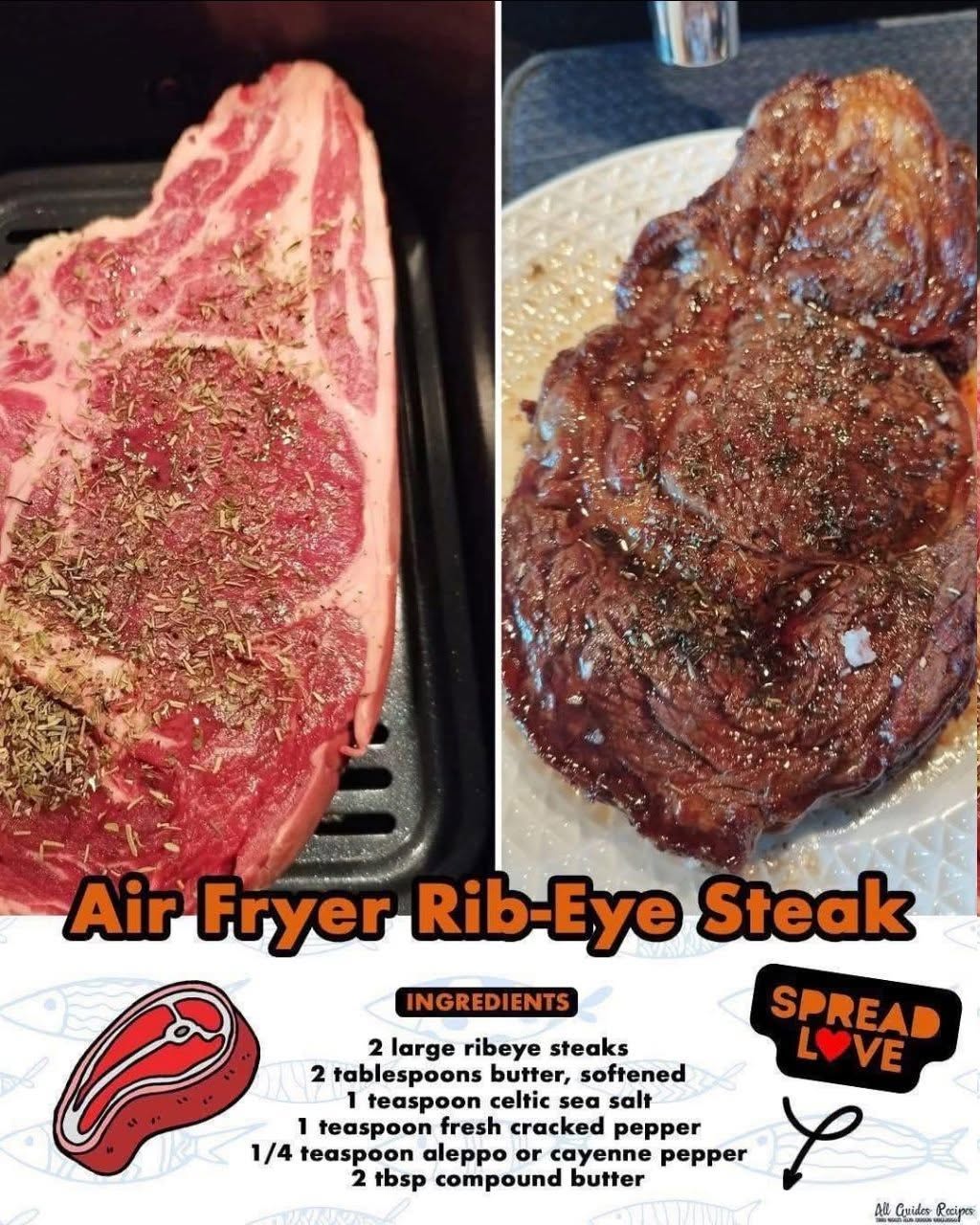
Preparing the Ribeye Steaks
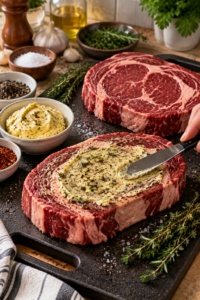
Pat the Steaks Dry
Remove the ribeyes from their packaging and pat every surface thoroughly dry with paper towels.
Surface moisture produces steam and can interfere with browning. Dry steaks develop a more attractive exterior.
Mix the Seasoned Butter
Combine the two tablespoons of softened butter with the salt, cracked black pepper, Aleppo or cayenne pepper, and optional dried herbs.
Mix until the seasonings are evenly distributed.
Season Both Sides
Spread the seasoned butter over both sides and around the edges of each steak.
If one side has a thick band of fat, coat it lightly but evenly.
Preheat the Air Fryer
Preheat the air fryer to 400°F or 200°C for approximately three to five minutes, unless the manufacturer advises against preheating.
Starting with a hot cooking chamber helps the exterior begin browning immediately.
How to Cook Air Fryer Ribeye Steak
Step 1: Arrange the Steaks
Place the seasoned ribeyes in the preheated air fryer basket in a single layer.
Do not stack or overlap them. If the basket is too small, cook one steak at a time.
Step 2: Begin Cooking
Cook at 400°F or 200°C for approximately four to six minutes.
The precise time depends on steak thickness and appliance performance.
Step 3: Turn the Steaks
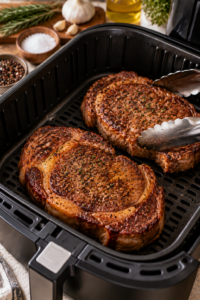
Open the basket and turn each steak with clean kitchen tongs.
Avoid piercing the meat with a fork because puncturing it can release juices.
Continue cooking for another four to six minutes.
Step 4: Check the Internal Temperature
Begin checking early, especially when cooking steaks thinner than 1½ inches.
Insert an instant-read thermometer horizontally into the thickest portion, avoiding the bone and large areas of fat.
For food safety, the official FoodSafety.gov temperature chart recommends cooking beef steaks to a minimum internal temperature of 145°F or 63°C, followed by a rest of at least three minutes.
Cooking times are only estimates. Use the measured internal temperature to decide when the steak is ready.
Step 5: Rest the Meat
Transfer the cooked ribeyes to a clean plate or cutting board.
Cover them loosely with foil and allow them to rest for at least three minutes. A rest of approximately five to ten minutes is helpful for thick steaks.
The temperature may continue rising slightly during this period.
Step 6: Add Compound Butter
Place one tablespoon of compound butter on each steak while it rests.
Allow the butter to soften and melt over the hot surface.
Step 7: Serve
Serve the air fryer ribeye steak whole or slice it across the grain immediately before eating.
Slicing against the grain shortens the muscle fibres and makes each bite easier to chew.
Estimated Air Fryer Cooking Times
The following times are approximate for steaks around 1 to 1½ inches thick at 400°F or 200°C:
| Desired result | Approximate total cooking time |
|---|---|
| Less cooked centre | 7–9 minutes |
| Medium centre | 9–12 minutes |
| More thoroughly cooked | 12–15 minutes |
These estimates are not substitutes for a thermometer. Steak thickness, bone structure, starting temperature, and air fryer design can change the required time.
For safety, follow the official minimum internal-temperature recommendation applicable to your household.
Important Tips for the Best Results
Choose Evenly Sized Steaks
Two similarly sized steaks will finish at approximately the same time. If one is noticeably thinner, remove it earlier when it reaches the appropriate temperature.
Do Not Overcrowd the Basket
Air must circulate around the beef. An overcrowded basket can cause uneven cooking and weaker browning.
Check the Temperature Early
You can always continue cooking an underdone steak, but you cannot reverse an overcooked one.
Begin checking several minutes before you expect it to be ready.
Use Tongs
Tongs let you turn the steaks without piercing them.
Rest Before Slicing
Cutting immediately releases more juice onto the plate. Resting gives the temperature time to equalize and improves moisture retention.
Clean the Air Fryer Promptly
Rendered ribeye fat and butter can collect beneath the basket. Allow the appliance to cool, then clean it according to the manufacturer’s directions.
Built-up grease can produce smoke during future use.