
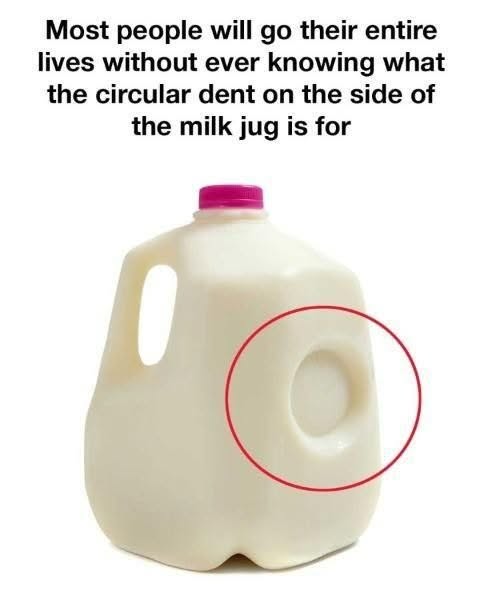
The modern plastic milk jug was developed in the 1960s as a lightweight, shatterproof alternative to glass bottles.
By the 1970s, manufacturers standardized the shape — including the now-iconic dent — after extensive testing showed:
-
- Retailers wanted sturdier packaging for shelves
- Distributors needed stackable, durable containers
Visual Art & Design
The result? A simple, cost-effective design that’s stood the test of time.
Debunking the Myths
Pro Tips for Using Your Milk Jug Better
Final Thoughts
You don’t need a high-tech gadget to appreciate smart design.
Sometimes, the best solutions are the quiet ones — like a simple curve molded into plastic that makes your life just a little easier.
So next time you’re pouring cereal… pause.
Look at the jug. Feel that dent.
And smile.
Because real brilliance isn’t about complexity. It’s about solving real problems — quietly, cleverly, and perfectly.
And that kind of design? It pours well.
Pages: 1 2